
REVIEW · SACRED VALLEY
Cusco: Zipline in the Sacred Valley
Four cables, one jaw-dropping valley. This Cusco Region zipline takes you to the Mirador de Racchi base for adrenaline runs and wide-open views over the Sacred Valley.
I love the structure of the ride, with four different cables that go from confidence-building to full speed. I also love that the course is built for sightlines, so you get panoramic views of the snowy peaks and the valley below.
One consideration: it is not suitable for pregnant women, wheelchair users, or people with pre-existing medical conditions, since this is an active, safety-dependent adventure.
In This Review
- Key highlights worth clocking before you go
- Sacred Valley ziplining from Mirador de Racchi: why this feels special
- Getting there: hotel pickup and the 40-minute ride out of central Cusco
- Gear up and safety briefing: harness, helmet, gloves, then fly
- The four cables: confidence, speed, Superman moves, and canyon views
- Cable one: soft start for confidence
- Cable two: the fastest line for maximum flying sensation
- Cable three: Superman and Superwoman positions
- Cable four: best views of the canyon and Sacred Valley
- A note on extra options for brave riders
- What those panoramic views actually give you in real terms
- Price and value: is $45 per person fair for this setup?
- What to bring, and how to avoid small frustrations
- Who this zipline is best for, and who should skip it
- The booking decision: should you book this Cusco Sacred Valley zipline?
- FAQ
- Where are you picked up in Cusco?
- How long does the zipline experience take?
- What equipment is included for the zipline?
- How many zipline cables will you ride?
- What positions are mentioned for the zipline?
- Is food included?
- Is this activity suitable for everyone?
Key highlights worth clocking before you go
- Four cables, four different sensations, starting soft and ending with big canyon views
- Speed and thrill factor, especially on the fastest second line
- Superman and Superwoman position on the third cable for extra movement
- Guides who focus on safety and confidence, with clear instructions and helpful support
- Optional fun for the very brave, like upside-down or monkey-style options mentioned in reviews
Shortlisting Peru? These reviews come up alongside this one most often.
- From Cusco: Tour Ausangate & 7 Lakes Full Day
★ 4.1 · 16 reviews - Cusco: Ausangate Tour Seven Lagoons + meals
★ 3.7 · 10 reviews - From Cusco: Inka Suspension Bridge Qeswachaca – Qeswachaka
★ 3.9 · 7 reviews - ECONOMIC PRIVATE TOUR IN THE CITY OF CUSCO – HALF DAY
★ 5.0 · 6 reviews
Sacred Valley ziplining from Mirador de Racchi: why this feels special
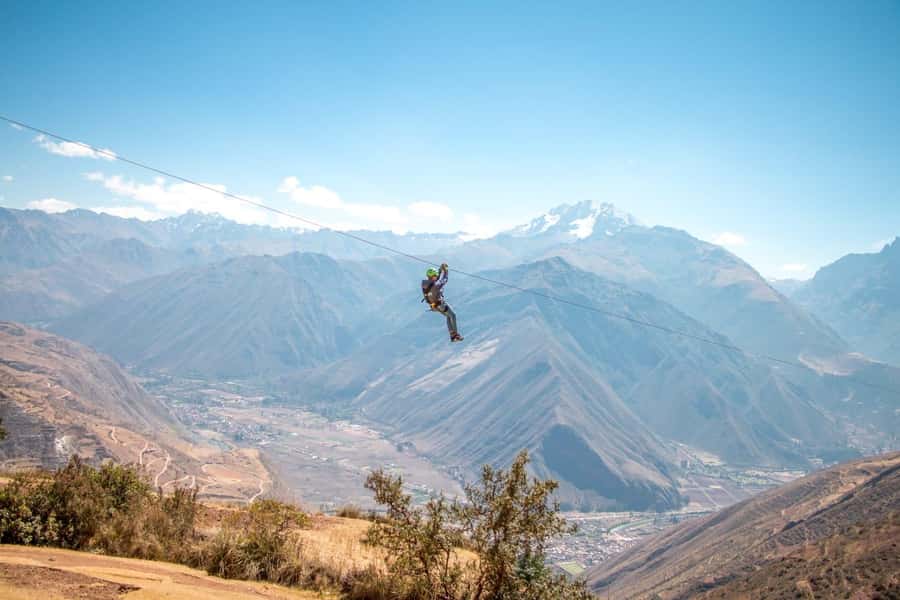
Cusco is already dramatic, but this activity changes the scale. Instead of sightseeing from a viewpoint, you travel across the valley like a moving viewpoint. From the Mirador de Racchi base, the setting is made for altitude and open air, which means the experience has that rare mix of motion and scenery.
I like that the ride is designed with a progression. The first cable is soft on purpose, so you can learn the body basics before things get intense. Then you move into faster speed and more dramatic positions, so it never feels like you’re being thrown straight into the deep end.
The view is also not a side benefit. It’s the point. The fourth cable is specifically described as the best for canyon views, including the Sacred Valley and mountains, so you’re not just paying for adrenaline. You’re paying for a front-row seat to the region from a moving angle.
And yes, you’ll see snowy peaks when conditions line up. The combination of high Andes scenery and a harness strapped to your body is exactly the kind of “I can’t believe this is real” moment that makes the Sacred Valley worth doing more than one type of activity.
Getting there: hotel pickup and the 40-minute ride out of central Cusco
The day starts with hotel pickup from locations near or within Cusco’s historic center. From there, you travel about 40 minutes to the base at Mirador de Racchi.
That transfer matters more than people think. Cusco’s altitude and roads can make the morning feel different from other places, so having a planned ride is one less thing to manage. It also gets you out of city noise and into the foothills area where the course starts.
What you should do: plan to be ready when pickup comes. If your hotel is near the historic center, you should be fine, but if you’re a bit outside the core, confirm timing ahead so you don’t start the day rushed.
Also, the activity is listed as about 3 hours, so the schedule will feel compact. A smooth pickup helps you actually enjoy the experience, not just sprint between steps.
Gear up and safety briefing: harness, helmet, gloves, then fly
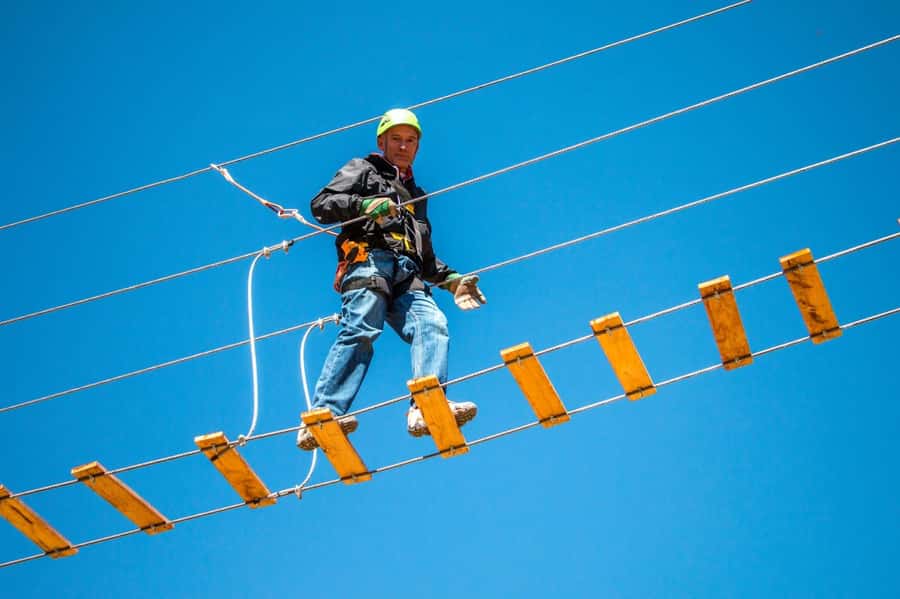
When you arrive at Mirador de Racchi, you don’t waste time. You get your safety equipment, including harnesses, helmets, and gloves, and you’ll receive safety instructions before the first ride.
This is a big deal, even if you’re the fearless type. Ziplining is not just about “hold on and hope.” The harness fit, helmet placement, and basic handling matter for comfort and confidence, especially on the first cable where you’re learning your rhythm.
Practical tip: bring a camera, because you’ll want to capture the views at least once. Another practical note is that cash is listed as something to bring. That doesn’t tell you exactly how it’s used, but it’s smart to have some ready rather than assuming card payments will work for extras.
And if you get a chance to ask questions, do it. The reviews highlight that the team is informative and helpful. You’ll likely get straight answers about what to do when you’re clipped in, how positions work, and what the guides expect from you at each cable.
The four cables: confidence, speed, Superman moves, and canyon views
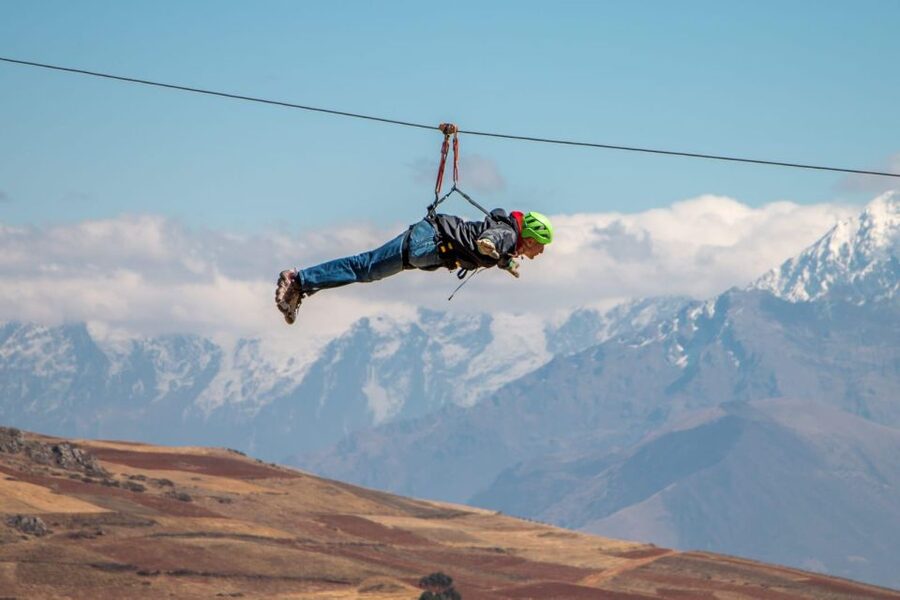
This course is built like a highlight reel, but it also has a logic to it: learn, accelerate, play with positions, then finish with the scenery.
Rappel, via ferrata and other high-pulse options
Cable one: soft start for confidence
The first cable is described as soft, which means it’s designed to help participants build confidence and get familiar with the sensation. This is where you should focus on breathing, listening, and getting your body comfortable in the harness.
If you’re nervous, this is the cable that makes the overall experience enjoyable instead of stressful. You’re not stuck on a scary start. You’re learning.
Cable two: the fastest line for maximum flying sensation
The second cable is the fastest, giving the maximum flying sensation. This is the one adrenaline fans tend to remember most, because it’s where your mind shifts from “how do I do this?” to “wow, I’m actually moving.”
If you’re camera-minded, this is often when you want to start experimenting with the angle of your shots. But listen to your guide first. Comfort and safety beat selfies.
Cable three: Superman and Superwoman positions
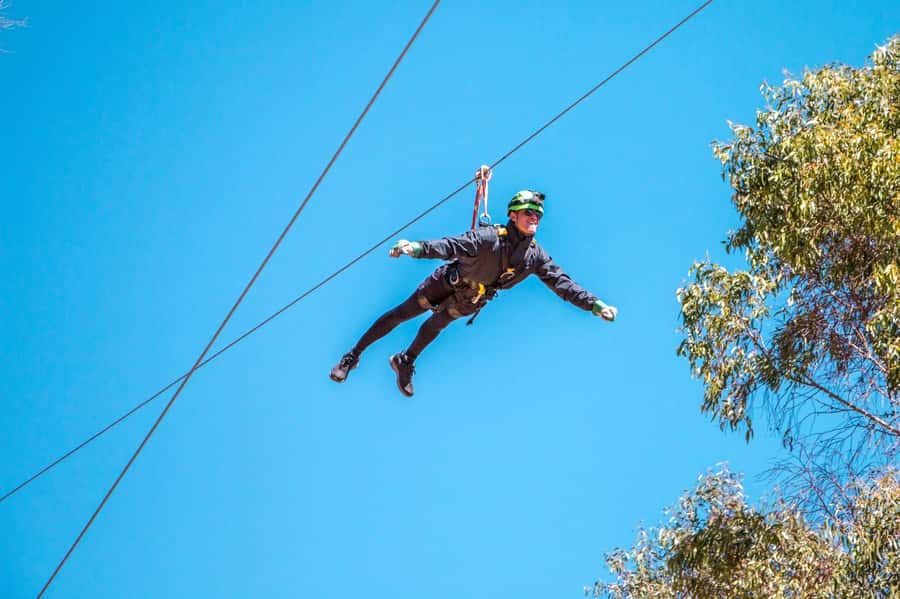
The third cable is ideal for extreme movements, and they specifically mention the Superman or Superwoman position. That means you’re not just gliding straight. You’re able to shift into a more dramatic pose depending on how you handle the line and what the guides instruct.
This is where the ride turns from thrill to play. If you want your photos to look like action, this is the cable to aim for.
Cable four: best views of the canyon and Sacred Valley
Finally, the fourth cable is for the best views of the canyon, the Sacred Valley, and the mountains. This is an important contrast with the earlier cables. Earlier lines are about speed and movement. The last one is about perspective.
Even if you think you’re here mainly for adrenaline, this is the moment that turns adrenaline into a memory with context. You see where you’ve been traveling, and you understand the scale of the valley in a way that photos can’t fully capture.
A note on extra options for brave riders
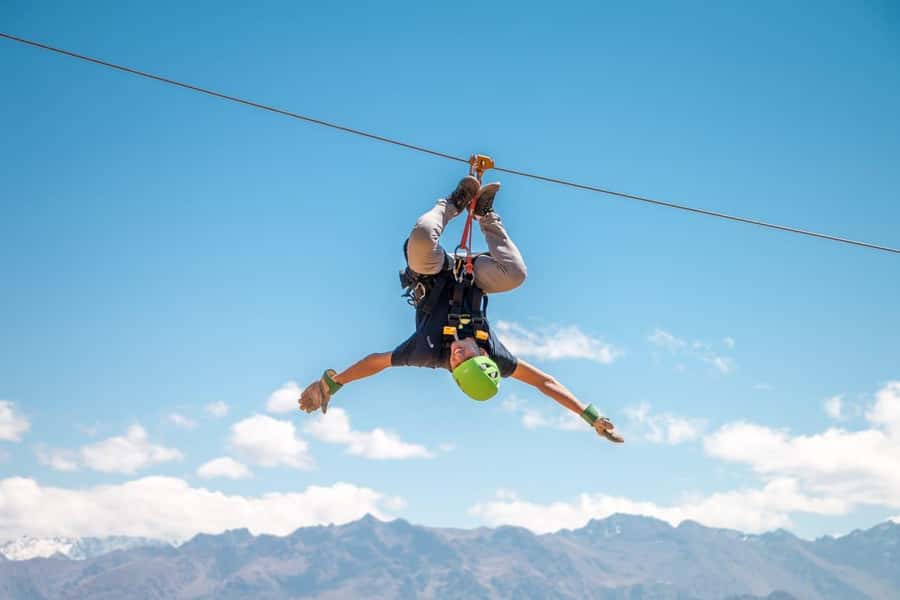
One review mentions an upside-down option or monkey style as an added thrill for very brave riders. If that’s offered during your session, it’s exactly the kind of “only on a zipline” feature that makes the experience feel customized. Stay within your comfort level, though. The best option is the one you can do safely while still enjoying it.
What those panoramic views actually give you in real terms
The Sacred Valley is famously scenic, but ziplining adds a moving dimension. You get changing angles as you travel, which helps your brain connect dots between the valley, the canyon contours, and the mountain backdrop.
Here’s what that means for you:
- You’ll likely spot how the terrain drops off into the canyon rather than just seeing a single static viewpoint.
- You’ll get a wider sense of direction, like you’re tracing a line across the region instead of standing on one place.
- The snowy peaks become more than a postcard background. They look closer because the flight path frames them at different points.
And because the fourth cable is described as the best for canyon views, you’ll end with the strongest “wow, so that’s the shape of it” takeaway. That ending matters. A lot of tours end when the adrenaline is still high, but this one ends with meaning.
This is also a good activity if you want a break from the usual Cusco rhythm. Some days are about walking streets and museum stops. This is about air, speed, and a full change of pace.
Price and value: is $45 per person fair for this setup?
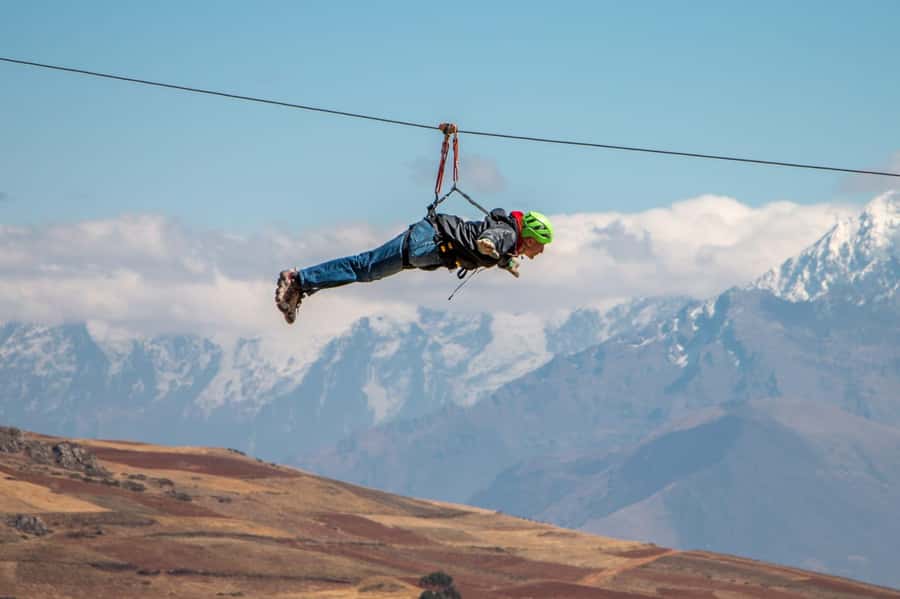
At $45 per person for a roughly 3-hour experience, the value looks strongest when you look at what’s included, not just the number.
You get:
- Outward and return transport
- Safety equipment: harness, helmet, gloves
- The zipline itself, including the four cables and guided instruction
You do not get food, and extra expenses are up to you. That’s normal for half-day style outdoor activities, but it does affect how you should plan your day.
So is it worth it? In practical terms, yes if you want an all-in-one adrenaline package. The transport and equipment alone remove major friction. You don’t have to source gear, find a meeting point, or worry about how you’ll manage the transfer.
Where value can drop for some people is if you’re not comfortable with heights, movement, or safety gear. But that’s less a price issue and more a fit issue. The activity is clear that it is not suitable for certain medical and mobility needs.
One more value tip: because the duration is about 3 hours, time is a factor. If you only have a short window around Cusco, this is a compact way to add a high-impact experience without losing an entire day.
What to bring, and how to avoid small frustrations
Based on what’s listed, bring:
- A camera
- Cash
That’s it from the essentials list, but here’s how I’d think about it as a rider:
- Use your camera time strategically. The best views come on multiple lines, but the last cable is built for canyon and mountain views.
- Have cash for any extras you might want on site. Since extras aren’t included, it’s safer to have the option.
What not to overpack: this is active. You’ll be wearing harnesses and gloves, so you want to avoid clutter. If you’re bringing a phone, make sure you can store it safely when you’re strapped in.
Also consider what your body is willing to do. One review highlights “very brave” options. If you’re not into upside-down or monkey-style thrills, you can still enjoy the main cables and the views. The course is designed so you can have fun at your own comfort level.
Who this zipline is best for, and who should skip it
This activity is a strong match for people who:
- Want a short, high-adrenaline break from sightseeing
- Like structured adventures, not free-for-all chaos
- Enjoy views that change as you move, not just static viewpoints
- Are comfortable following safety instructions closely
It may not be a match for you if:
- You are pregnant (explicitly not suitable)
- You use a wheelchair (explicitly not suitable)
- You have pre-existing medical conditions (explicitly not suitable)
It’s also best to be realistic about your comfort with heights and harness equipment. The first cable helps you ease in, but you still need to be willing to fly, even at the start.
For language, instructors are listed as English and Spanish. If you prefer one of those, you can plan to communicate quickly at the safety briefing. Clear communication makes everything feel easier.
The booking decision: should you book this Cusco Sacred Valley zipline?
If you’re deciding between doing one big outdoor activity and sticking to standard Cusco sights, this zipline is an excellent choice. The combination of four cables, guided setup with harness and helmet, and ending on the best canyon views is exactly the kind of experience that changes how you remember the region.
I’d book it if you want:
- A compact about 3-hour adventure
- Panoramic Sacred Valley views built into the experience
- A course that starts gently and then turns up the intensity
Skip it if you fall into the listed restrictions, or if you know you’re not comfortable with heights and active safety equipment.
Lastly, if you like the idea of extra thrills, look for that upside-down or monkey-style option mentioned in reviews. But treat it as a bonus, not the requirement. The main wins here are the four cables and those sweeping Sacred Valley views from above.
FAQ
Where are you picked up in Cusco?
Pickup is from your hotel near or within Cusco’s historic center.
How long does the zipline experience take?
The duration is about 3 hours. Starting times depend on availability.
What equipment is included for the zipline?
You’ll receive safety equipment including a harness, helmet, and gloves.
How many zipline cables will you ride?
You pass through four cables of different lengths.
What positions are mentioned for the zipline?
The third cable is ideal for extreme movements, including a Superman or Superwoman position.
Is food included?
No, food is not included.
Is this activity suitable for everyone?
It is not suitable for pregnant women, wheelchair users, or people with pre-existing medical conditions.
More Tour Reviews in Peru
- From Cusco: Tour Ausangate & 7 Lakes Full Day
★ 4.1 · 16 reviews - Cusco: Ausangate Tour Seven Lagoons + meals
★ 3.7 · 10 reviews - From Cusco: Inka Suspension Bridge Qeswachaca – Qeswachaka
★ 3.9 · 7 reviews - ECONOMIC PRIVATE TOUR IN THE CITY OF CUSCO – HALF DAY
★ 5.0 · 6 reviews - 1-day excursion to Palcoyo Mountain + Breakfast and Lunch
★ 4.0 · 5 reviews
Higher-Pulse Days in Peru
- Paracas : Paragliding – Fly Like a Bird
★ 5.0 · 3 reviews
Freshly reviewed across Peru
- Cusco: Excursion to Ausangate 7 Lagunas + lunch★ 4.2 · 3 reviews
- Paracas : Paragliding – Fly Like a Bird★ 5.0 · 3 reviews
- excursion to colorful mountain & red valley viewpoint cusco★ 4.6 · 3 reviews
- Paracas: Drive ATV and Buggy in Paracas Reserve★ 4.6 · 3 reviews
- From Lima || Excursion to Sayán and Churín ||★ 3.7 · 3 reviews
- Offer Price Tour Salinas Lagoon and National Reserve 8 hours★ 5.0 · 4 reviews
Sacred Valley Tours side by side.
 ★ 4.8From Cusco: Sacred Valley & Maras Salt Mines Tour with LunchFrom $282,227 reviews
 ★ 4.6Cusco: Sacred Valley, Pisac, Ollantaytambo, Salt Mines MorayFrom $281,058 reviews
 ★ 4.8Sacred Valley: Chinchero, Moray, Ollantaytambo & Pisac+LunchFrom $25501 reviews
 ★ 4.6Sacred Valley: Maras & Moray by Quad Bike from CuscoFrom $39418 reviews
 ★ 4.6From Cusco: 2-Day Trip to the Sacred Valley and Machu PicchuFrom $370265 reviews
 ★ 4.8Cusco:Sacred Valley Pisaq,Ollantaytambo,Chinchero with LunchFrom $28183 reviews
 ★ 4.5Full-Day Excursion to Sacred Valley, Pisac and Ollantaytambo from CuscoFrom $47174 reviews
 ★ 5.0Food and Culture Full day Tour in the Sacred ValleyFrom $200144 reviews
Also on these Peru lists