

REVIEW · SACRED VALLEY
From Cusco: Sacred Valley of the Incas Full-Day Tour
Pisac and Ollantaytambo in one day is a great hit of Peru. This full-day Sacred Valley trip packs Inca ruins and local market life into a tight, efficient loop from Cusco to Urubamba and back, with an added weaving demonstration that reaches back to pre-Columbian techniques. You get real context, not just photo stops.
I particularly like the way the tour blends ruins with everyday culture. In Pisac you’ll see the market scene in the main square, and in Ollantaytambo you’ll explore an Inca town that was not overthrown by the conquistadores. A strong live guide helps, and past groups reported standouts like Rosa and Giancarlo, with explanations that make the sites click.
One consideration: the advertised price is low, but entrance fees and lunch are not included unless you pick a private option. So you’ll want to budget a bit extra and keep a little flexibility in mind, since the partner can adjust the schedule when conditions change.
In This Review
- Key Highlights You Should Actually Care About
- A Smart Sacred Valley Day Plan From Cusco
- Pisac Village and Its Market Days (and What You’ll See)
- The Pisac Ruins: Perfect Stonework and Valley Views
- Ollantaytambo Ruins: The Inca Town Above the Town
- Chinchero Market En Route: Crafts, Color, and Timing
- The Andean Weaving Demonstration That Actually Adds Meaning
- Price and Logistics: Is $26 Worth It?
- What Makes the Best Guides Matter Here
- Who This Sacred Valley Day Tour Is For
- Should You Book This Tour?
- FAQ
- What is included in the Cusco to Sacred Valley full-day tour?
- What is not included?
- How long is the tour and where do you start?
- What markets does the tour visit?
- Do you get an Andean weaving demonstration?
- What languages are available for the guide?
- Is this tour suitable for everyone?
Key Highlights You Should Actually Care About
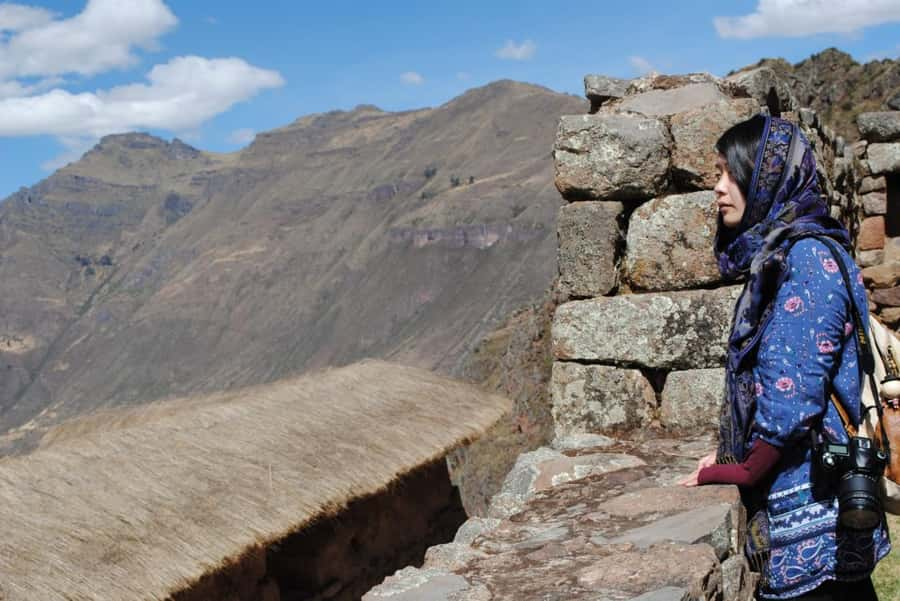
- Pisac ruins plus viewpoints: built structures on a hillside, with valley lookouts that explain why the Inca chose this spot
- Market timing in Pisac: the market in the main square runs Sundays, Tuesdays, and Thursdays
- Ollantaytambo’s special status: an Inca town that was not overthrown by the conquistadores, with ruins above the town
- Chinchero market en route: a second look at traditional local trade before you head back
- Andean weaving demo: you meet an expert weaver and learn techniques linked to pre-Columbian traditions
- Small group options: some departures run around 10 people, making questions and conversation easier
More Sacred Valley itineraries on our list
- Cusco: Sacred Valley, Pisac, Ollantaytambo, Salt Mines Moray
★ 4.6 · 1,058 reviews - Sacred Valley: Chinchero, Moray, Ollantaytambo & Pisac+Lunch
★ 4.8 · 501 reviews - Sacred Valley: Maras & Moray by Quad Bike from Cusco
★ 4.6 · 418 reviews - From Cusco: 2-Day Trip to the Sacred Valley and Machu Picchu
★ 4.6 · 265 reviews
A Smart Sacred Valley Day Plan From Cusco
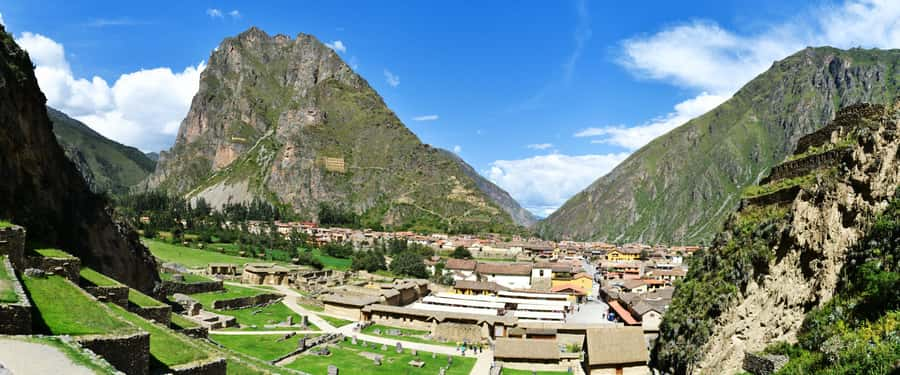
This is the kind of day trip that works because it avoids the common trap, trying to do too much with too little time. You start in Cusco and ride down into the Sacred Valley area around Urubamba, where the altitude is still high but life feels more settled than it does right in Cusco. The route is built around two heavyweight ruins, Pisac and Ollantaytambo, then supports them with market stops and a weaving lesson.
If you care about understanding how the Andes work, this tour gives you the pieces. The ruins show the engineering, the markets show the economy and daily life, and the textile demo shows why weaving mattered so much to the Inca and still matters today. It is a practical mix, not a checklist.
You also get a real guide for the full day. You’ll have a professional guide in English or Spanish, and the tour skips the ticket line, which saves time when your day is already packed.
Pisac Village and Its Market Days (and What You’ll See)
Pisac starts at the foot of a hill with an Inca city up above. On this tour, you first get the village side of the experience, not just the stones. That matters because Pisac is still a working place. You’re not walking through a museum town, you’re watching regional trade happen.
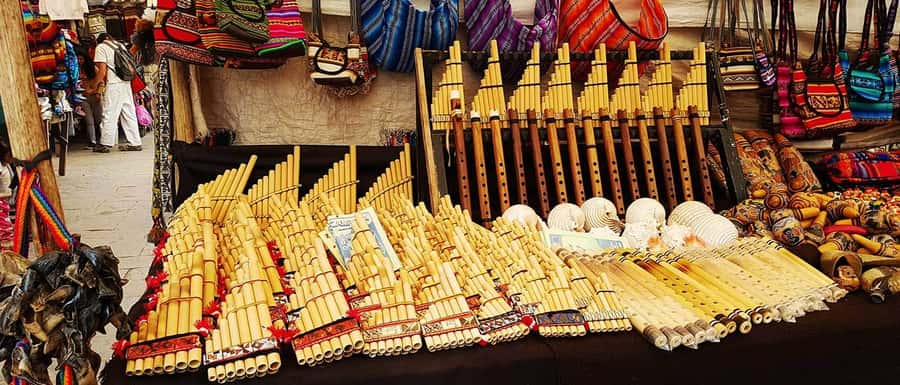
In the main square, there is a market atmosphere on Sundays, Tuesdays, and Thursdays. If your trip falls on one of those days, you’re likely to see locals bartering and artisans selling a steady flow of goods. Based on what the tour notes highlight, expect to spot the kind of items Peru is famous for in this region, including alpaca wool ponchos and blankets, handcrafted jewelry, and even engraved gourds. You may also see antique-style reproductions and other small craft pieces.
What I like about this part is that it trains your eye. When you later look at the ruins, you are already thinking about why people lived here, how they supported themselves, and how materials moved around the valley. Even if you do not buy anything, the market gives you a sense of what is valued and what is produced locally.
Small heads up: markets can be chaotic in a good way, so bring a little patience. If you’re shopping, have an idea of what you want before you get swept into the stalls.
The Pisac Ruins: Perfect Stonework and Valley Views
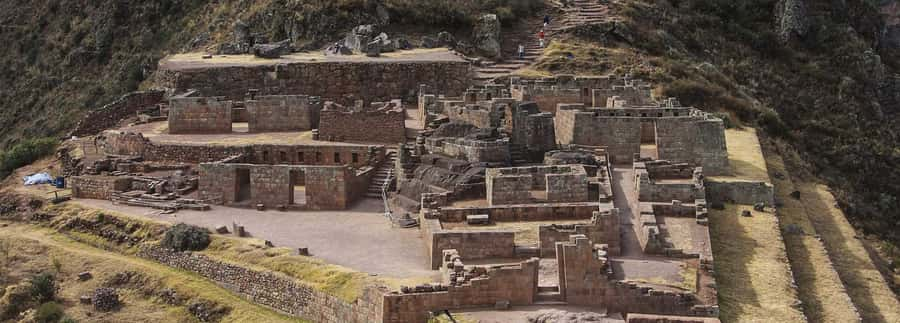
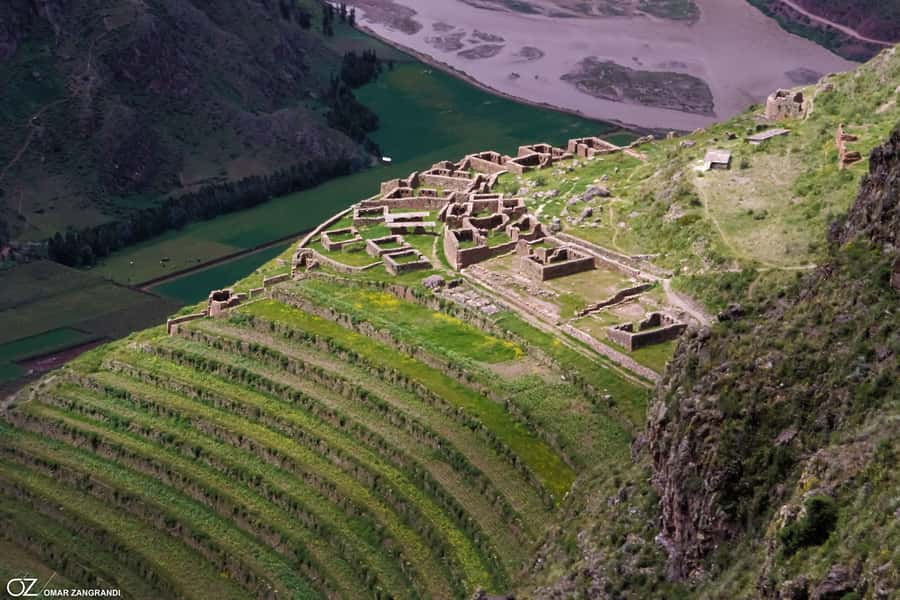
After the village and market time, the day turns uphill toward the ruins. The Pisac complex is especially striking because you can see the logic of the site. The Inca built in layers up the slope, with terraces and structures that look precise even after centuries of change.
You’ll explore the ancient Pisaq ruins (tour spelling may vary), where the notes emphasize the perfectly built houses and temples. That phrase is not just marketing language. Inca stonework tends to hold together with a kind of calm confidence, and when you stand close, you can see how carefully the blocks fit.
And yes, you get outstanding views over the Sacred Valley from the lookouts. This is one of those moments where the landscape is not just scenery, it is information. You’re better able to understand how visibility, routes, and agricultural terraces worked together.
What might slow you down here is the walking. Even if you are not doing a full hike, you will move around at altitude and on uneven ground. Hiking shoes are a smart choice, not a fashion statement.
Ollantaytambo Ruins: The Inca Town Above the Town
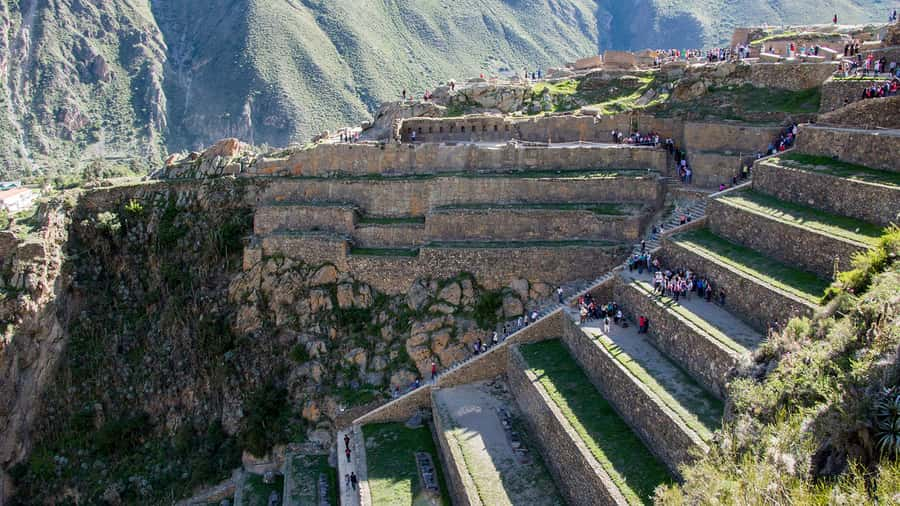
After lunch, you head to Ollantaytambo, and this stop has a built-in sense of importance. The tour highlights that Ollantaytambo is the only Inca town which was not overthrown by the conquistadores. Whether you focus on the politics or the architecture, the result is the same: it feels like a place with gravity.
Ollantaytambo’s ruins sit above the town, and you’ll explore those commanding structures that tower over everything below. The feeling here is different than Pisac. Pisac feels like a hillside settlement that uses the slope as its stage. Ollantaytambo feels like a fortified center watching over the valley.
Practical value of this stop: it is one of the clearest ways to understand the Inca approach to settlement. You can connect what you saw in Pisac, built structures on a hillside, with the idea of planning a whole community around defense, water, and food systems.
If you plan to continue onward toward Machu Picchu, Ollantaytambo is also a convenient place to end your day. The tour notes that you can finish in Cusco City or in Ollantaytambo, so you can connect more smoothly to the next leg.
Nearby in Cusco, these earned their own write-ups

Chinchero Market En Route: Crafts, Color, and Timing
On the way back in the late afternoon, you stop at the traditional market of Chinchero. This is the kind of add-on that works because it interrupts the day between big ruins with something human-scale. You’re not only seeing ancient structures now, you’re seeing the Andes as a living craft region.
Chinchero is known for its local trade, and the tour’s focus here is the market experience. You can expect a traditional setting where local culture shows up in how people sell, bargain, and display goods. Even if your main goal is ruins, this stop is useful because it gives you a last look at how textiles and crafts connect to regional identity.
If you’re shopping, this can be a good moment to compare what you saw in Pisac. You might notice differences in style, materials, and pricing, and it helps you avoid impulse buying earlier in the day.
The Andean Weaving Demonstration That Actually Adds Meaning
The most educational part is not a monument. It’s the weaver.
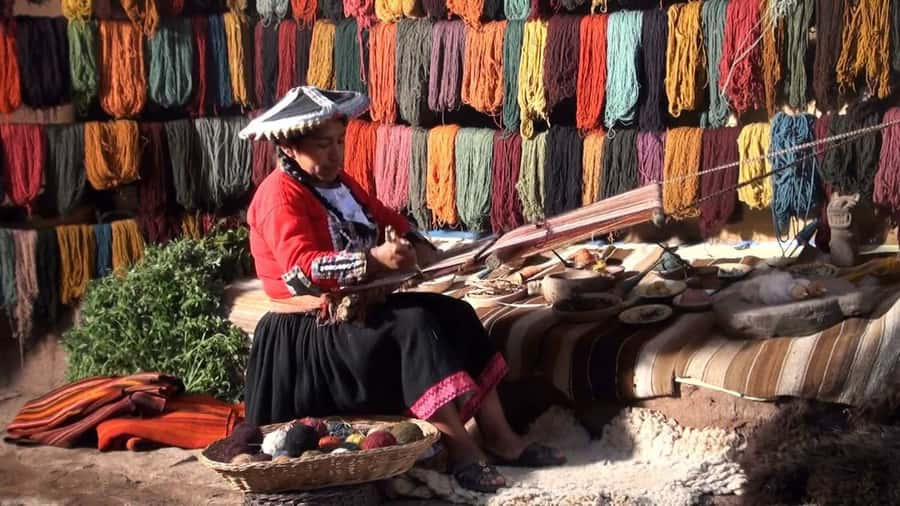
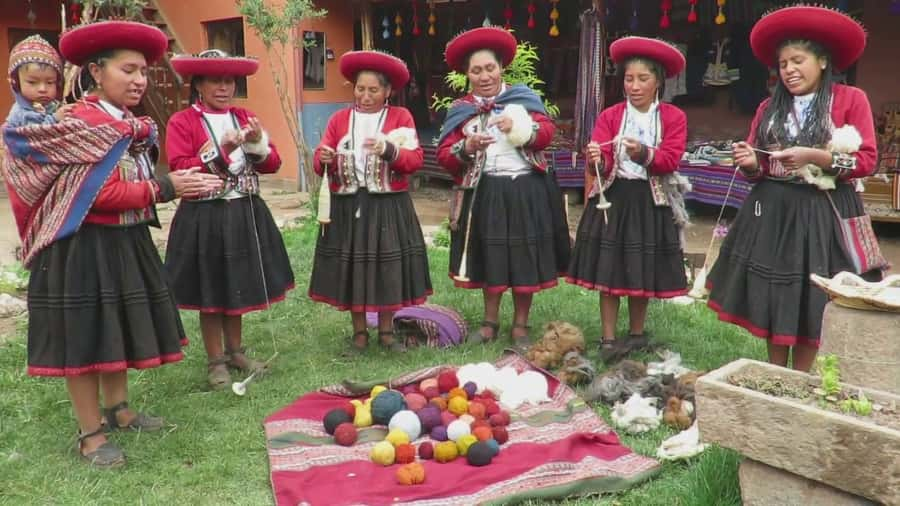
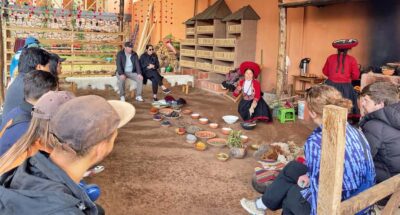
The tour includes a meeting with an expert Andean weaver who demonstrates techniques that date back to pre-Columbian times. This is the ingredient that turns the day from sightseeing into understanding. Weaving in the Andes is not just decoration. It is linked to knowledge transfer, identity, and how people used fiber, dyes, and patterns.
I like that the demo is part of the itinerary, not an optional add-on you have to hunt for on your own. It also helps you interpret what you saw at the markets. Once you understand the work behind the textiles, those blankets and ponchos in the stalls stop being random souvenirs and become a clue about labor, skill, and tradition.
Even if you know nothing about textiles, you’ll probably leave with a clearer picture of why alpaca wool products are so central to the region’s economy and culture.
Price and Logistics: Is $26 Worth It?
At around $26 per person for a full day, the value is mostly in the organization. You get pickup from downtown hotels only, transportation, and a professional guide, plus ticket line skipping. For many people, that is the real cost saver, because it prevents the day from falling apart due to finding transit, buying tickets, or guessing routes at altitude.
But here is the honest part. The tour notes that entrance fees are not included, and lunch is not included unless you choose the private option. That means your all-in cost will be higher than the headline price once you add what the sites charge and what you decide to eat. If you’re traveling on a tight budget, plan for it rather than being surprised later.
Also consider time and energy. This is a full-day format, so you should expect a lot of moving around. The tour is not described as suitable for people with mobility impairments. If you know you need frequent, easy stops or smooth surfaces, pick a gentler alternative.
The good news: the tour is designed as a loop with a late return, and it offers flexibility in where the day ends, either Cusco City or Ollantaytambo.
What Makes the Best Guides Matter Here
This tour lives or dies on the guide. The sites are beautiful, sure, but the explanations are what help you understand why these stones and terraces matter.
In feedback from real departures, guides such as Rosa and Giancarlo stood out for being friendly, engaging, and clear. One group appreciated the easy discussion of a limited group size around 10 people, which is a reminder that you will get more out of the day if you can ask questions and stay engaged.
So when you book, choose the option that best fits your style. If you want interaction and conversation, go for the small group or private style. If you just want to relax, the standard group format can still work well, especially with a guide who keeps the pace sensible.
Who This Sacred Valley Day Tour Is For
This works best if you want a one-day introduction to the Sacred Valley without needing to plan driving, ticket timing, or routes yourself. It is also ideal if you want both sides of Peru in one day: the ancient engineering at Pisac and Ollantaytambo, and the living culture you see in market squares and textiles.
You’ll likely enjoy this most if:
- You like ruins but also want context from daily life
- You are interested in crafts, especially Andean weaving
- You want a day that keeps moving but still includes meaningful stops
- You plan to continue toward Machu Picchu and might want to end in Ollantaytambo
If you are chasing a slow, unstructured day, this may feel scheduled. And if you have limited mobility, you may find the walking and terrain tough.
Should You Book This Tour?
Book it if you want a high-value, guided Sacred Valley day that includes both major ruins and local culture, plus a weaving demonstration that adds real meaning. The low price helps, especially because transportation, a guide, and pickup from downtown are handled for you.
Consider skipping or switching to a different format if you hate walking on uneven ground, or if you cannot budget for entrance fees and lunch. Also, keep in mind the operator can adjust the schedule for practical reasons related to conditions, so you should not treat the day like a perfectly fixed timetable.
If your priority is seeing Pisac and Ollantaytambo with a guide who keeps it understandable, this is one of the better ways to do it in a single day from Cusco.
FAQ
What is included in the Cusco to Sacred Valley full-day tour?
The tour includes pickup from downtown hotels only, transportation, and a professional live guide.
What is not included?
Entrance fees and lunch are not included. Lunch is included only if you select the private option.
How long is the tour and where do you start?
It is a full-day trip and starts from Cusco. Starting times can vary, so you’ll need to check availability for your preferred departure.
What markets does the tour visit?
You visit the Pisac main square market and the traditional market in Chinchero en route. The Pisac market runs on Sundays, Tuesdays, and Thursdays.
Do you get an Andean weaving demonstration?
Yes. You meet an expert Andean weaver who demonstrates techniques linked to pre-Columbian times.
What languages are available for the guide?
The live tour guide is offered in Spanish and English.
Is this tour suitable for everyone?
It is not suitable for people with mobility impairments. Pets are also not allowed.
More Tours in Cusco
- Cusco: Humantay Lake Tour with Breakfast and Buffet Lunch
★ 4.9 · 2,976 reviews - From Cusco: Moray, Maras Salt Mines & Chinchero Weavers Tour
★ 4.8 · 1,925 reviews - From Cusco: Full-Day Group Tour of Machu Picchu
★ 4.7 · 1,767 reviews - Cusco: Half-Day City Tour with Sacsayhuaman and Q’enco
★ 4.6 · 1,129 reviews - Machu Picchu: Full-Day Tour from Cusco with Optional Lunch
★ 4.6 · 927 reviews
More Tour Reviews in Cusco
- Cusco: Humantay Lake Tour with Breakfast and Buffet Lunch
★ 4.9 · 2,976 reviews - From Cusco: Moray, Maras Salt Mines & Chinchero Weavers Tour
★ 4.8 · 1,925 reviews - From Cusco: Full-Day Group Tour of Machu Picchu
★ 4.7 · 1,767 reviews - Machu Picchu Day Trip from Cusco
★ 4.5 · 1,644 reviews - Cusco: Half-Day City Tour with Sacsayhuaman and Q’enco
★ 4.6 · 1,129 reviews
Sacred Valley, Further Afield
- Cusco: Sacred Valley, Pisac, Ollantaytambo, Salt Mines Moray
★ 4.6 · 1,058 reviews - Sacred Valley: Chinchero, Moray, Ollantaytambo & Pisac+Lunch
★ 4.8 · 501 reviews - Sacred Valley: Maras & Moray by Quad Bike from Cusco
★ 4.6 · 418 reviews - From Cusco: 2-Day Trip to the Sacred Valley and Machu Picchu
★ 4.6 · 265 reviews - Full-Day Excursion to Sacred Valley, Pisac and Ollantaytambo from Cusco
★ 4.5 · 174 reviews
Freshly reviewed across Cusco
- Excursion Cusco – Puno – Titicaca Observatory Train★ 5.0 · 3 reviews
- Sacred Valley Vip Cusco★ 4.7 · 3 reviews
- Cusco | Humantay Lake 1-Day Tour with Breakfast and Lunch★ 5.0 · 3 reviews
- Full-Day Condor Viewpoint & Inca Sites Tour★ 5.0 · 3 reviews
- Best of Cusco: Private Walking Tour with a Local★ 3.6 · 3 reviews
- From Cusco: Full-Day Private Sacred Valley Tour★ 5.0 · 3 reviews
Sacred Valley Tours side by side.
 ★ 4.8From Cusco: Sacred Valley & Maras Salt Mines Tour with LunchFrom $282,227 reviews
 ★ 4.6Cusco: Sacred Valley, Pisac, Ollantaytambo, Salt Mines MorayFrom $281,058 reviews
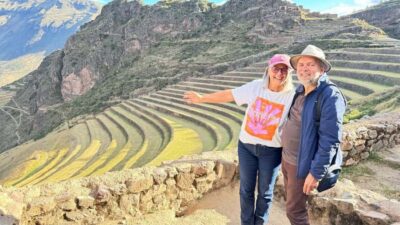 ★ 4.8Sacred Valley: Chinchero, Moray, Ollantaytambo & Pisac+LunchFrom $25501 reviews
 ★ 4.6Sacred Valley: Maras & Moray by Quad Bike from CuscoFrom $39418 reviews
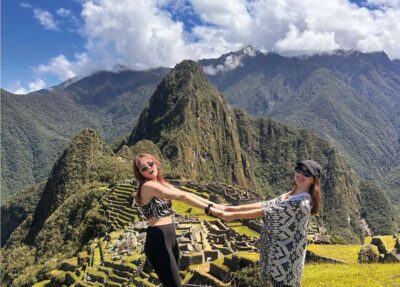 ★ 4.6From Cusco: 2-Day Trip to the Sacred Valley and Machu PicchuFrom $370265 reviews
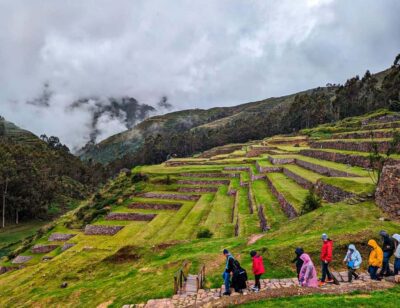 ★ 4.8Cusco:Sacred Valley Pisaq,Ollantaytambo,Chinchero with LunchFrom $28183 reviews
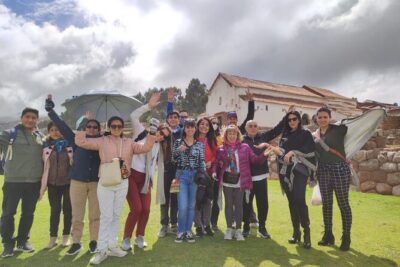 ★ 4.5Full-Day Excursion to Sacred Valley, Pisac and Ollantaytambo from CuscoFrom $47174 reviews
 ★ 5.0Food and Culture Full day Tour in the Sacred ValleyFrom $200144 reviews
Also on these Peru lists