
REVIEW · SACRED VALLEY
From Cusco: South Valley Villages and Archaeology Tour
Tipón plus a chapel in one half-day. This South Valley villages and archaeology tour is a tight circuit that pairs Tipón with the Sistine Chapel of Peru, all with an English-speaking guide and hotel pick-up.
I like that it is built for people who want more than one kind of site: Inca agriculture, Huari adobe ruins, and then church art that many visitors miss when they stay stuck on the main streets. A possible drawback to plan for is that lunch and entrance fees are not included, so you will want extra cash on hand.
In This Review
- Key points before you go
- Price and Logistics for a 5-Hour South Valley Loop
- Tipón: Inca Terrace Farming, Aqueducts, and Royal-Garden Lore
- Pikillacta: Huari Adobe Complex from 700 to 900 AD
- Andahuaylillas: The Sistine Chapel of Peru and Escuela Cuzqueña Paintings
- Saylla Food Stop: Local Flavors and What to Expect
- What Makes This Tour Work for Your Time in Cusco
- Who This Tour Fits Best
- Should You Book This Cusco South Valley Villages Tour?
- FAQ
- How long is the tour?
- What is included in the price?
- Is lunch included?
- Are entrance fees included?
- What are the main stops on the route?
- What can I learn at Tipón?
- What is Pikillacta and what era does it represent?
- What is special about Andahuaylillas on this tour?
- Will I get to try local food?
- Can I cancel and get a refund?
- Are pets allowed?
Key points before you go
- Multiple eras in one route: Inca terraces, Huari ruins, and colonial-era paintings
- Hotel pick-up and drop-off means less time navigating Cusco logistics
- English and Spanish guide helps you follow the story at each stop
- Tipón’s irrigation system is the kind of detail that makes the Inca feel real
- Saylla food options (like pork chicharrones or roasted guinea pig) keep the ending fun and local
- No lunch included so you control what you eat and how much you spend
More Sacred Valley itineraries on our list
- Cusco: Sacred Valley, Pisac, Ollantaytambo, Salt Mines Moray
★ 4.6 · 1,058 reviews - Sacred Valley: Chinchero, Moray, Ollantaytambo & Pisac+Lunch
★ 4.8 · 501 reviews - Sacred Valley: Maras & Moray by Quad Bike from Cusco
★ 4.6 · 418 reviews - From Cusco: 2-Day Trip to the Sacred Valley and Machu Picchu
★ 4.6 · 265 reviews
Price and Logistics for a 5-Hour South Valley Loop
This tour runs 5 hours in the Cusco Region at a price of $29 per person. For the amount of ground it covers, that is strong value, especially because transportation and a bilingual guide are included. You start with hotel pick-up in Cusco, then ride in shared transport to the Valle Sur.
What makes the logistics workable is that the day is built like a “greatest hits” route. You do not just stop at one archaeological site and call it a win. Instead, you layer Tipón’s engineering, Pikillacta’s earlier culture, and Andahuaylillas’ famous interior art.
The main thing to budget for is what the tour does not include. Lunch and entrance fees are separate, so I recommend carrying cash for both. Also note the activity is non-refundable, so only book if your plans are stable.
Tipón: Inca Terrace Farming, Aqueducts, and Royal-Garden Lore
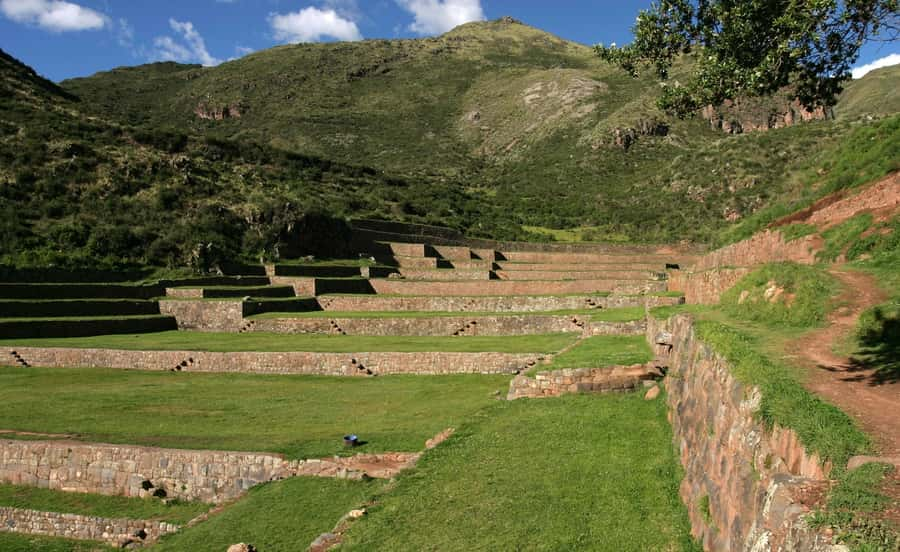
Tipón is the first big stop, and it is easy to see why it is often the anchor of South Valley days. You arrive at the archaeological site of Tipón, described as a royal garden commissioned by the Inca god Viracocha. Even if you do not track the mythology closely, the place explains itself through the visible systems the Incas built.
Here is what I would focus on during your time there:
- Agricultural terraces that show how the Incas shaped a steep environment for farming
- An aqueduct used to irrigate the terraces from the sacred Pachatusan mountain
- The baths and the temple complex, which help connect practical infrastructure to ceremonial life
The terrace-and-water story is the big payoff. Many ruins look like stone and walls. Tipón adds function, because you can visually connect the water route to the fields. That turns the Incas from abstract names in a textbook into people who solved real problems with engineering and planning.
A practical consideration: Tipón is an archaeology site, and you will be walking around uneven ground. Wear shoes you trust for a bit of climbing and shifting surfaces, and keep your pace steady. If you prefer slower sightseeing, you are better off staying focused on a few key areas rather than trying to absorb everything at once.
Pikillacta: Huari Adobe Complex from 700 to 900 AD
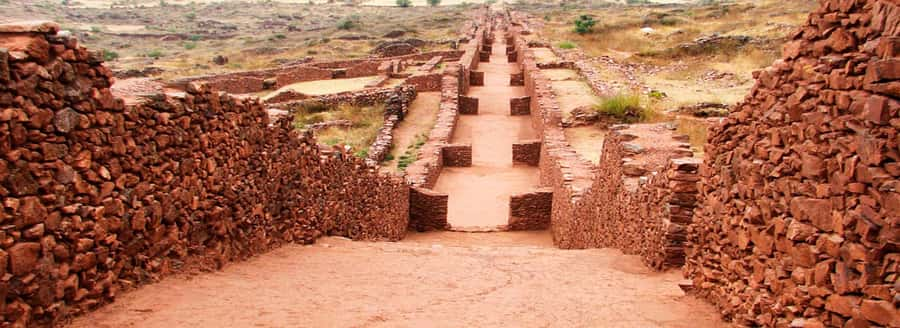
After Tipón, you head to Pikillacta, a pre-Inca site tied to the Huari people, active roughly between 700 and 900 AD. Pikillacta is known for its adobe complex, and the feel of the site is different from Tipón. Instead of the polished Inca waterworks vibe, you get something more grounded in how an earlier culture lived and built with earth.
This is the stop that helps you understand that the Andes were not one timeline. There were multiple cultures with their own priorities, building methods, and ways of using space. The Huari presence at Pikillacta adds depth, because it makes the later Inca achievements feel like part of a longer regional story rather than a sudden leap.
When you are there, pay attention to how the walls and structures create zones. Even without every label, you can often see the logic of the layout. That is what makes Pikillacta worth the detour. It is not just another “pretty ruin,” it is an early look at how communities organized built environments before the Inca took over much of the region.
Andahuaylillas: The Sistine Chapel of Peru and Escuela Cuzqueña Paintings
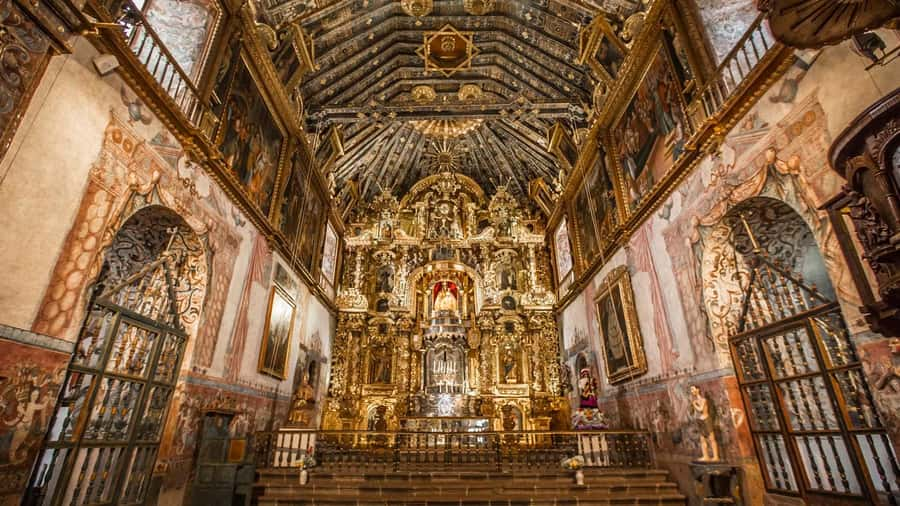
Next comes Andahuaylillas and its famed church interior often called the Sistine Chapel of Peru. This is the cultural pivot on the tour. After archaeological sites outdoors, you shift indoors to art that is meant to be seen close up.
The highlights here are the elaborate paintings, including work associated with the Escuela Cuzqueña. That term matters because it points to a local style and workshop tradition, not just imported European decoration. In other words, you are seeing a mix of influences expressed through local artistic practice.
Why this stop is valuable, especially on a half-day: it gives your brain a break from stone structures and water channels. You also get a strong “human scale” moment. Paintings like these reward slow looking, because details can be easy to miss when you are rushed.
If you care about religious art and colonial-era aesthetics, this is the part of the tour that can feel like the most memorable. The church interior is more about atmosphere and detail than about climbing and distance.
Saylla Food Stop: Local Flavors and What to Expect
You return to Cusco via Saylla, and this is where the tour shifts into everyday life. Depending on what is available that day, you may enjoy dishes such as pork chicharrones or roasted guinea pig. You also get a chance to interact with local communities as part of the experience.
This is not just about eating. Food stops on cultural tours work best when they help you notice how people live, what they cook, and how community life looks outside the most tourist-heavy areas. Saylla gives you that bridge from monuments back to meals.
One important planning note: lunch is not included in the tour price. That does not mean you will go hungry, but it does mean you should expect to spend extra if you want a full meal during or after the food portion. The tour’s included elements do not cover that cost, so decide what you want to budget before you go.
What Makes This Tour Work for Your Time in Cusco
The South Valley is popular because it offers a different view of the region than Cusco city itself. This tour fits well for short stays because it concentrates multiple highlights into 5 hours with a set route. You start with hotel pick-up and end with drop-off, so you avoid the scattershot approach where you lose time to sorting out transport.
Another strong point is the bilingual guide setup. The tour includes a guide who speaks both English and Spanish. That matters when you want context, because archaeology and church art both become more meaningful when someone explains what you are looking at. The calm structure also helps, since you are not bouncing around in a way that forces you to skim everything.
There is also a practical element I appreciate: the itinerary mixes outdoor monuments with an indoor art experience. That rhythm keeps the day from feeling like one long walk-and-look. It gives you different types of focus, engineering at Tipón, cultural context at Pikillacta, and close-up art viewing in Andahuaylillas.
Who This Tour Fits Best
This tour is a good match if you want a guided overview across different kinds of Andean sites in a short window. It is especially suited to people who like having context as they walk, rather than wandering alone with vague signs.
It also makes sense if you are curious about how cultures connect over time. You see the Inca irrigation and terraces, then earlier Huari adobe construction, then colonial-era art tied to regional training like the Escuela Cuzqueña style. That combination helps you build a clearer mental map of what you are seeing.
If you hate the idea of extra costs, be aware of the non-included items. Lunch and entrance fees can change your final total. And since the activity is non-refundable, book only if your schedule is firm.
Should You Book This Cusco South Valley Villages Tour?
I would book it if you want a structured, half-day hit of South Valley culture with a bilingual guide and hotel pick-up included. The mix of Tipón’s irrigation and terrace engineering, Pikillacta’s Huari adobe world, and Andahuaylillas’ Sistine Chapel-style church art is a smart way to get more for your time.
Skip or reconsider if you budget tightly and do not want to pay extra for lunch and entrance fees. Also consider whether shared transportation fits your comfort level, since this is not a private tour.
If you do book, arrive ready to spend a little for food and entry, wear good walking shoes, and plan to take your time with the paintings in Andahuaylillas. Those slower moments are where the day turns from a checklist into a real experience.
FAQ
How long is the tour?
The tour lasts 5 hours.
What is included in the price?
The tour includes hotel pick-up and drop-off, shared transportation, and a bilingual English and Spanish-speaking guide.
Is lunch included?
No. Lunch is not included.
Are entrance fees included?
No. Entrance fees are not included.
What are the main stops on the route?
You visit Tipón, then Pikillacta, and then the Sistine Chapel in Andahuaylillas, with the day ending via Saylla.
What can I learn at Tipón?
You’ll learn about Inca farming methods, including terrace agriculture and irrigation from an aqueduct linked to the sacred Pachatusan mountain, plus you can see structures like the baths and temple complex.
What is Pikillacta and what era does it represent?
Pikillacta is a pre-Inca site associated with the Huari people, built around 700 to 900 AD, known for its adobe complex.
What is special about Andahuaylillas on this tour?
Andahuaylillas is known for the Sistine Chapel of Peru, including elaborate paintings associated with the Escuela Cuzqueña.
Will I get to try local food?
You return via Saylla, where you can enjoy local options like pork chicharrones or roasted guinea pig, and the experience includes time connected to local communities.
Can I cancel and get a refund?
No. This activity is non-refundable.
Are pets allowed?
No. Pets are not allowed.
More Tours in Cusco
- Cusco: Humantay Lake Tour with Breakfast and Buffet Lunch
★ 4.9 · 2,976 reviews - From Cusco: Moray, Maras Salt Mines & Chinchero Weavers Tour
★ 4.8 · 1,925 reviews - From Cusco: Full-Day Group Tour of Machu Picchu
★ 4.7 · 1,767 reviews - Cusco: Half-Day City Tour with Sacsayhuaman and Q’enco
★ 4.6 · 1,129 reviews - Machu Picchu: Full-Day Tour from Cusco with Optional Lunch
★ 4.6 · 927 reviews
More Tour Reviews in Cusco
- Cusco: Humantay Lake Tour with Breakfast and Buffet Lunch
★ 4.9 · 2,976 reviews - From Cusco: Moray, Maras Salt Mines & Chinchero Weavers Tour
★ 4.8 · 1,925 reviews - From Cusco: Full-Day Group Tour of Machu Picchu
★ 4.7 · 1,767 reviews - Machu Picchu Day Trip from Cusco
★ 4.5 · 1,644 reviews - Cusco: Half-Day City Tour with Sacsayhuaman and Q’enco
★ 4.6 · 1,129 reviews
Sacred Valley, Further Afield
- Cusco: Sacred Valley, Pisac, Ollantaytambo, Salt Mines Moray
★ 4.6 · 1,058 reviews - Sacred Valley: Chinchero, Moray, Ollantaytambo & Pisac+Lunch
★ 4.8 · 501 reviews - Sacred Valley: Maras & Moray by Quad Bike from Cusco
★ 4.6 · 418 reviews - From Cusco: 2-Day Trip to the Sacred Valley and Machu Picchu
★ 4.6 · 265 reviews - Full-Day Excursion to Sacred Valley, Pisac and Ollantaytambo from Cusco
★ 4.5 · 174 reviews
Freshly reviewed across Cusco
- Excursion Cusco – Puno – Titicaca Observatory Train★ 5.0 · 3 reviews
- Sacred Valley Vip Cusco★ 4.7 · 3 reviews
- Cusco | Humantay Lake 1-Day Tour with Breakfast and Lunch★ 5.0 · 3 reviews
- Full-Day Condor Viewpoint & Inca Sites Tour★ 5.0 · 3 reviews
- Best of Cusco: Private Walking Tour with a Local★ 3.6 · 3 reviews
- From Cusco: Full-Day Private Sacred Valley Tour★ 5.0 · 3 reviews
Sacred Valley Tours side by side.
 ★ 4.8From Cusco: Sacred Valley & Maras Salt Mines Tour with LunchFrom $282,227 reviews
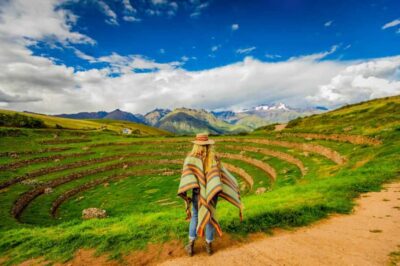 ★ 4.6Cusco: Sacred Valley, Pisac, Ollantaytambo, Salt Mines MorayFrom $281,058 reviews
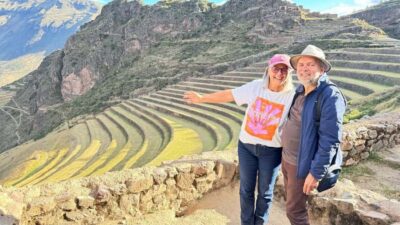 ★ 4.8Sacred Valley: Chinchero, Moray, Ollantaytambo & Pisac+LunchFrom $25501 reviews
 ★ 4.6Sacred Valley: Maras & Moray by Quad Bike from CuscoFrom $39418 reviews
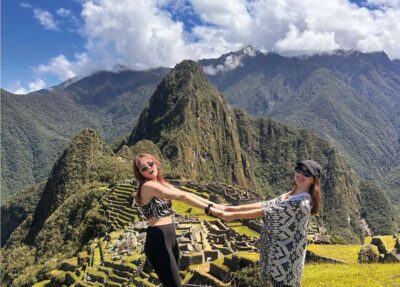 ★ 4.6From Cusco: 2-Day Trip to the Sacred Valley and Machu PicchuFrom $370265 reviews
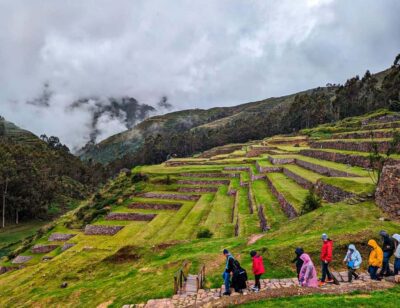 ★ 4.8Cusco:Sacred Valley Pisaq,Ollantaytambo,Chinchero with LunchFrom $28183 reviews
 ★ 4.5Full-Day Excursion to Sacred Valley, Pisac and Ollantaytambo from CuscoFrom $47174 reviews
 ★ 5.0Food and Culture Full day Tour in the Sacred ValleyFrom $200144 reviews
Also on these Peru lists