
REVIEW · PERU
Lima: Villa El Salvador Shanty Town Tour
A city tour with real voices. This Villa El Salvador tour sends you 16 miles south of Lima to see how one community grew from a 1971 settlement into a planned district, with panoramic views and a lot of neighbor-to-neighbor time.
I especially like two things: meeting people at homes and schools, and getting taught the bigger story behind the hills, not just a quick walk-through. One possible drawback is that you will climb and descend stairs, and it is not set up for wheelchair users.
The tour runs with a small group, so the guide can actually slow down and talk. I also appreciate the way guides explain the community system, plus the history, politics, and religion, with names you might hear like Maverick, Leonardo, and Nataly in past groups.
The only real caution: plan on physical effort. You must be able to climb and descend stairs, including access points like the yellow stairs on an urban project.
In This Review
- Key takeaways before you go
- Getting from central Lima to Villa El Salvador in one smooth plan
- The 1971 story you’ll actually understand on the ground
- Walking the neighborhood with a guide who encourages real interaction
- The yellow stairs, and why access projects change everything
- Panoramic photo time over Lima, Lurin Valley, and the Pacific
- Local market stop: the everyday side of life
- Community kitchen: where support happens every day
- School time: kindergarten on weekdays, street play on weekends
- How the van rides shape the whole experience
- Price and value: what $61 covers, and what it doesn’t
- Who this Lima neighborhood tour suits best
- Practical tips so your visit feels smooth
- Should you book this Villa El Salvador tour?
- FAQ
- What is the duration of the Lima: Villa El Salvador shanty town tour?
- Where does pickup happen?
- What is the group size?
- Are guides available in English and Spanish?
- Will I visit a kindergarten?
- Is food or drinks included?
- Do I need to climb stairs?
- What should I bring with me?
Key takeaways before you go
- Small group of up to 8 means more conversation, fewer rushed stops.
- Homes, schools, and daily life give you context beyond a photo-op.
- Yellow stairs and urban upgrades show how access and planning can change daily routines.
- Panoramic photo time includes Lima, the Valley of Lurin, and the Pacific Ocean.
- Market plus community kitchen connects what you see outdoors to real support inside the neighborhood.
- Kindergarten access depends on day: Monday to Friday only, weekends focus more on street play.
Shortlisting Lima? These reviews come up alongside this one most often.
- Lima: Ultimate Peruvian Food Tour
★ 4.9 · 700 reviews - Full Day Paracas Ica and Huacachina from Lima All Included
★ 4.5 · 623 reviews - Lima’s Vibrant Heritage: Exploring the City’s Landmarks Half-day
★ 4.5 · 581 reviews - From Lima: Day trip to Paracas, Ica and Oasis Huacachina
★ 4.6 · 409 reviews
Getting from central Lima to Villa El Salvador in one smooth plan
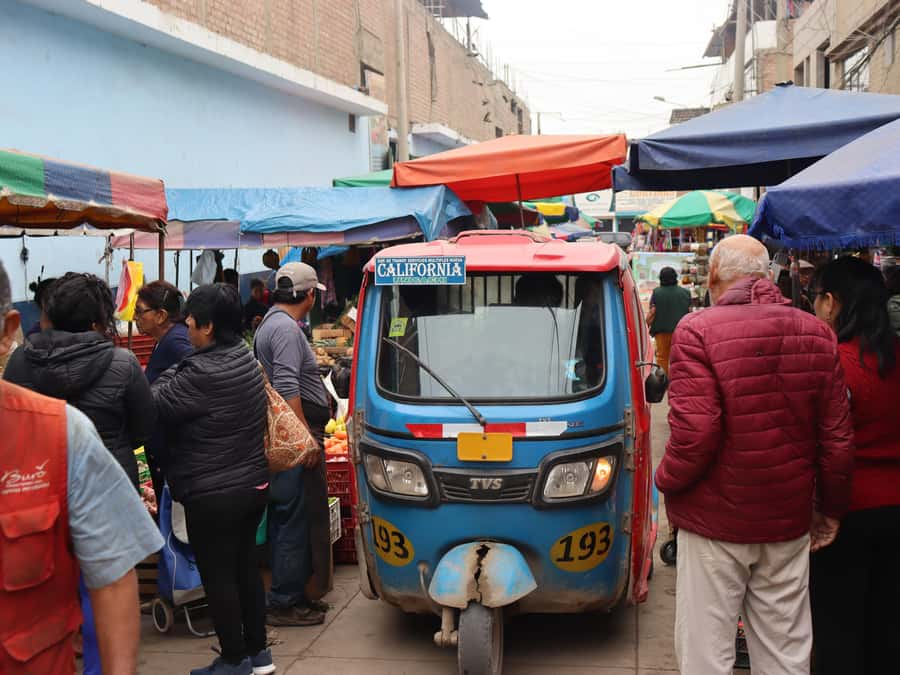
The day starts with hotel pickup in three central areas, Miraflores, Barranco, and San Isidro. Then you ride by van for about 45 minutes to reach Villa El Salvador. The total tour time is around 3.5 hours, so the schedule is built to balance travel time with enough walking and interaction.
This matters because Lima can be fast and chaotic, and getting to the south by yourself can eat up hours. Here, you get door-to-door logistics handled, including van time plus the return drop-off in those same districts.
You also get a simple rhythm: transit, community walk, and then back to Lima. That structure helps if you only have a short window in town and still want something meaningful, not another checklist tour.
The 1971 story you’ll actually understand on the ground
Once you reach the district, the walking part begins with a guided introduction and orientation. Villa El Salvador started as a human settlement in 1971, when many families arrived without basic services like water, drainage, and electricity. Over time, the community developed with an urbanization plan that helped inhabitants improve daily life and access.
I like that you do not just hear the slogan version of development. As you get closer to the bottom of the hill, the guide explains how the community system works, and how history, politics, and religion fit into daily decisions. It is the kind of context that turns a neighborhood into a living system, not an exhibit.
A useful way to think about this: many places in Lima grew from difficult starts. San Juan de Lurigancho and Villa Maria del Triunfo, for example, started as shanty towns and later became recognized districts. In Villa El Salvador, you’re seeing one path of change that is specific to this area, not a generic “Peru is developing” lecture.
Walking the neighborhood with a guide who encourages real interaction
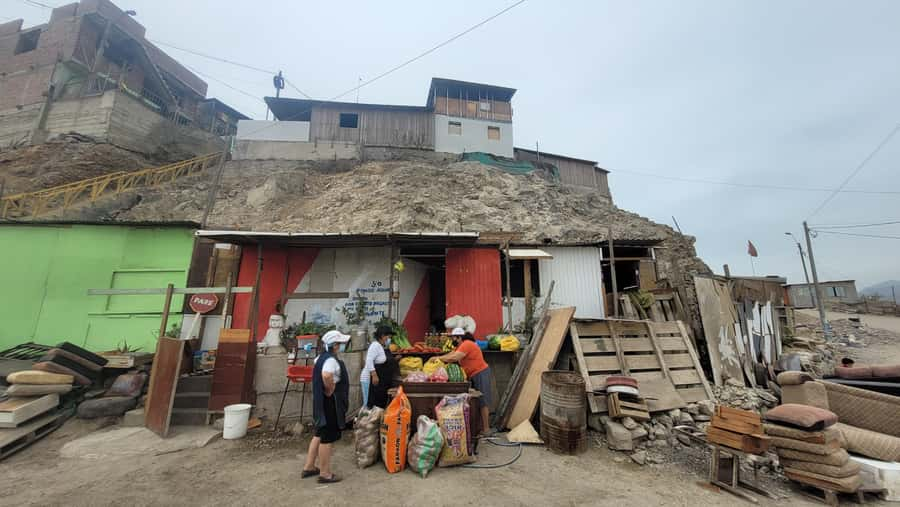
The heart of the tour is the way it shifts from “look at this” to “talk with people.” You explore with a leader and you have time to visit houses and meet neighbors. This is where the tour feels different from the standard shantytown format that can sometimes feel like a drive-by narration.
In earlier groups, guides such as Maverick and Leonardo were praised for being passionate about sharing how and why the community was built, and by who. That style matters. When a guide brings clear reasons, you notice details more. You start connecting urban planning decisions to real routines like pathways to homes, getting around school-age routes, and access to services.
You may also take pictures with residents in their traditional houses. If you do, keep it respectful and take cues from your guide. If someone seems cautious, you can always step back. This is a community you are visiting, not a stage set.
Because the group is limited to 8 participants, you’re not standing in a bottleneck while everyone tries to ask the same question. You get a better chance to say hello and listen.
The yellow stairs, and why access projects change everything
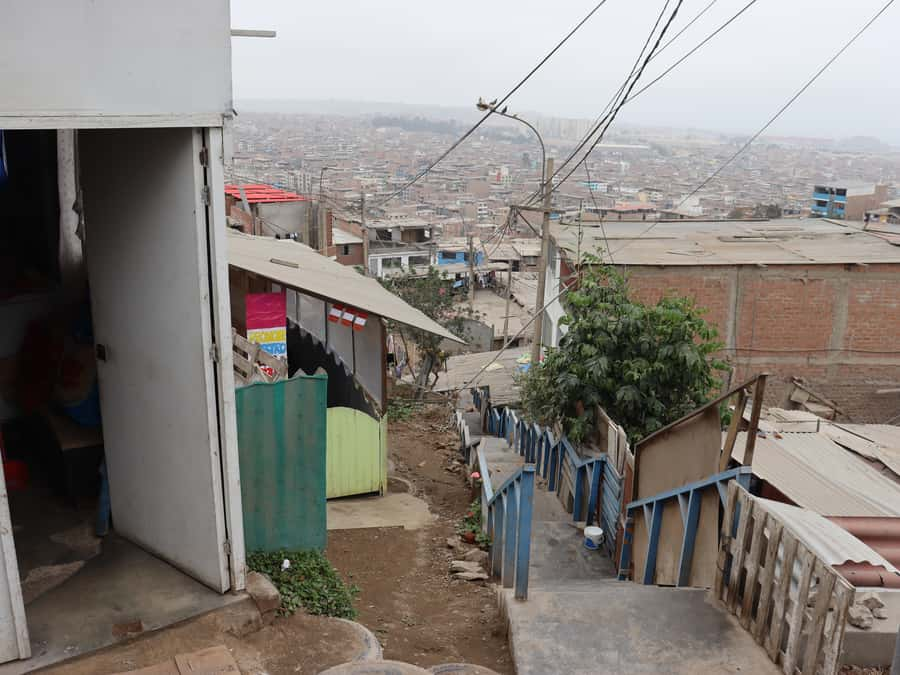
As the route moves along the lower part of the hill, you reach the yellow stairs. They are part of an urban project designed to improve access to homes. This is one of those “small detail, big impact” moments.
Here’s what you can learn from it: when a place improves its walkways, it improves the everyday. That includes routes for kids going to school, families moving between homes, and older residents navigating slopes. Even if you are just thinking as a visitor, you can feel how a designed path reduces friction, stress, and time.
You’ll also see how planning can reshape a view. The stairway is not only practical, it becomes a landmark inside the neighborhood, something residents recognize and use. Your guide can point out how these upgrades connect to the community’s larger growth, since the district has evolved over decades rather than overnight.



Panoramic photo time over Lima, Lurin Valley, and the Pacific
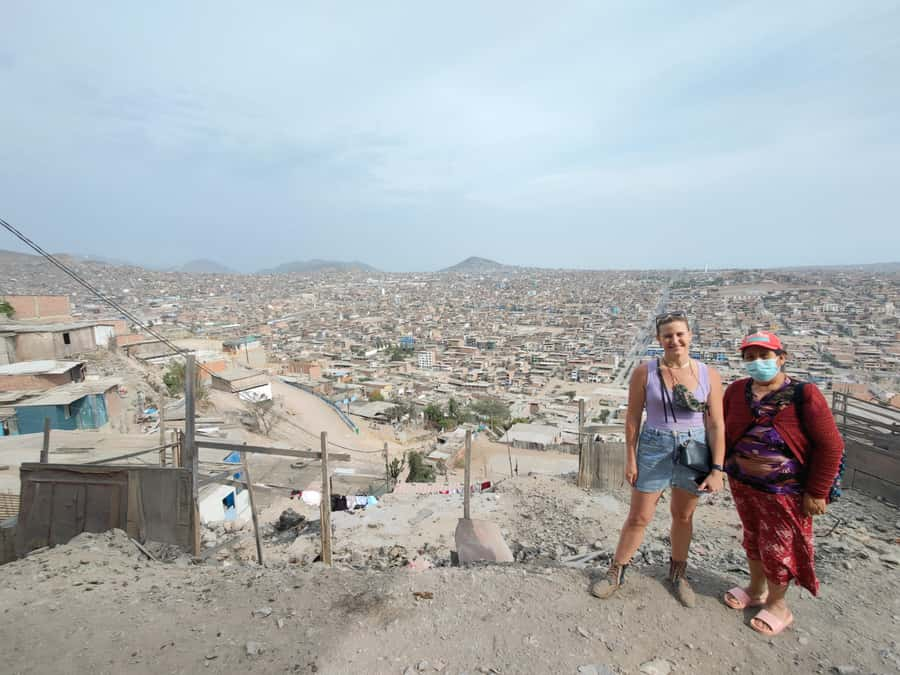
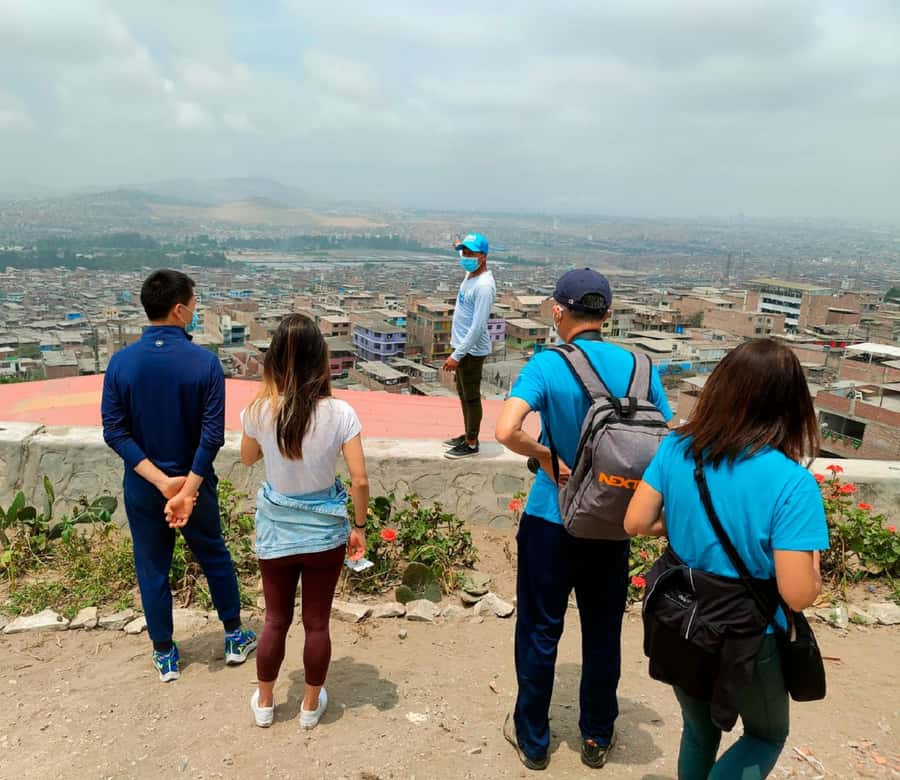
The tour includes time to take amazing panoramic pictures. As you look out, you can capture Lima from above, plus views toward the Valley of Lurin and the Pacific Ocean.
This is more than a pretty break. Views like this help you “place” what you’re seeing. Without them, you might struggle to understand how hill communities relate to the wider city. With the vista, you start to see the geography that shapes housing choices, routes, and the way neighborhoods expand along slopes.
If you want the best photos, bring sunglasses and sunscreen and put your hat to work. The day is only about 210 minutes total, so you will not spend all day chasing perfect light, but you will have time to frame shots.
Also, bring water. Even if the walking is not extreme for an able adult, Lima sun plus stairs adds up.
Local market stop: the everyday side of life
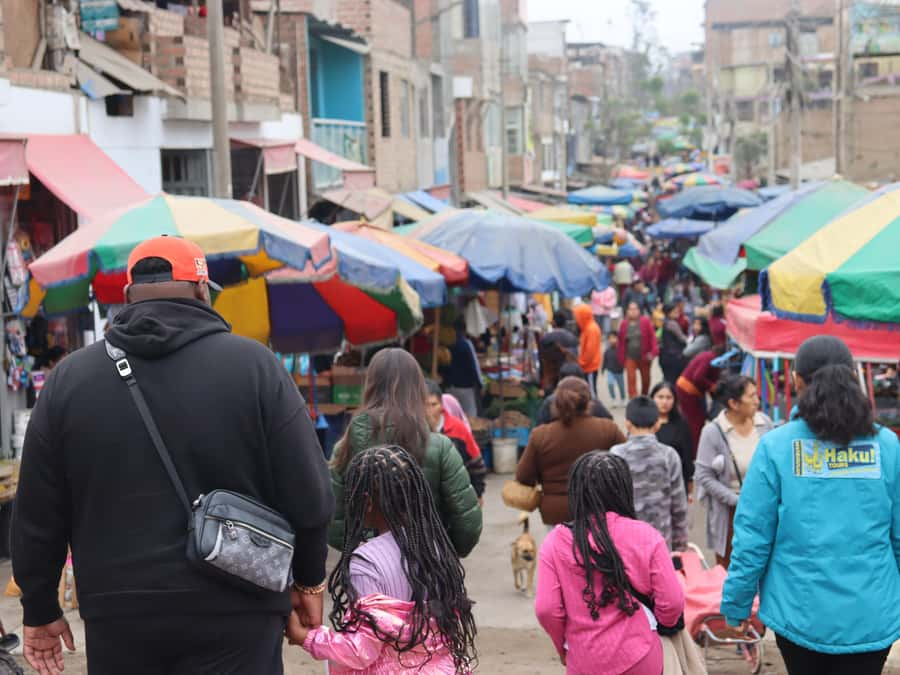
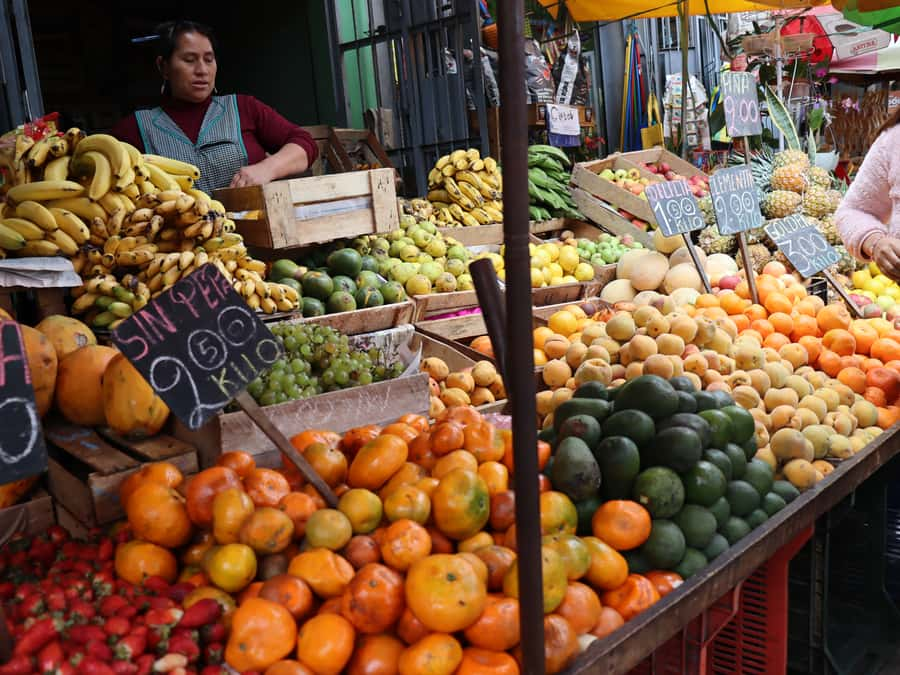
After the more interpretive parts of the walk, you visit a local market to see basic products. This stop grounds the tour in daily needs, not just big-picture development talk.
Markets in neighborhoods like this often reflect what’s easy to buy, what families rely on, and how the community organizes around routine. You do not need to overanalyze it, just pay attention to what is offered and how people move. It helps you see Villa El Salvador not as a “project,” but as a place with normal errands and local habits.
If you want to buy something, do it in a way that feels comfortable for you and only if your guide says it is okay. Since food and drinks are not included on the tour, you’ll be glad you planned ahead if you need a refresh later.
Community kitchen: where support happens every day
One of the most powerful stops is the community kitchen. You visit a place where people without resources get fed every day.
This is the kind of part that can feel heavy, but it is also practical to understand. A community can build infrastructure and still have urgent needs. The kitchen shows that support systems exist alongside development. In other words, urbanization is not just buildings and roads, it is also social safety and daily care.
If you are prone to feeling awkward in these settings, go slowly. Let your guide lead. Ask questions if you genuinely want to know, but keep your body language calm and respectful. This stop can shift how you interpret everything else you’ve seen, including the importance of schools, access routes, and community planning.
School time: kindergarten on weekdays, street play on weekends
Your tour includes a kindergarten visit on Monday to Friday only. If you go during the week, you’ll see how children are part of the neighborhood’s future through schooling.
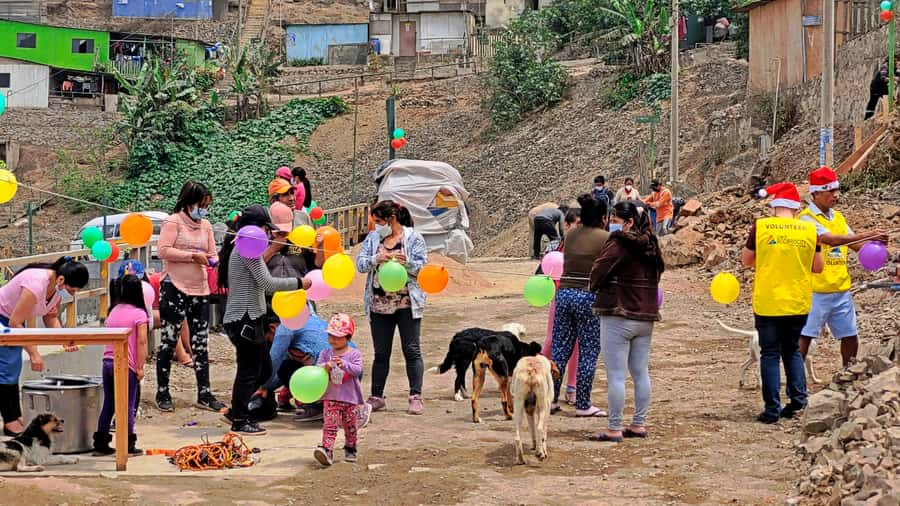
On weekends, the plan changes. Instead of the kindergarten stop, you get time to know some children while they are playing in the streets.
Either way, it’s a reminder that this community is not just about visitors walking through. Kids are living here every day, and the tour’s focus on schools and street life helps you connect development to real lives.
Because you’ll be around children, keep your pace easy and follow your guide closely. If you bring anything small like a child-friendly item, your guide would need to confirm what is appropriate, since the tour details you have do not mention giving items.
How the van rides shape the whole experience
There are two van rides, each about 45 minutes. That means the walking section needs to be effective, and the organizers keep you moving enough to cover key areas within about 70 minutes on foot.
This affects you in a good way if you prefer structure. It also means you might feel you have only a limited window to absorb everything. My advice: focus on the quality of what you learn rather than trying to memorize every street detail. Take a few photos where you can, but also keep room for conversation.
If you get travel-sore easily, ask your guide before you start how often you might stop. The plan is designed for a range of ages, but you still need comfort for stairs and uneven walking.
Price and value: what $61 covers, and what it doesn’t
At $61 per person for about 210 minutes, the value here is in three things: round-trip hotel transfer, a professional bilingual guide in English and Spanish, and a small group capped at 8 participants. You’re also getting access to multiple community spaces, including homes, schools, a market, and a community kitchen.
Food and drinks are not included, which is something you should plan for. Bring water, and consider having a simple snack before you start, or plan to eat once you’re back in central Lima. You do not want to be thinking about lunch while you’re trying to listen to a guide.
Also, transfers include tolls and parking lots. That’s not just convenience. It means you are not dealing with logistics on a day where you already have stairs and walking to focus on.
Bottom line: if you want a shanty town tour that prioritizes conversation and context over a speed-run photo route, this price can feel fair. If you only want views with zero interaction, it might feel like more than you need.
Who this Lima neighborhood tour suits best
This is a good fit if you like learning how places work and you want to meet locals in a respectful, guided setting. It’s also suited for people who can handle stairs, since that is required.
It’s particularly strong for:
- Small-group travelers who want conversation time
- Visitors interested in urban planning and community change since 1971
- Anyone who wants views over Lima, including the Valley of Lurin and the Pacific Ocean, with context attached
It is not a good fit for:
- Wheelchair users
- Anyone who cannot climb and descend stairs comfortably
Practical tips so your visit feels smooth
Before you go, pack like you’re doing a hillside walk in Lima sun:
- Sunglasses, sunscreen, hat
- Comfortable clothes, plus water
- Passport or a copy (a copy is accepted)
- Wear shoes that grip. Stairs plus uneven footwork is not the day to test new sandals
If you’re the kind of person who gets nervous about entering someone else’s space, calm yourself ahead of time. Your guide is there to translate not just language, but the correct pacing. You’ll likely have questions about community organization, politics, and religion. Write down what you want to ask, then listen for your opportunity.
Also, since the tour includes a kindergarten only Monday through Friday, double-check the day you’re booking if that part matters to you.
Should you book this Villa El Salvador tour?
I’d book it if you want a meaningful Lima experience that goes beyond a quick pass through a hillside neighborhood. The strongest part is how much time you get for interaction and context, plus the memorable payoff of panoramic views and the daily-life stops like the market and the community kitchen.
I wouldn’t book it if you need step-free access, or if you’re looking for a purely scenic outing. The day is built around walking and stairs, and the tour’s focus is community relationships, not just photography.
If you’re ready for a guided walk with real conversation and thoughtful context, this is one of the better ways to understand the other side of Lima.
FAQ
What is the duration of the Lima: Villa El Salvador shanty town tour?
The tour lasts about 210 minutes.
Where does pickup happen?
Pickup is included from centrally located hotels in Miraflores, Barranco, and San Isidro.
What is the group size?
It is a small group limited to 8 participants.
Are guides available in English and Spanish?
Yes. The tour includes a live guide in English and Spanish.
Will I visit a kindergarten?
Yes, you can visit a kindergarten from Monday to Friday only. On weekends, the focus is on children playing in the streets.
Is food or drinks included?
No. Food and drinks are not included, so plan to bring water and handle snacks or meals separately.
Do I need to climb stairs?
Yes. You must be able to climb and descend stairs, and the tour is not suitable for wheelchair users.
What should I bring with me?
Bring sunglasses, sunscreen, comfortable clothes, water, a hat, and your passport (a copy is accepted).
More Tours in Lima
- Lima: Ultimate Peruvian Food Tour
★ 4.9 · 700 reviews - Lima: Paracas and the Huacachina Oasis Guided Day Tour
★ 4.5 · 354 reviews - Lima: Pachacamac Ruins & Barranco Half-Day Guided Tour
★ 4.6 · 296 reviews - Pre Inca Temple of Pachacamac Half-Day Tour from Lima
★ 4.5 · 283 reviews - Lima: Magic Water Circuit Light Show Tour with Pickup
★ 4.9 · 251 reviews
More Tour Reviews in Lima
- Lima: Ultimate Peruvian Food Tour
★ 4.9 · 700 reviews - Full Day Paracas Ica and Huacachina from Lima All Included
★ 4.5 · 623 reviews - Lima’s Vibrant Heritage: Exploring the City’s Landmarks Half-day
★ 4.5 · 581 reviews - From Lima: Day trip to Paracas, Ica and Oasis Huacachina
★ 4.6 · 409 reviews - Private transfers from Lima Airport or to Lima Airport
★ 4.0 · 359 reviews
Freshly reviewed across Lima
- LIMA: HALF-DAY SANDBOARDING TOUR★ 4.5 · 3 reviews
- Lima: Escapada de 2 Días a la Reserva Nor Yauyos-Cochas★ 3.1 · 3 reviews
- Private Tour Casa Aliaga,San Francisco Convent, Larco Museum★ 4.8 · 3 reviews
- From Lima : 360° Panoramic Bus★ 4.0 · 3 reviews
- Lima: Market Tour and Cooking Class with Pisco Sour★ 5.0 · 3 reviews
- Lima: Market Tour, 35 Fruits Tasting & Cooking Class★ 5.0 · 3 reviews