
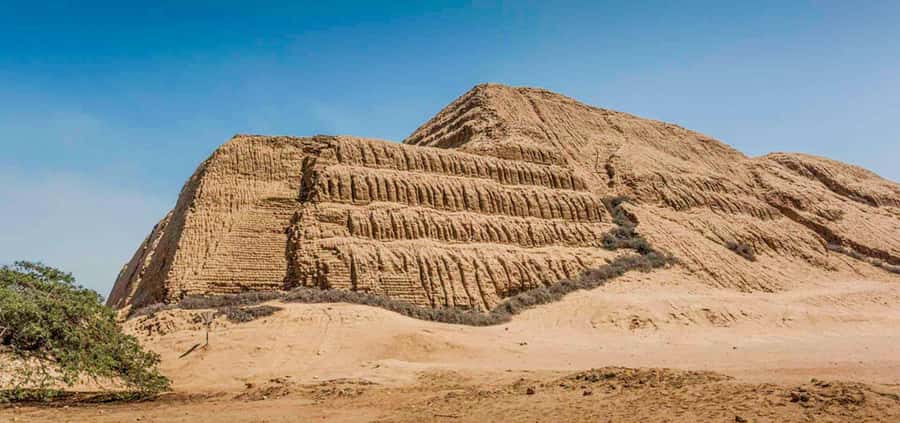
REVIEW · CHAN CHAN
Pyramids of the Sun and the Moon, Huanchaco and Chan Chan
Chan Chan and Huanchaco in one day. It’s a solid 8-hour route through Moche and Chimú sites, plus a real slice of coastal Peru. I especially like how the day links ancient religious places to everyday life in Huanchaco, with time built in to reset before the big finale at Chan Chan. You’ll see why this region matters for understanding pre-Inca Peru, not just ticking off “some ruins.”
Two things I truly like: the guided pacing that makes the sites easier to read, and the way the Chimú and Moche art shows up directly in what you’re standing in front of. A handy bonus is that the guide experience can include strong help with photos, with some guides like David and Juan called out for explanations and even acting as a personal photographer. One possible drawback is that the schedule is tight, so you need to be ready for set time windows, especially around the lunch and the Huanchaco stop.
In This Review
- Key Highlights You’ll Care About
- Why This Trujillo Route Feels Worth Your Time
- Meeting Point, Timing, and the “8 Hours Means 8 Hours” Reality
- Pyramids of the Sun and the Moon: Moche Shrines You Can Actually Follow
- What to look for
- A small practical note
- Huaca del Arco Iris (Huaca del Dragon): Chimú Beliefs in Adobe Murals
- Why this stop is a highlight
- The drawback to expect
- Huanchaco Fishing Break: Caballitos de Totora and Real Coastal Time
- How to use your lunch break well
- Chan Chan: The Biggest Adobe City in the Americas
- Why Chan Chan hits differently
- What to focus on during your walk
- Practical reality
- Price and Value: Is $55 a Good Deal?
- The Guide and Transport Experience: What Makes the Day Feel Easy
- What to Bring, Dress for, and Keep Ready
- Who Should Skip This Tour (and Who Will Enjoy It)
- Should You Book This Tour?
- FAQ
- How long is the tour?
- Where do we meet, and is hotel pickup included?
- What’s included in the price?
- What language is the guide available in?
- Is lunch included?
- Are entrance fees included?
- What should I bring with me?
- Is the tour suitable for wheelchair users?
- Can I pay later, and can I cancel for a refund?
Key Highlights You’ll Care About
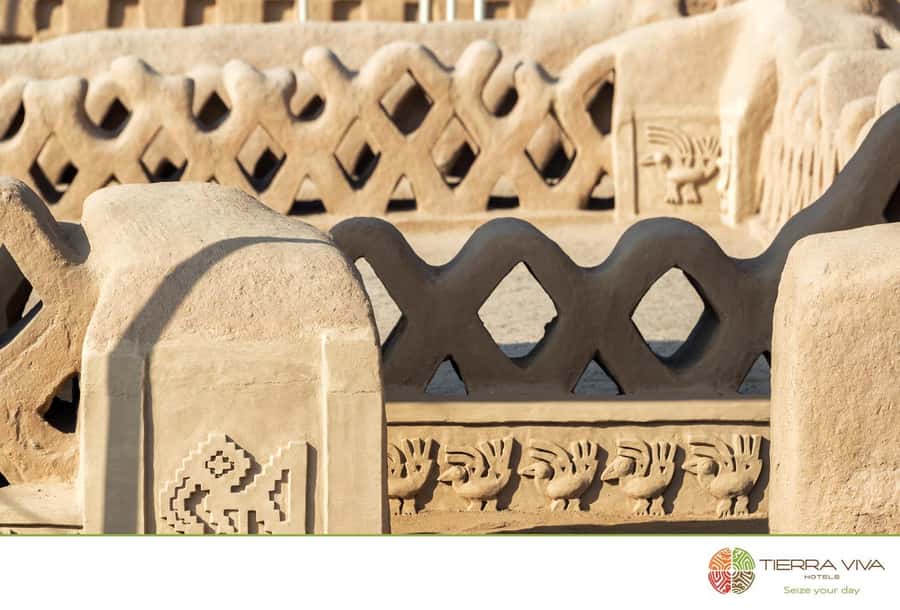
- Pyramids of the Sun and the Moon with a focus on Moche shrines and how people in the Trujillo valley lived and believed.
- Huaca del Arco Iris (Huaca del Dragon), where Chimú beliefs come through in stelae and adobe murals.
- Huanchaco’s Caballitos de Totora, plus free time to eat and wander the fishing vibe.
- Chan Chan, the largest adobe city in the Americas, with specific areas to look for like Nik An and ceremonial squares.
- Photo-friendly guidance, including clear communication and support that can help you frame shots.
Why This Trujillo Route Feels Worth Your Time
Trujillo is one of Peru’s quieter history hubs. You’re not chasing crowds the way you might elsewhere, and that makes the ruins feel more readable.
This day tour is built for people who want variety without flying around. You get desert-era shrines first, then Chimú adobe artistry, then a coastal town, then the region’s biggest adobe statement at Chan Chan.
Meeting Point, Timing, and the “8 Hours Means 8 Hours” Reality
You meet at the main square of Trujillo at the agreed time. Hotel pickup is included, and you’ll move by minibus or coach.
The day runs about 8 hours, with an estimated return to the main square at 18:00. That timing matters because it explains the pace: you’ll get guided attention at key sites, plus limited free time for Huanchaco.
If you prefer slow sightseeing, plan mentally for a structured day. You’ll be moving. You’ll be looking. And you’ll have just enough room to enjoy the coastal break.
Pyramids of the Sun and the Moon: Moche Shrines You Can Actually Follow
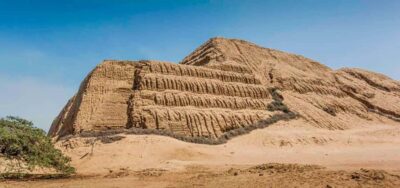
The day starts at the Pyramids of the Sun and the Moon area. Even if you’ve seen “pyramid” ruins before, these are different because the focus here is on what the place meant to the Moche society in the Trujillo valley.
As you explore, you’ll learn about Moche shrines and the kind of religious life tied to this landscape. That’s the value of having a Spanish-speaking guide who can also explain in English. It helps you connect the physical structures to the social world that built and used them.
What to look for
You’ll want to pay attention to how the site is interpreted as a shrine complex, not just massive stone and sun-worn walls. When the guide ties certain parts to practices of that era, the ruins stop looking like random platforms and start looking like a functioning religious space.
A small practical note
This first stop sets the tone. If you’re cold in the morning, bring your jacket early. If you’re planning photos, start with the light you get at the beginning rather than waiting until later in the day.
Huaca del Arco Iris (Huaca del Dragon): Chimú Beliefs in Adobe Murals
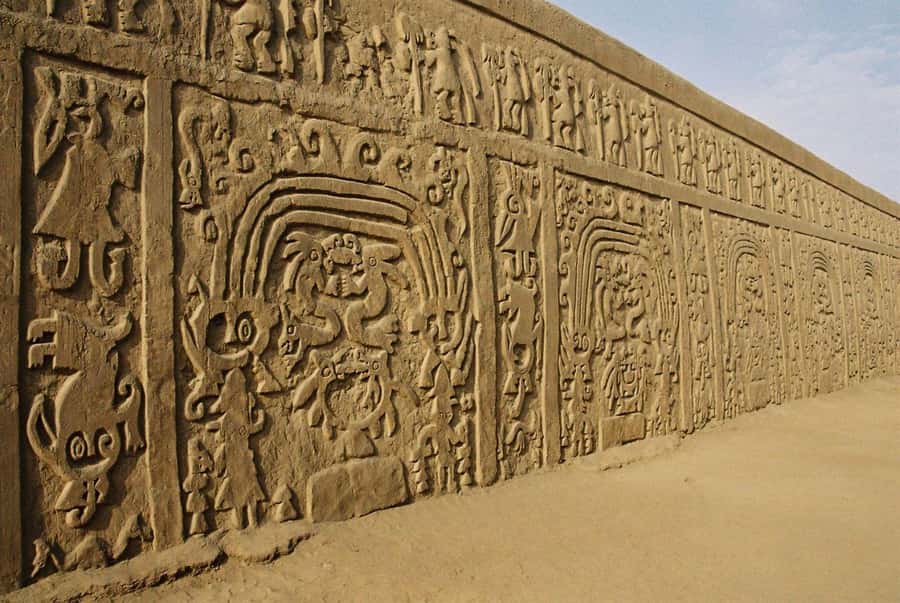
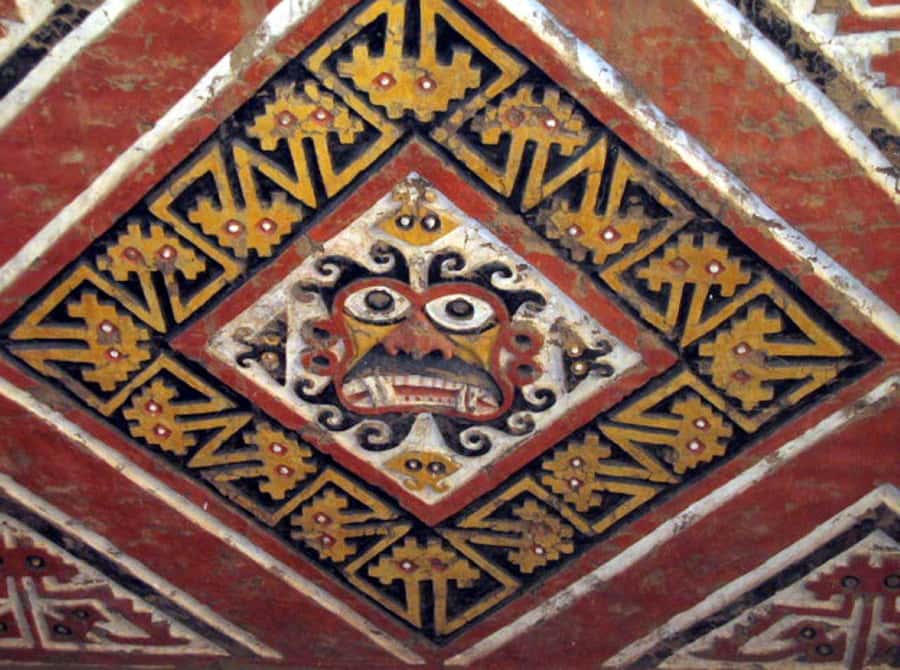
Next comes Huaca del Arco Iris, also called Huaca del Dragon. This is where the Chimú culture becomes feelable in a different way.
Instead of only talking about big civilizations, you’re focusing on beliefs and traditions expressed through stelae and murals carved in adobe. Standing close to those surfaces changes how you perceive them. You’re not just hearing history, you’re seeing how people built meaning into everyday sacred architecture.
Why this stop is a highlight
Chimú art and symbolism can feel distant if you don’t have context. Here, the guide’s job is to translate the story in front of you. The stelae and adobe murals are the “text,” and you’re learning how to read that text.
The drawback to expect
This is another guided moment, so you’ll likely spend more time listening than roaming. If you’re the type who wants long independent wandering, you may find yourself wishing for more open time at Huaca del Arco Iris.
Huanchaco Fishing Break: Caballitos de Totora and Real Coastal Time
Then you head to Huanchaco, a charming fishing village known for its emblematic Caballitos de Totora. You’ll have free time for lunch, which is a real blessing in a day this full.
This is not just a decorative seaside stop. It’s part of the reason the whole tour works. You move from shrine complexes and adobe citadels into coastal life that still looks tied to the region’s rhythms.
How to use your lunch break well
Because the day is structured, your Huanchaco time can feel like a window rather than an entire afternoon. I’d treat it like this: grab lunch efficiently, then take a short walk to enjoy the fishing atmosphere and the classic totora setups.
If you love photos, this is a good moment to reset your camera settings. Change batteries if needed. Get the shots where the light is easiest. Then you’ll arrive at Chan Chan ready to focus.
Chan Chan: The Biggest Adobe City in the Americas
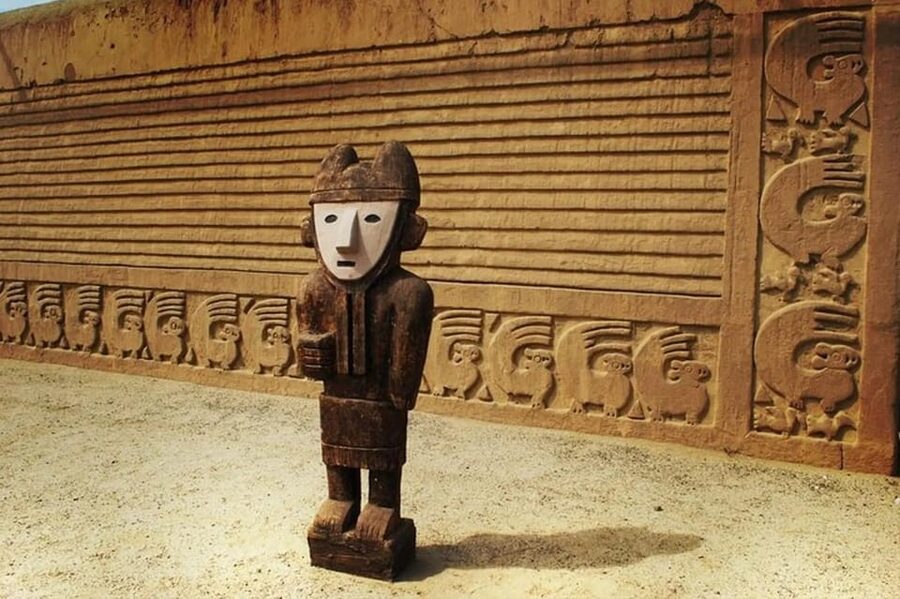
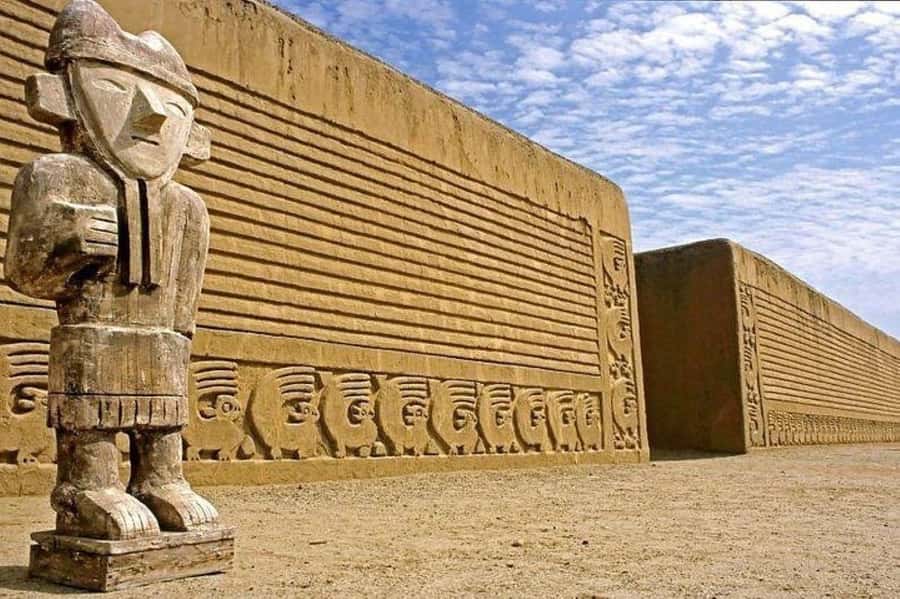
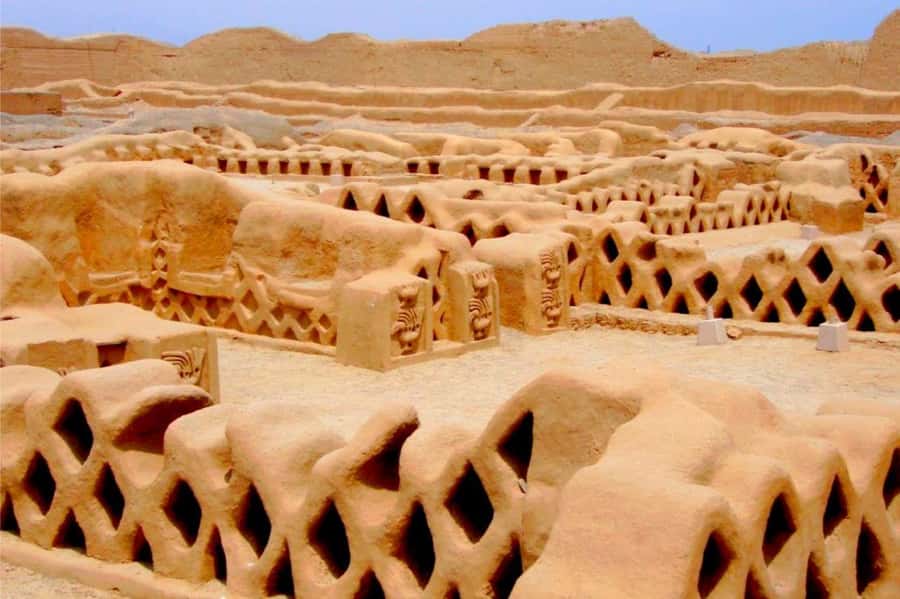
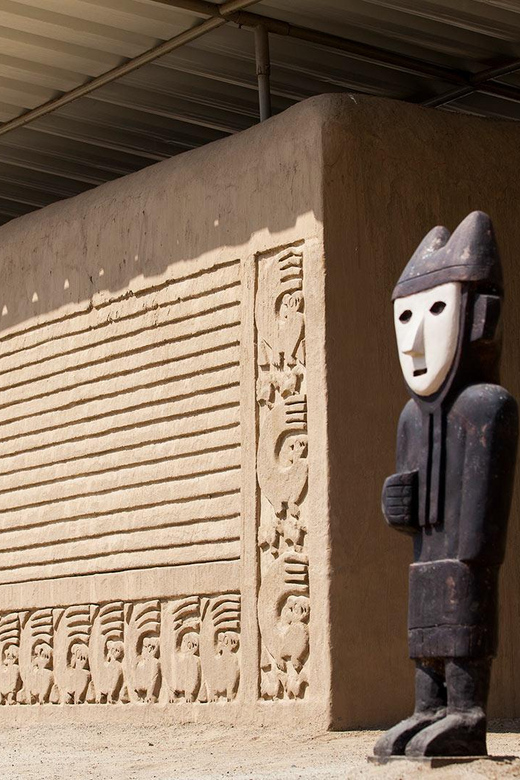
Chan Chan is the main event. It’s the largest adobe city in the Americas, and it’s a World Heritage Site, built by the Chimú.
This part of the tour is where the day turns from “many stops” into “one unforgettable place.” You’ll explore the walls of Nik An, ceremonial squares, granaries, and ancient cemeteries.
Why Chan Chan hits differently
Adobe architecture has a different texture than stone ruins. It looks softer at a distance but more complex up close. When you move through different zones like ceremonial squares and storage areas, the place starts to feel like a system, not just a big set of walls.
The guide helping you connect each area to Chimú life is what makes the experience click. You’re not just walking around. You’re learning what each section likely did.
What to focus on during your walk
- Nik An walls, because they set the tone for how the site is organized.
- Ceremonial squares, because they show the public ritual space.
- Granaries, because they remind you that a city also depends on food and planning.
- Ancient cemeteries, because they shift your mindset back to belief and remembrance.
Practical reality
Chan Chan takes mental energy. So do this: keep your questions for the guide and don’t try to memorize everything at once. Let the site be big. Then take the pieces the guide gives you and hold onto just a few.
Price and Value: Is $55 a Good Deal?
The price is $55 per person for an 8-hour day. What you get included is not just sightseeing, you get transport by minibus or coach, a Spanish speaking guide, and pickup at your hotel.
Entrance fees are not included, and meals are only covered by free time for lunch, not by an included meal. So the real cost is “tour price plus site entries plus what you eat.”
For value, I like that you’re covering multiple major stops in one run. If you tried to do this on your own, you’d spend time coordinating transport, and you’d lose the context that helps you understand Chimú and Moche places.
If you’re budget-minded, bring cash in advance. That way, you can handle entrances quickly and keep the day moving.
The Guide and Transport Experience: What Makes the Day Feel Easy
Transport is handled for you. That removes one of the biggest stressors in historic day trips: finding reliable rides and timing.
The guide is the real engine of the experience. Some guides have been highlighted for taking time with explanations, and a couple of names come up, including David and Juan. One reason that matters is simple. When you’re touring places like Chimú adobe murals and Chan Chan’s mapped zones, you want interpretation, not just instructions to look at walls.
Also, if you’re the kind of person who struggles getting good photos at ruins, it helps when the guide is willing to help you frame shots. That’s not guaranteed for everyone, but it’s a known strength of some guiding styles on this route.
What to Bring, Dress for, and Keep Ready
You’ll want a practical packing list because you’re moving between sites and you’ll be outdoors part of the day.
Bring:
- Passport or ID card
- Camera
- Jacket
- Cash
- Personal medication
- Pen
I’d also plan to keep your camera accessible during transitions. The best shots often happen right before you think you’re done with a stop.
If you take medication, bring it in your day bag, not in a checked location. You’ll appreciate having it instantly when needed.
Who Should Skip This Tour (and Who Will Enjoy It)
This isn’t the right choice for everyone.
It’s not suitable for pregnant women, people with back problems, people with heart problems, or wheelchair users. That means the physical pacing and walking on uneven historic ground is part of the deal.
This tour is ideal if you:
- want a structured day with big highlights
- enjoy guided interpretation of archaeological sites
- like mixing ancient ruins with a real coastal break
- don’t mind a packed schedule in exchange for seeing more in one day
Should You Book This Tour?
I’d book it if you want a high-impact day around Trujillo. Chan Chan and Huaca del Arco Iris are the kind of places where context matters, and the included guide helps you read what you’re seeing instead of just photographing walls.
I’d think twice if you hate tight schedules or need long independent time at each stop. The itinerary is designed to hit multiple major sites in one push, so you’ll likely want to come to terms with “enough time” rather than “hours to wander.”
If you’re happy with that trade, this is a strong value way to understand Peru’s Moche and Chimú worlds, then cool off in Huanchaco before the biggest adobe city in the Americas becomes your final impression.
FAQ
How long is the tour?
The duration is 8 hours.
Where do we meet, and is hotel pickup included?
You meet at the main square of Trujillo at the agreed time. Pickup at your hotel is included.
What’s included in the price?
Transport by minibus or coach, a Spanish speaking guide, and hotel pickup are included. Entrance fees and meals are not included.
What language is the guide available in?
The live tour guide is available in Spanish and English.
Is lunch included?
Meals are not specifically included. You’ll have free time to enjoy lunch in Huanchaco.
Are entrance fees included?
No. Entrance fees to all places visited are not included.
What should I bring with me?
Bring your passport or ID card, camera, jacket, cash, personal medication, and a pen.
Is the tour suitable for wheelchair users?
No, it is not suitable for wheelchair users.
Can I pay later, and can I cancel for a refund?
Yes, you can reserve now and pay later. Free cancellation is available up to 24 hours in advance for a full refund.
Chan Chan and Northern Ruins side by side.
 ★ 4.5Lima Bike Tour Miraflores – Barranco + Huaca Pucllana!From $30137 reviews
 ★ 4.5Full Day Tour Huacas, Chan Chan & Huanchaco – TrujilloFrom $2764 reviews
 ★ 4.9Lima: Huaca Ruins and Larco Museum at Night with DinnerFrom $10035 reviews
 ★ 4.8Lima city tour: Larco Museum and Huaca PucllanaFrom $6533 reviews
 ★ 4.8Chachapoyas | Kuelap Fortress Full-Day TourFrom $5912 reviews
 ★ 4.3Tour Huaca Pucllana: Pyramids and Pre-Columbian AntiquityFrom $6612 reviews
 ★ 4.1Pyramids of the Sun and the Moon, Huanchaco and Chan ChanFrom $659 reviews
 ★ 5.0Trujillo Shore Excursion from Salaverry PortFrom $959 reviews
Also on these Peru lists