
REVIEW · CITY
City Tour Cusco
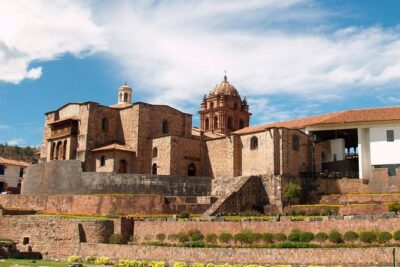
Cusco is built like a living textbook. This half-day tour connects the Inca world to the Spanish-era look of the city, then takes you to stone sites where you can see how power and belief shaped everyday life. I especially love how the guide ties together Inca culture and the Inca and Spanish architecture you notice around Cusco.
My second favorite part is the focus on Cusco art styles, so you learn what to look for instead of just passing monuments. The one real consideration: this tour is not suitable for people with mobility impairments, since these are outdoor historic sites with uneven ground.
In This Review
- Key highlights worth your time
- Why This 5-Hour Cusco Tour Feels Like a Best-First Stop
- Pickup, ride time, and why the drive matters
- Sacsayhuamán: the ceremonial fortress and the “three levels” lesson
- Q’enqo: the Puma temple and the altar in the shrine story
- Tambomachay: spring water sources, terraces, and Andean cosmovision
- Puca Pucará: the watchtower stop that helps you read the valley
- Price and what you really get for $15
- What to bring, what to skip, and who should go
- How the bilingual guide turns stones into meaning
- Should you book City Tour Cusco?
- FAQ
- How long is the City Tour Cusco?
- What does it cost?
- Where does pickup happen, and where do we finish?
- What is included in the price?
- Are entrance tickets included?
- What languages is the live guide?
- Can I cancel for a full refund?
- What should I bring, and is it suitable for everyone?
Key highlights worth your time
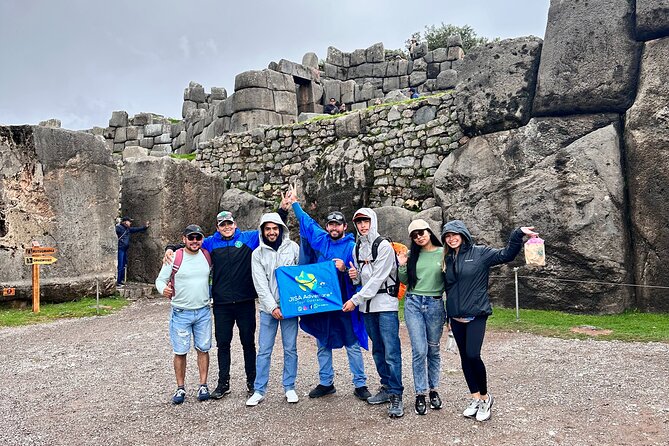
- Sacsayhuamán’s three levels, including the bases of the great Inca towers in their upper area
- Q’enqo’s Puma temple, where an altar linked to sacrifice is part of the story
- Tambomachay’s spring water sources, still tied to irrigation and terraces
- Puca Pucará’s strategic watchtower, giving you a view of the valley and the imperial city
- Professional bilingual guide (English or Spanish) who explains what most people miss
- Hotel pickup and city-center finish, making it easy to fit into a first visit
Nearby in Cusco, these earned their own write-ups
- Cusco: Half-Day City Tour with Sacsayhuaman and Q’enco
★ 4.6 · 1,129 reviews - City Tour Cusco Qoricancha Sacsayhuaman y Tambomachay
★ 4.7 · 617 reviews - Open Bus Cusco City Tour
★ 4.5 · 219 reviews - Cusco: City Tour | Half-Day Tour to 4 Archaeological Sites
★ 4.6 · 206 reviews
Why This 5-Hour Cusco Tour Feels Like a Best-First Stop
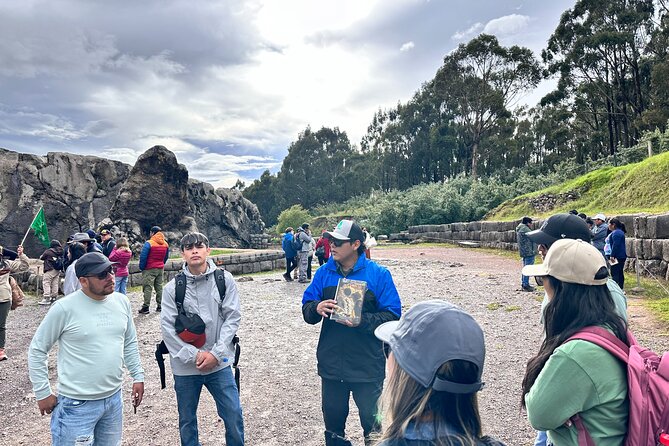
For $15 per person, this is a practical way to get meaning out of Cusco fast. You are not stuck staring at random ruins. You get a guided loop that links sights together, so they start to make sense as one story.
I like the timing most. Five hours is enough to hit four major Inca sites around Cusco without eating your whole day. If this is your first time in town, you’ll come away with a set of mental reference points that make later exploring easier.
You do have to move through multiple sites and viewpoints, so it is not the slow, lazy kind of tour. But if you want an efficient introduction to Inca ceremonial places, this length is a sweet spot.
Pickup, ride time, and why the drive matters
The tour includes tourist transportation and hotel pickup, with a collection schedule shared with you. You can also coordinate from a neutral point and match the pickup times with your plan, which is handy when you are staying a bit outside the tight center.
Your day starts in Cusco and includes scenic views on the way between stops. That matters more than it sounds. Cusco sits in a landscape of steep valleys and high ridges, and even the ride helps you understand why these locations were chosen. When you later stand near stone walls and terraces, the surroundings stop feeling random.
The tour ends back at Cusco Main Square. That is a big plus for planning dinner and an easy walk back to your hotel. It also means you can keep the rest of your day flexible instead of finding a new transportation problem at the end.
Sacsayhuamán: the ceremonial fortress and the “three levels” lesson
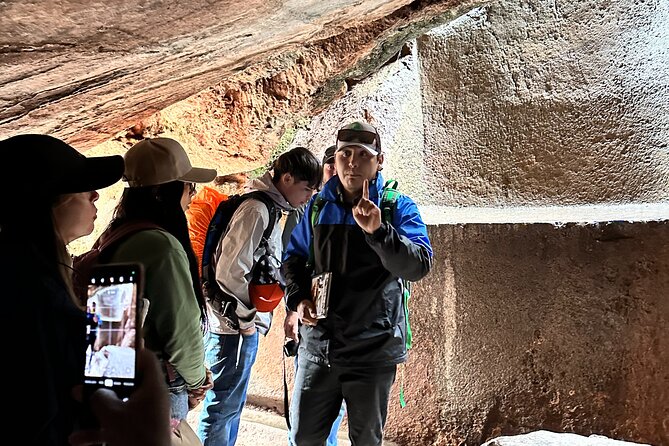
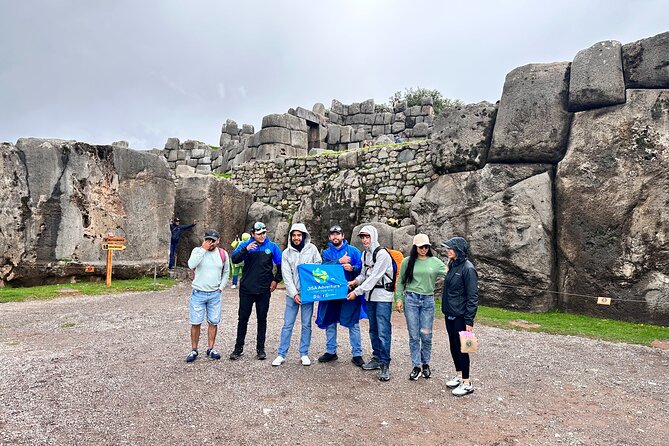
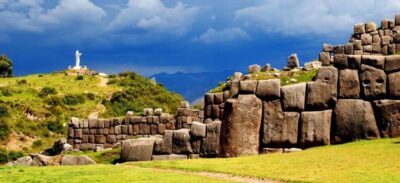
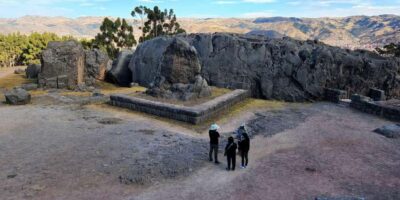
Sacsayhuamán is the first stop because it sets the tone. You leave the city to reach an impressive ceremonial fortress made of huge constructions, with open views in every direction. The guide takes you through the three levels of the site, which changes how you experience it.
Here is what I think most people miss, and why the guide helps. From the right vantage points, you can understand how the upper part relates to what came below. Your visit includes discovering the bases of the great towers that dominated Cusco in Inca times. Even if you are not an architecture expert, the explanation makes the geometry feel intentional instead of just massive.
Sacsayhuamán also works as a visual bridge between the city and the broader Inca world. You get to see how control of place and ceremony were tied to the built environment. It is a strong start, and it makes the later stops feel connected rather than separate.
Potential drawback: it is a historic outdoor site, so you should expect uneven surfaces and some uphill movement. The tour is not listed as suitable for mobility impairments, so if that applies to you, you’ll likely want a different format.
Q’enqo: the Puma temple and the altar in the shrine story
Next you head to Q’enqo, described as an Inca shrine and an ancient temple of the Puma. This is one of those places where the name alone is not the full story. The value is in how the guide explains symbolism you might not notice on your own.
At Q’enqo, you learn about the Pachamama connection and how an altar for sacrifices was housed inside the shrine. That matters because it changes what you think you are looking at. Instead of treating it like a pile of carved stone, you start seeing it as a place with a role in belief and ritual.
The stop is also good for your attention span. You are not just waiting at a viewpoint. You get guided interpretation that helps you look longer, read the site, and understand the logic of the sacred space.
If you like religious and cultural context, this is where the tour starts to feel more than scenic. You can walk away with a clearer sense of what these sites meant to people at the time, not just what they look like now.
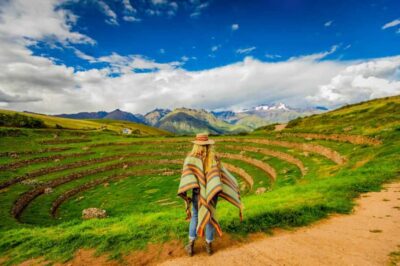
Tambomachay: spring water sources, terraces, and Andean cosmovision
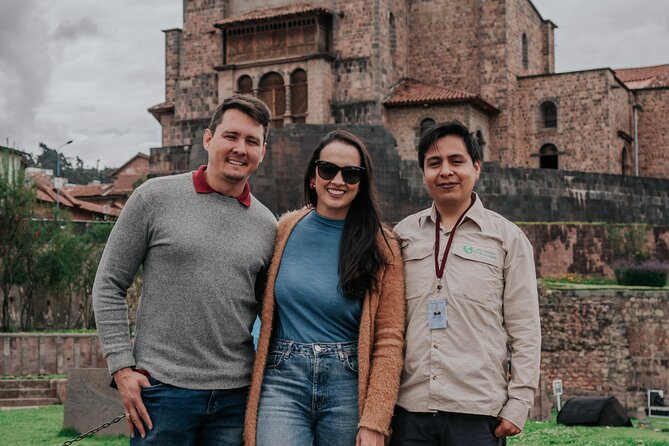
Tambomachay is next, and it comes with a different kind of fascination. It is described as a monument of remarkable architectural excellence, and it is considered a pillar of Andean cosmovision.
The big practical reason to care about Tambomachay is the water. You will observe the spring water sources that still irrigate fields and terraces of the city. That is not just a fun detail. It shows how Inca planning often worked with natural systems rather than fighting them.
When a guide connects the stone structures to how water flows and how agriculture continues, the whole area stops being “ancient ruins” and becomes “infrastructure with spiritual meaning.” That is an important shift in perspective, and it is usually what people remember later.
There’s also a realism to Tambomachay. Water is easy to understand, and once you grasp the irrigation angle, the rest of the cosmovision explanation feels grounded. Even if you are tired from the first two stops, this one tends to reset attention because it is so tangible.
Puca Pucará: the watchtower stop that helps you read the valley
The final major site is Puca Pucará, described as a watchtower and a strategic place dominating the valley and the imperial city. This is a classic “last stop, big picture” location.
From here, you should be able to connect what you learned earlier with what you see in the surrounding area. The guide’s explanation helps you understand why control of sightlines mattered. You start thinking like planners, not just like tourists.
This also works well as a mental wrap-up. Sacsayhuamán gives you monumental energy, Q’enqo gives you sacred meaning, Tambomachay shows you how belief and agriculture tie together, and Puca Pucará gives you the strategic overview. Together, they create a full day arc.
If you like photography, Puca Pucará is often the moment you realize the best shots come from understanding the view, not just framing stones. You’ll leave with a sense of where Cusco sits in the larger geography.
Price and what you really get for $15
At $15 per person, you are paying for more than transportation. The tour includes professional guide time and guided on the sites for about five hours. You also get tourist transportation and assistance from the agency 24/7.
That is the real value: you do not need to figure out how to connect multiple sites by yourself, and you are not stuck with a self-guided experience where you might miss the meaning of the carvings and site layouts. The tour is built around interpretation, especially at places like Q’enqo and Tambomachay where symbolism is hard to read without help.
Two costs to plan for:
- Entrance tickets are not included, so you’ll likely pay separately on the day.
- Meals, beverages, snacks are not included, so bring a plan for when you get hungry after the tour.
When you compare the included guidance plus logistics versus doing sites independently, this pricing can be a very fair deal, especially on a first visit when your time is limited.
What to bring, what to skip, and who should go
Bring your passport or ID card. This is explicitly required, and it is the kind of small thing that can ruin a day if you forget.
Also, no luggage or large bags are allowed. If you are carrying extra gear, downsize what you bring to the essentials for the walk and the ride.
This tour is not suitable for people with mobility impairments. If that describes you, you may want to look for a modified option or a shorter, less physical alternative.
Who it fits best:
- First-time visitors who want a guided orientation to major nearby Inca sites
- People who like explanations about meaning, not just photos
- Travelers who appreciate the combination of Inca and Spanish architecture as part of Cusco’s story
- Anyone who wants to end at Cusco Main Square with energy left for dinner
If you hate structured pacing and prefer to wander without stops, you might find the route a bit scheduled. But if you like a clear plan and a guide who can answer questions, this format is a win.
How the bilingual guide turns stones into meaning
The tour runs with a live guide in English and Spanish. That matters because the tour’s value is interpretation. At sites like Q’enqo, where a shrine and an altar are part of the explanation, you will understand more when the guide can slow the story down for you.
I also appreciate how the tour focuses on what tourists often miss. Instead of treating the day as a quick checklist, the guide highlights the kinds of details that make the architecture and carving feel intentional. That approach is also where learning Cusco’s art styles becomes useful, because you start seeing patterns.
A good cue for you: ask the guide what to look for at the next stop. With a small group dynamic (not guaranteed, but common on these tours), questions often land well. And when you understand what you are trying to notice, you’ll get more from every minute.
Should you book City Tour Cusco?
Book it if you want a strong first-pass introduction to Cusco’s Inca roots plus the Spanish-era city contrast, and you like guided storytelling at real sites. The five-hour format is time-efficient, and the route gives you a complete arc from ceremonial fortress to sacred shrine to water-related architecture to strategic viewpoints.
Skip it if mobility is an issue for you, because it is not listed as suitable for mobility impairments. Also, if you hate paying entrance fees separately, budget for tickets in advance so the day stays smooth.
If you are only choosing one guided experience near Cusco, this one is a smart bet. You get transportation, a professional guide, and meaningful stops that help you understand what you are seeing instead of just moving from photo spot to photo spot.
FAQ
How long is the City Tour Cusco?
The tour duration is listed as 5 hours.
What does it cost?
The price is $15 per person.
Where does pickup happen, and where do we finish?
Pickup is included from your hotel, and there are two pickup location options including Plaza de Armas in Cusco. The tour finishes at Cusco Main Square.
What is included in the price?
The included items are tourist transportation, a professional tourist guide, guided coverage on the sites for about 5 hours, and assistance from your agency 24/7.
Are entrance tickets included?
No. Entrance tickets are not included.
What languages is the live guide?
The live tour guide is available in English and Spanish.
Can I cancel for a full refund?
Yes. Free cancellation is available up to 24 hours in advance for a full refund.
What should I bring, and is it suitable for everyone?
Bring your passport or ID card. Luggage or large bags are not allowed. The tour is not suitable for people with mobility impairments.
More City Tours in Cusco
- Cusco: Half-Day City Tour with Sacsayhuaman and Q’enco
★ 4.6 · 1,129 reviews - City Tour Cusco Qoricancha Sacsayhuaman y Tambomachay
★ 4.7 · 617 reviews - Cusco: Sightseeing Tour of the City on an Open-Top Bus
★ 4.0 · 481 reviews - Open Bus Cusco City Tour
★ 4.5 · 219 reviews - Cusco: City Tour | Half-Day Tour to 4 Archaeological Sites
★ 4.6 · 206 reviews
More Tours in Cusco
- Cusco: Humantay Lake Tour with Breakfast and Buffet Lunch
★ 4.9 · 2,976 reviews - From Cusco: Moray, Maras Salt Mines & Chinchero Weavers Tour
★ 4.8 · 1,925 reviews - From Cusco: Full-Day Group Tour of Machu Picchu
★ 4.7 · 1,767 reviews - Cusco: Half-Day City Tour with Sacsayhuaman and Q’enco
★ 4.6 · 1,129 reviews - Machu Picchu: Full-Day Tour from Cusco with Optional Lunch
★ 4.6 · 927 reviews
More Tour Reviews in Cusco
- Cusco: Humantay Lake Tour with Breakfast and Buffet Lunch
★ 4.9 · 2,976 reviews - From Cusco: Moray, Maras Salt Mines & Chinchero Weavers Tour
★ 4.8 · 1,925 reviews - From Cusco: Full-Day Group Tour of Machu Picchu
★ 4.7 · 1,767 reviews - Machu Picchu Day Trip from Cusco
★ 4.5 · 1,644 reviews - Cusco: Half-Day City Tour with Sacsayhuaman and Q’enco
★ 4.6 · 1,129 reviews
Freshly reviewed across Cusco
- Excursion Cusco – Puno – Titicaca Observatory Train★ 5.0 · 3 reviews
- Sacred Valley Vip Cusco★ 4.7 · 3 reviews
- Cusco | Humantay Lake 1-Day Tour with Breakfast and Lunch★ 5.0 · 3 reviews
- Full-Day Condor Viewpoint & Inca Sites Tour★ 5.0 · 3 reviews
- Best of Cusco: Private Walking Tour with a Local★ 3.6 · 3 reviews
- From Cusco: Full-Day Private Sacred Valley Tour★ 5.0 · 3 reviews
City Tours side by side.
 ★ 4.6Cusco: Half-Day City Tour with Sacsayhuaman and Q’encoFrom $131,129 reviews
 ★ 4.7City Tour Cusco Qoricancha Sacsayhuaman y TambomachayFrom $13617 reviews
 ★ 4.5Lima’s Vibrant Heritage: Exploring the City’s Landmarks Half-dayFrom $39581 reviews
 ★ 4.0Cusco: Sightseeing Tour of the City on an Open-Top BusFrom $12481 reviews
 ★ 4.5Open Bus Cusco City TourFrom $14219 reviews
 ★ 4.6Cusco: City Tour | Half-Day Tour to 4 Archaeological SitesFrom $29206 reviews
 ★ 5.0City Tour in Cusco & visit Museum South American Camelid Private.From $49147 reviews
 ★ 4.5Cusco City Sightseeing, San Pedro Market, Cathedral and Qorikancha TempleFrom $59139 reviews
Also on these Peru lists