
REVIEW · PACHACAMAC
Lima: Tour to Huaca Pucllana and Huaca Mateo Salado
A pyramid and a storyline, right inside Lima. You’ll see Huaca Pucllana rise like a squat adobe landmark in Miraflores, and a professional guide helps connect what you’re looking at to real Lima culture history. I also like that the pace stays focused and guided, so you do not wander around guessing, but there is one consideration: you will be outside in Lima light, so plan for sun and bring what the tour asks for.
This is built for convenience. Hotel pickup and drop-off cover Barranco, San Isidro, and Miraflores, and the short van rides between sites keep the whole experience to a tidy 4 hours.
The payoff is two different huacas in one outing, with a clear time leap. You start with a ceremonial and administrative center tied to Lima culture (about 200 to 700 A.D.), then shift to Huaca Mateo Salado in Pueblo Libre, including its connection to the Qhapaq Ñan and Inca reuse linking toward Pachacamac.
In This Review
- Key Things I’d Prioritize on This Huaca Duo Tour
- Lima’s Huaca Route in 4 Hours, What You Actually Get
- Pickup and Timing: Why This Van Ride Matters
- Huaca Pucllana in Miraflores: The Adobe Pyramid You Notice Instantly
- What to Look For at Pucllana: Courtyards, Squares, and the Big Picture
- Mateo Salado in Pueblo Libre: Another Truncated Pyramid, Another Purpose
- The Qhapaq Ñan Connection: Why Mateo Salado Feels Bigger Than a Local Ruin
- The Real Walk: What the Tour Feels Like On the Ground
- Included Value: What Your $217 Per Person Covers
- Who This Tour Fits Best (and Who Might Skip)
- Small Things That Make the Big Difference
- Should You Book This Huaca Pucllana and Mateo Salado Tour?
- FAQ
- Where does hotel pickup happen?
- How long is the tour?
- What are the two archaeological sites visited?
- Do I need to buy tickets for the sites?
- What languages are the guides available in?
- Is food included?
- What should I bring?
- Is there cancellation flexibility?
Key Things I’d Prioritize on This Huaca Duo Tour
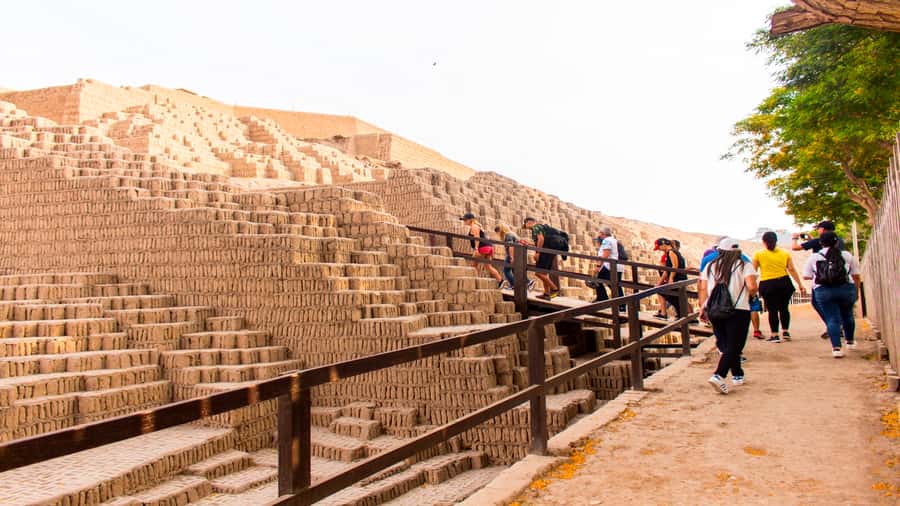
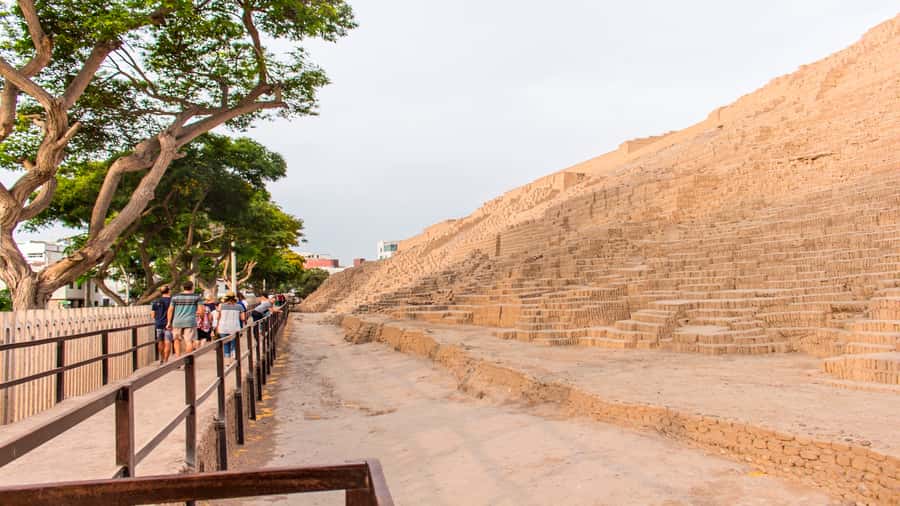
- Huaca Pucllana in Miraflores: a truncated adobe pyramid plus courtyards, squares, and an exhibition hall
- A guided story you can follow: interpretation that ties Lima culture building to what you see on site
- Huaca Mateo Salado in Pueblo Libre: another truncated pyramid and ceremonial plaza from about 600 to 900 A.D.
- Qhapaq Ñan and Inca reuse: the site’s later role connects it to a wider Andean network
- Private-group feel: you travel with a smaller group and keep questions close to the moment
- Tickets and pickup included: you spend less time on logistics and more time at the archaeological complexes
Pachacamac and other pre-Inca ground
- Lima: Pachacamac Ruins & Barranco Half-Day Guided Tour
★ 4.6 · 296 reviews - Pre Inca Temple of Pachacamac Half-Day Tour from Lima
★ 4.5 · 283 reviews - Lima: Pachacamac Inca Archaeological Complex Tour
★ 4.8 · 164 reviews - Lima Bike Tour Miraflores – Barranco + Huaca Pucllana!
★ 4.5 · 137 reviews
Lima’s Huaca Route in 4 Hours, What You Actually Get
Lima can feel like a lot of city and not enough time for deeper history. This half-day format solves that problem by packing two huacas into one clear, guided arc. You do not just see ruins behind fences. You get a guided explanation of what each structure likely functioned as, plus what makes the design and later reuse worth paying attention to.
The tour is also practical in a very Lima way. The stops are within the city, so you are not sacrificing half your day to long travel times. After you finish the second site, you are back at your drop-off district without needing to figure out transport.
And yes, the structures are small compared to grand stone monuments you might expect in other countries. But that is part of the charm. Adobe architecture tells a different story, and it is easier to imagine daily ceremonial space when you can stand close to the footprint of the complex.
Pickup and Timing: Why This Van Ride Matters
This is the kind of tour that works best when the logistics are boring and smooth. You get picked up from hotels in Miraflores, San Isidro, and Barranco, then you head to the first stop by van. The drives are short enough that you keep your energy for walking and looking, not sitting in transit all afternoon.
The schedule is built around two guided visits: about 80 minutes at Huaca Pucllana, then about 1.5 hours at Mateo Salado. Those time blocks are long enough for a real explanation, but short enough that you do not feel stuck in one place too long.
One smart detail here is the private group setup. Even though the tour is short, you do not have the chaotic feel of a big bus day. You should still expect to stay with the group for the guide’s narration, but the smaller format makes questions easier and the pacing feel more human.
Huaca Pucllana in Miraflores: The Adobe Pyramid You Notice Instantly
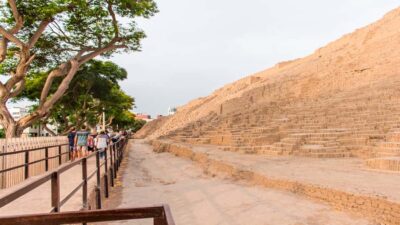
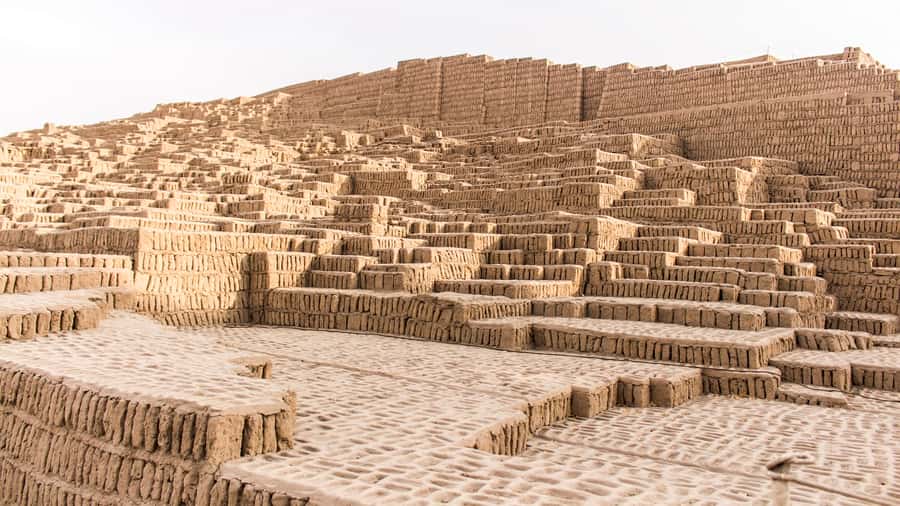
Huaca Pucllana is the kind of site that changes your mental map of Lima. In Miraflores, you are surrounded by modern city life, and then suddenly you see a truncated adobe pyramid rising to about 25 meters. It is not subtle. From the moment you arrive, it reads as a deliberate presence, not a random remnant.
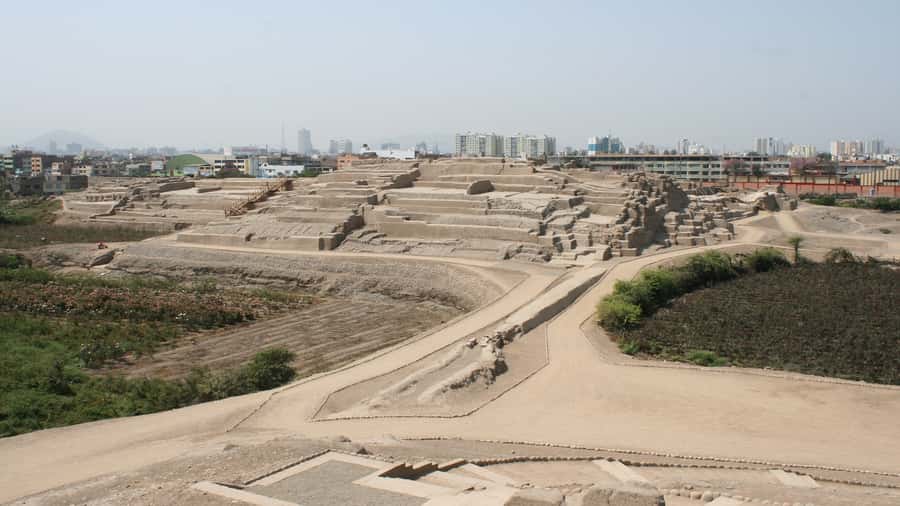
What you will like most is how the visit is structured around moving through the archaeological complex. You do not just look at one angle. You explore courtyards and squares, and the guide points out what those spaces suggest about the site’s ceremonial and administrative role.
The historical context matters. This huaca has roots in the Lima culture, an ancient civilization that thrived on Peru’s central coast between about 200 and 700 A.D. The guide’s explanation frames the site as a tangible legacy of that pre-Columbian past, and you start seeing the complex as a working center of meaning and authority, not just a mound of old bricks.
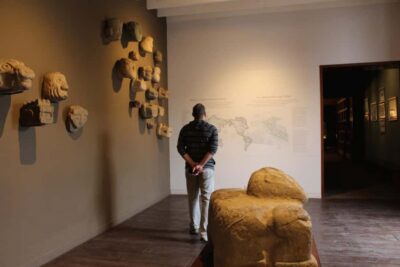
If you are the type who likes visuals, plan to make time for the exhibition hall. The hall is part of the experience here, and it helps you interpret what you are seeing outside. The goal is simple: you leave with a story you can repeat, not just photos of an adobe structure.
Practical note: Huaca Pucllana was discovered during urbanization works in the 1980s, and since then excavation and restoration have helped preserve it. That means parts of the complex are maintained so you can learn from them, but you may also notice how a living city shapes how we access ancient layers.
What to Look For at Pucllana: Courtyards, Squares, and the Big Picture
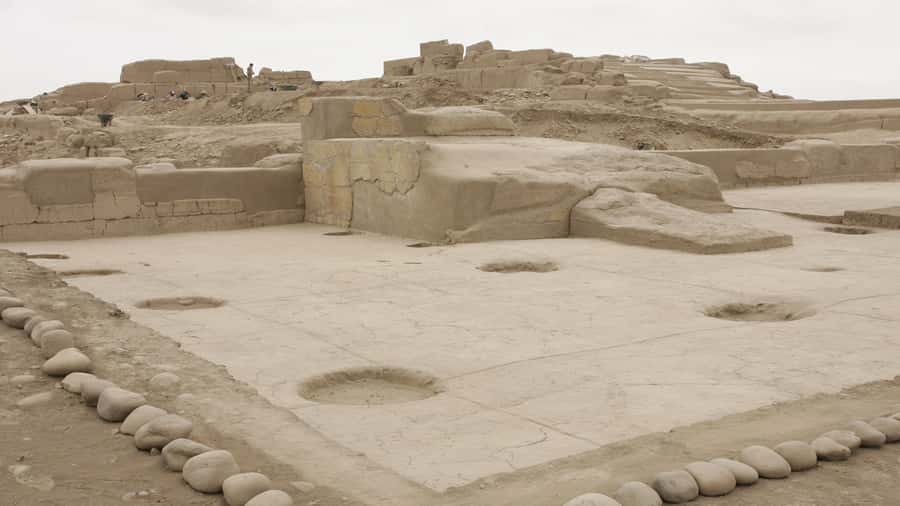
At Huaca Pucllana, I’d focus on three things as you follow the guide. First is the shape, that truncated pyramid form. It is distinctive, and it hints at how the structure was built for prominence and ritual function.
Second is spatial design. Courtyards and squares are where interpretation becomes real. These are the kinds of areas where you can imagine gatherings, processions, and events tied to the Lima culture’s ceremonial life. Even if you cannot reconstruct the past scene perfectly, the layout gives you something tangible to picture.
Third is the material and craft angle. The guide’s explanation ties the site to Lima culture, so you are not just admiring adobe, you are learning why adobe architecture mattered in that coastal environment and period. That connection is what makes the site feel more meaningful than a single photo.
One more tip: wear comfortable clothes and be ready for sun. The tour asks you to bring sunglasses and sunscreen, and that is your clue that you’ll want to protect yourself while you move through open outdoor spaces.
Chan Chan, Huanchaco and the Moche huacas
Mateo Salado in Pueblo Libre: Another Truncated Pyramid, Another Purpose
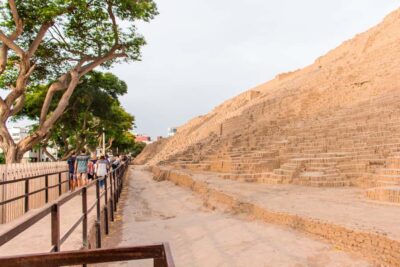
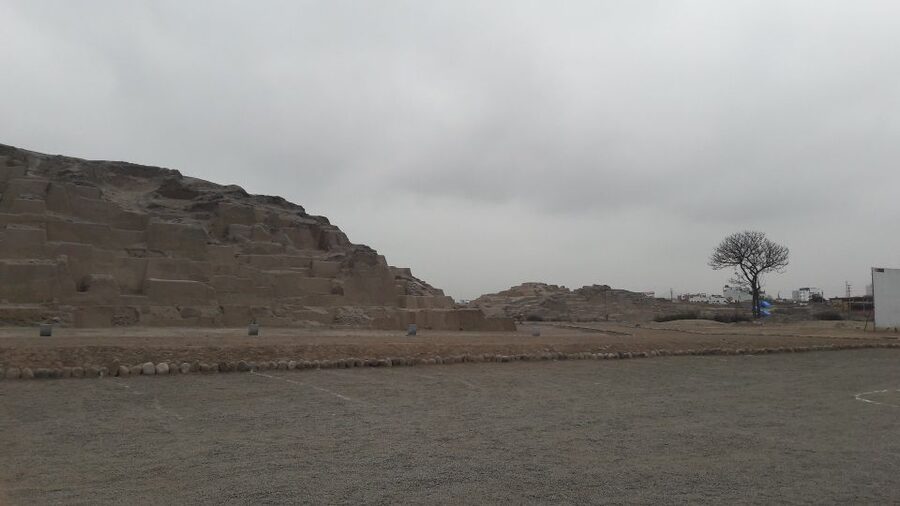
After the first site, you hop back in the van and head to Pueblo Libre for the Mateo Salado archaeological complex. This is a different feeling right away. Where Pucllana is in Miraflores and feels like a central city anchor, Mateo Salado sits in a district known for its everyday neighborhoods, which can make the transition feel like you’re stepping into a less polished, more local part of Lima.
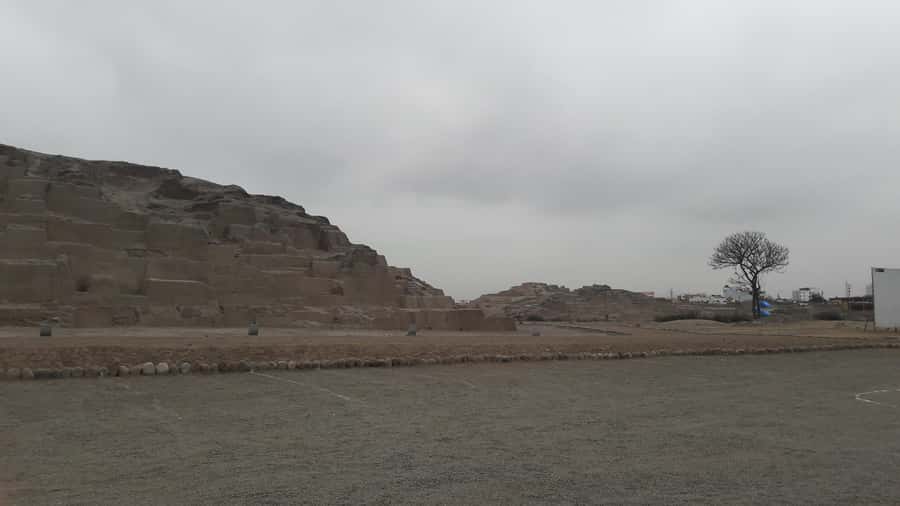
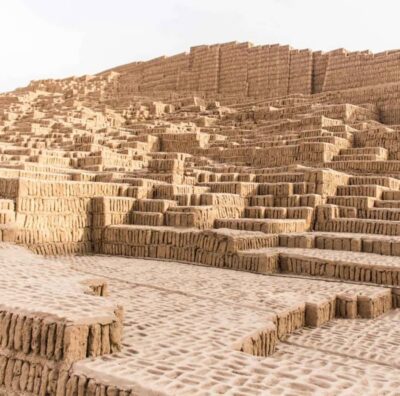
The tour focuses on the complex itself: a truncated pyramid and a ceremonial plaza, plus surrounding auxiliary structures. The guide frames it as about 1,400 years old, built by the ancient Lima people during the Middle Horizon period, roughly between 600 and 900 A.D.
This is where the story gets extra interesting because Mateo Salado is tied to multiple layers of regional history. The site is associated with the Ychsma culture, functioning as an administrative-ceremonial center. Then, later, the Incas reused the huaca. The guide explains that this reuse connected the site to the wider system of the Qhapaq Ñan, also known as the Inca Trail, linking toward Pachacamac south of Lima.
That Inca reuse part matters because it shows how sacred landscapes were not frozen in time. They were reused, reinterpreted, and integrated into later power networks. You can stand in the same place and understand how different cultures claimed meaning there over centuries.
The Qhapaq Ñan Connection: Why Mateo Salado Feels Bigger Than a Local Ruin
You might expect a huaca to be a standalone relic. Mateo Salado challenges that expectation. The link to the Qhapaq Ñan and Pachacamac gives you a sense that the ancient world in this region worked like a connected map, not isolated islands.
When the guide describes how the Incas used the structure to connect this huaca with Pachacamac, you get a practical lens for seeing the site’s importance. It was not only local ceremony, it was tied into a larger road and communication system across the empire.
I also like that the tour gives you more than just names. The complex includes a main pyramid that was covered in adobe and adorned with reliefs and mural paintings depicting human figures, animals, and deities related to Lima mythology. Even if not everything survives exactly as it once appeared, the idea of painted reliefs and mythic imagery helps you visualize what the space was designed to communicate.
If you enjoy interpretation, lean into what the guide says about the mythology themes. It turns the site from a physical structure into a narrative space.
The Real Walk: What the Tour Feels Like On the Ground
This tour is short, but it is not a sit-and-watch experience. You are going to move between parts of each archaeological complex while the guide explains history and significance. At Huaca Pucllana, the total guided time is about 80 minutes. At Mateo Salado, you get about 1.5 hours. That longer second visit makes sense because Mateo Salado has a bigger story arc, including the Middle Horizon period and the later Inca reuse.
Because the tour is suitable for all ages, the walking pace is likely manageable for most people. Still, I’d plan for an outdoor visit in Lima conditions. Comfortable clothes are recommended, and the tour suggests bringing sunglasses and sunscreen, which is your reminder to dress for bright light and warmth.
If you are the type who likes to take your time, you will still get a solid explanation but you might want to pace yourself. After your second site, the van ride back and drop-off help you avoid the fatigue that can come with self-guided exploring.
Included Value: What Your $217 Per Person Covers
At $217 per person for a 4-hour experience, the value question is simple: what is included, and how much work does the tour remove from you?
Here’s what you get included:
- Hotel pickup and drop-off in Miraflores, San Isidro, and Barranco
- Tickets to Huaca Pucllana and Mateo Salado
- An official guide in English, Spanish, and Portuguese
- Private group format
- Van transport between sites
That is a lot for a half-day. If you were to do this on your own, you would still need to arrange transport and admissions and find a guide who can explain what you are seeing in plain terms. This tour handles that for you, which is often worth the price when time is limited and you want accuracy.
Do I think it is overpriced? Not based on what is covered. I do think it is priced for people who care about interpretation and convenience. If you want ruins with minimal guiding and you are comfortable working out logistics independently, you might pay less DIY. But if you want a guided story that connects dates, cultures, and the specific features of each complex, this format makes financial sense.
Who This Tour Fits Best (and Who Might Skip)
This is a great choice if you want Lima’s pre-Columbian layer without losing your whole day. It also works well for people who are curious but not archaeologist-level. The guides are official and multilingual, and the visits are organized so you can follow the narrative instead of getting stuck in uncertainty.
It is also ideal if you are staying in Miraflores, San Isidro, or Barranco, because the pickup keeps things easy. If you are in a different district, you might need to consider how you would reach the meeting points, but this tour specifically states those hotel areas.
You might skip it if you have zero interest in guided explanations and you plan to enjoy ruins mainly through your own reading and photos. Also, if you are extremely heat-sensitive, plan around sun exposure because the tour expects you to bring sunscreen and sunglasses.
Small Things That Make the Big Difference
A few practical tips will help you enjoy the tour more.
First: bring your passport. The tour explicitly asks for it, so do not leave it behind.
Second: protect your eyes and skin. Sunglasses and sunscreen are part of the plan for a reason.
Third: wear comfortable clothes. You will be out at two archaeological sites, moving through areas that are part of outdoor complexes.
Fourth: keep your expectations aligned. This is a half-day. You will not see the whole city or every major site, but you will see two significant huacas, with a clear storyline that ties them together through time.
Fifth: if language matters to you, you can choose a guide in English, Spanish, or Portuguese. That helps you get the explanation without translation gaps.
Should You Book This Huaca Pucllana and Mateo Salado Tour?
Yes, I would book it if you want a guided introduction to Lima’s archaeological side in one efficient window. Huaca Pucllana gives you the striking adobe pyramid experience in Miraflores, and Mateo Salado adds the Middle Horizon era story plus the Qhapaq Ñan and Inca reuse connection toward Pachacamac. Together, they make Lima feel layered and connected, not just modern streets and sea views.
I’d especially recommend it if your priority is understanding what you are seeing. The official guide format, the included tickets, and the hotel pickup mean you spend less time on logistics and more time learning. For a short 4-hour tour, that is the sweet spot.
If you like your history served with clear context, this one should land well.
FAQ
Where does hotel pickup happen?
Pickup is available for hotels located in Miraflores, San Isidro, and Barranco.
How long is the tour?
The tour duration is 4 hours.
What are the two archaeological sites visited?
The tour includes a visit to Huaca Pucllana and Huaca Mateo Salado.
Do I need to buy tickets for the sites?
Tickets to Huaca Pucllana and Mateo Salado are included.
What languages are the guides available in?
The live tour guide is available in English, Spanish, and Portuguese.
Is food included?
Food and drinks are not included.
What should I bring?
You should bring your passport, sunglasses, sunscreen, and comfortable clothes.
Is there cancellation flexibility?
Free cancellation is available up to 24 hours in advance for a full refund.
More Tour Reviews in Lima
- Lima: Ultimate Peruvian Food Tour
★ 4.9 · 700 reviews - Full Day Paracas Ica and Huacachina from Lima All Included
★ 4.5 · 623 reviews - Lima’s Vibrant Heritage: Exploring the City’s Landmarks Half-day
★ 4.5 · 581 reviews - From Lima: Day trip to Paracas, Ica and Oasis Huacachina
★ 4.6 · 409 reviews - Private transfers from Lima Airport or to Lima Airport
★ 4.0 · 359 reviews
Adobe Cities of the North
- Lima Bike Tour Miraflores – Barranco + Huaca Pucllana!
★ 4.5 · 137 reviews - Lima: Huaca Ruins and Larco Museum at Night with Dinner
★ 4.9 · 35 reviews - Lima city tour: Larco Museum and Huaca Pucllana
★ 4.8 · 33 reviews - Tour Huaca Pucllana: Pyramids and Pre-Columbian Antiquity
★ 4.3 · 12 reviews - Lima: Private Tour to Huaca Pucllana and Huaca Mateo Salado
★ 5.0 · 5 reviews
Pre-Inca Ground Near Lima
- Lima: Pachacamac Ruins & Barranco Half-Day Guided Tour
★ 4.6 · 296 reviews - Pre Inca Temple of Pachacamac Half-Day Tour from Lima
★ 4.5 · 283 reviews - Lima: Pachacamac Inca Archaeological Complex Tour
★ 4.8 · 164 reviews - Lima Bike Tour Miraflores – Barranco + Huaca Pucllana!
★ 4.5 · 137 reviews - Lima:Half-Day Pachacamac, Barranco & Chorrillos Private Tour
★ 4.8 · 76 reviews
Freshly reviewed across Lima
- LIMA: HALF-DAY SANDBOARDING TOUR★ 4.5 · 3 reviews
- Lima: Escapada de 2 Días a la Reserva Nor Yauyos-Cochas★ 3.1 · 3 reviews
- Private Tour Casa Aliaga,San Francisco Convent, Larco Museum★ 4.8 · 3 reviews
- From Lima : 360° Panoramic Bus★ 4.0 · 3 reviews
- Lima: Market Tour and Cooking Class with Pisco Sour★ 5.0 · 3 reviews
- Lima: Market Tour, 35 Fruits Tasting & Cooking Class★ 5.0 · 3 reviews
Pachacamac and Pre-Inca Ruins side by side.
 ★ 4.6Lima: Pachacamac Ruins & Barranco Half-Day Guided TourFrom $59296 reviews
 ★ 4.5Pre Inca Temple of Pachacamac Half-Day Tour from LimaFrom $79283 reviews
 ★ 4.8Lima: Pachacamac Inca Archaeological Complex TourFrom $79164 reviews
 ★ 4.5Lima Bike Tour Miraflores – Barranco + Huaca Pucllana!From $30137 reviews
 ★ 4.8Lima:Half-Day Pachacamac, Barranco & Chorrillos Private TourFrom $7576 reviews
 ★ 4.5Caral, Oldest Civilization of America: Private Day trip from LimaFrom $19272 reviews
 ★ 5.0Pachacamac’s Inka Pyramids Tour including Museum Small-GroupFrom $5265 reviews
 ★ 5.0Lima FD Experience Pachacamac, Barranco, City Centre & Water ParkFrom $15564 reviews
Also on these Peru lists