
REVIEW · LAKE TITICACA
Puno: History and Culture Walking Tour
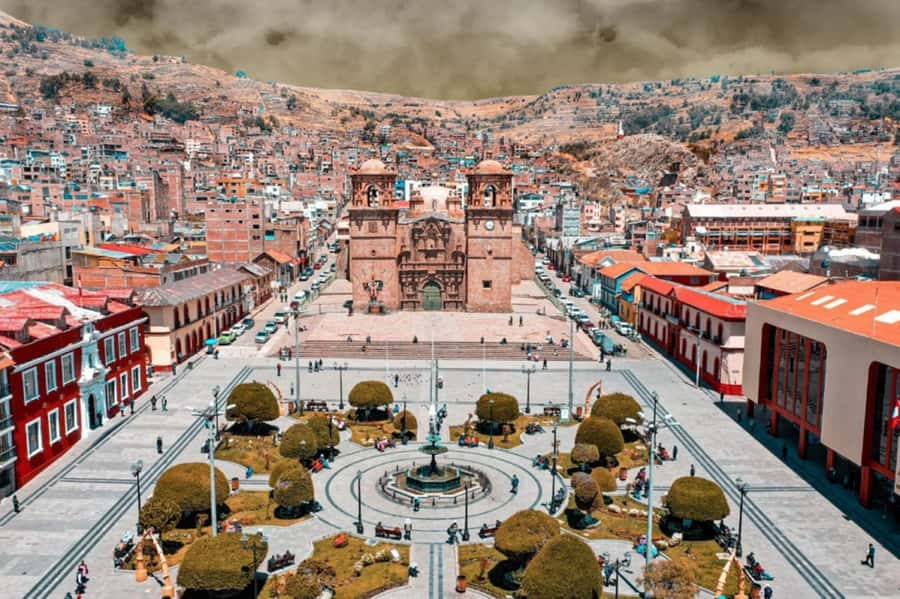
Puno shines brightest from the lookout. This guided route starts at Plaza de Armas in Puno and takes you to Huajsapata Lookout for standout Lake Titicaca panoramas, then keeps going to the Carlos Dreyer Museum, where you get hands-on context for Puno’s roots through pre-Columbian jewelry, ceramics, and textiles.
I like that the tour mixes big views with real objects, not just photo stops. The main heads-up: the Dreyer Museum entrance fee is not included, so you’ll likely pay 20 soles per person on arrival.
In This Review
- Key things you will notice on this Puno walk
- A 2-hour loop that gets you oriented fast
- Huajsapata Lookout: views plus the Manco Capac monument
- The Puno Cathedral: how Baroque Spanish meets Andean style
- Carlos Dreyer Museum: pre-Columbian objects with a city story
- A bilingual guide who keeps the pace human
- Price and value: $20 is fair, but budget for the museum
- What to bring, and what not to bring
- Who this tour fits best in Puno
- Should you book the Puno History and Culture Walking Tour?
- FAQ
- How long is the Puno History and Culture Walking Tour?
- Where does the tour start and end?
- What is the price, and what is included?
- Is the Carlos Dreyer Museum entrance fee included?
- What languages are offered on the tour?
- How big is the group?
- What should I bring, and what is not allowed?
- Is the tour suitable for young children?
Key things you will notice on this Puno walk
- Huajsapata Lookout viewpoints with city and Lake Titicaca sightlines
- Manco Capac monument at the lookout for easy historical framing
- Puno Cathedral’s 18th-century blend of Baroque Spanish and Andean elements
- Carlos Dreyer Museum collection focused on jewelry, ceramics, and textiles
- Small group size (max 10) so questions do not get lost in a crowd
- Spanish and English guide for clear explanations as you walk
Uros, Taquile and Amantani, other crossings
- From Puno: Uros, Amantaní & Taquile Islands 2-Day Tour
★ 4.5 · 452 reviews - From Puno: Floating Islands of the Uros Half-Day Tour
★ 4.4 · 394 reviews - Lake Titicaca 2-Day Tour to Uros, Amantani and Taquile
★ 4.4 · 199 reviews - Puno: Full-Day Tour of Lake Titicaca and Uros & Taquile
★ 4.4 · 178 reviews
A 2-hour loop that gets you oriented fast
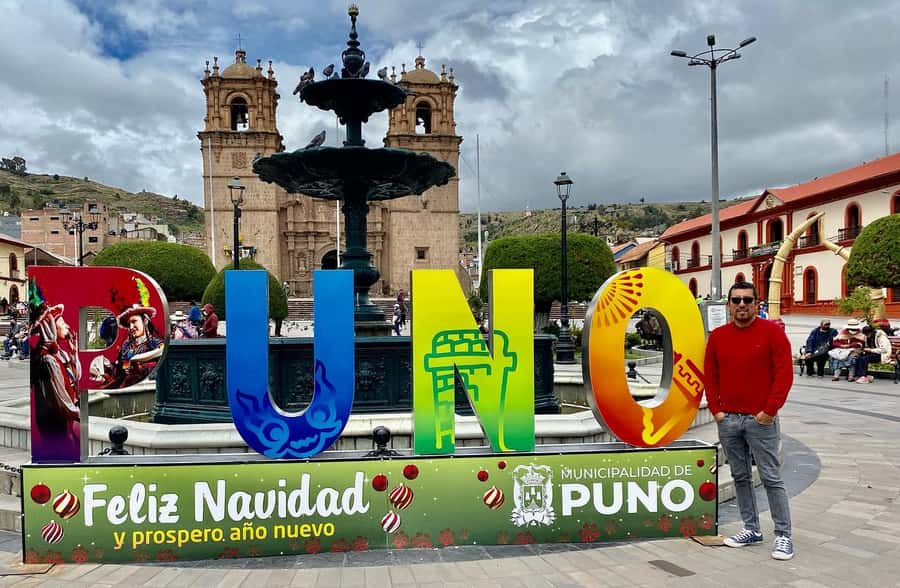
Puno can feel spread out, and it helps to have a plan when you only have a short window. This tour is built as a compact walking circuit, lasting about 2 hours, so you are not stuck hunting down the major sights on your own. With a small group of up to 10 people, you also get more back-and-forth with your guide than you would on a larger bus-style outing.
The tour starts back at Plaza de Armas of Puno, which is a smart choice because it’s the kind of place you can use later to reconnect if you decide to wander afterward. You also get a bilingual guide in Spanish and English, which matters here because architectural details and museum objects can mean different things depending on what you know to look for.
Where this format really shines is pacing. You get outdoors views first, then you move into indoor cultural stops where you can slow down and actually interpret what you’re seeing. If your goal is to leave Puno with the city making sense, this route does that in a short time.
Huajsapata Lookout: views plus the Manco Capac monument
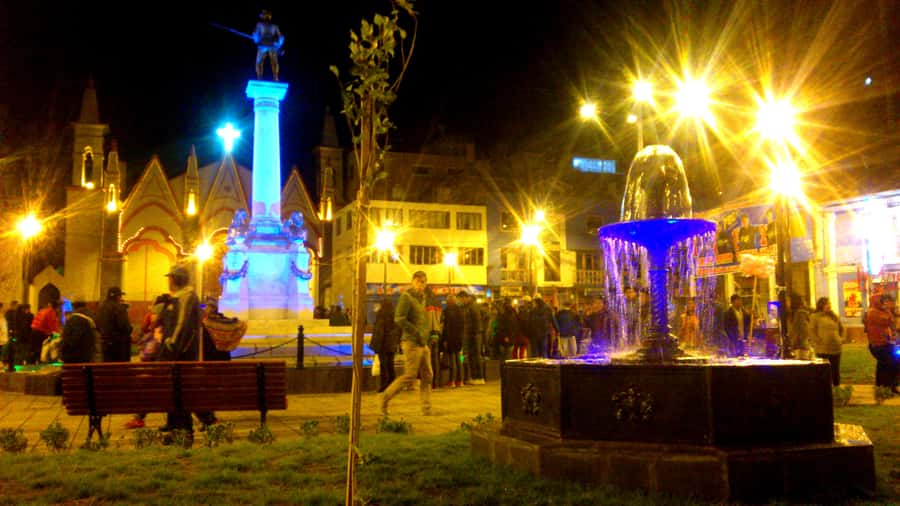
Your walk begins with a climb up to Huajsapata Lookout, and that’s where the tour earns its keep. From here, you get panoramic views over Puno and toward Lake Titicaca. Even if you have seen lake views before, this one is useful because you can connect the water to the city’s setting.
Then there is a historical moment that’s easy to miss if you arrive on your own. At the lookout, you can visit the monument dedicated to Manco Capac, the founder figure of the Incan Empire. It gives you a starting point for the layered identity of the region, where Indigenous history and later Spanish influence both shaped what Puno became.
My practical tip: use the first few minutes at the lookout to scan the city and your direction of view before you start looking for details. When you have that “map in your head,” the rest of the tour feels less like a checklist and more like a story.
The Puno Cathedral: how Baroque Spanish meets Andean style
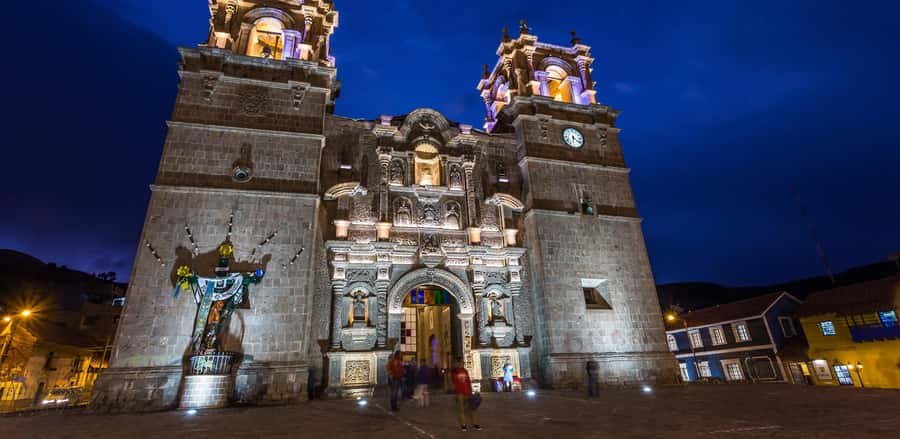
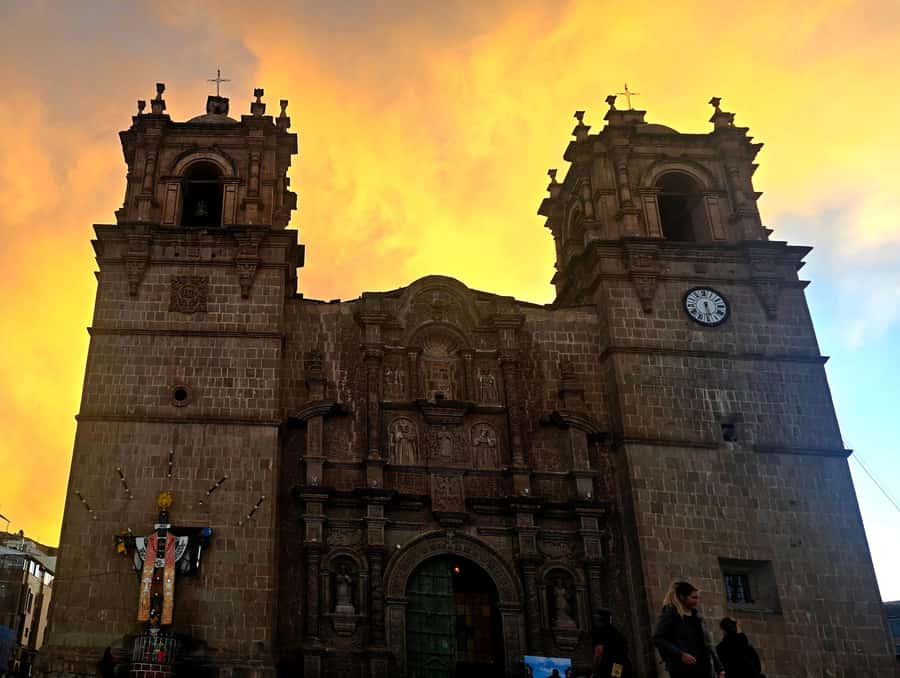
Next comes the 18th-century Puno Cathedral, and it’s not just about admiring stonework. This building is described as having a blend of Baroque Spanish architecture and Indigenous Andean elements. That combination is exactly why a guided walk helps, because the meaning is in the mix.
As you stand in front of it, the cathedral becomes a clue to Puno’s mestizo character, meaning a shared cultural space shaped by multiple influences. The value here is not just aesthetics. You learn how religion and art traveled and transformed, rather than arriving as a single, unchanged style.
If you enjoy architecture but do not want to spend hours reading guidebooks, this is a good compromise. You get the big visual impression plus the “what am I looking at and why” explanation from your guide. The stop also gives you a natural transition from outdoors views into cultural context, which makes the whole 2 hours feel balanced.
Carlos Dreyer Museum: pre-Columbian objects with a city story

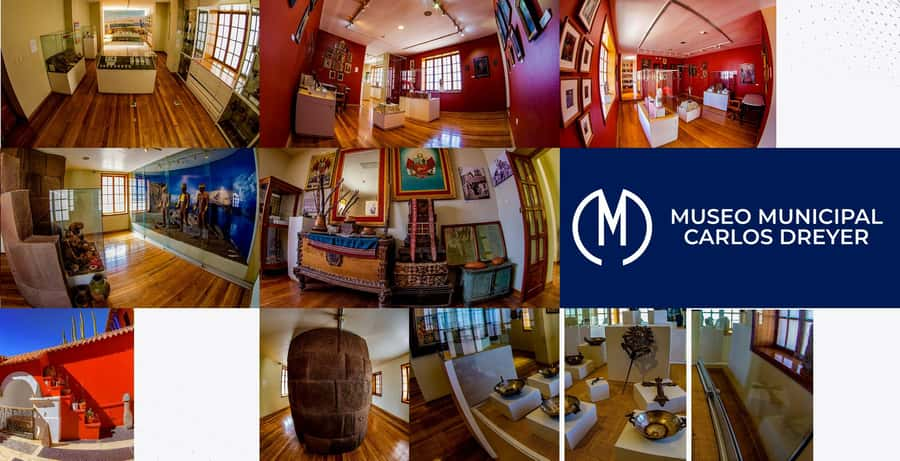
The museum stop is where the tour shifts from scenic to interpretive. At the Carlos Dreyer Museum, you can explore the detailed history of Puno’s founding and then move into the collection of pre-Columbian artifacts.
This is the kind of museum visit that works well even if you are not a formal art historian. You are guided toward specific categories of objects, including pre-Columbian jewelry, ceramics, and textiles. Those materials matter because they connect to daily life, trade, craft traditions, and identity, not just big ceremonial themes.
A practical consideration: the museum entrance fee is 20 soles per person and is not included in the $20 tour price. That means your actual “all-in” cost will be slightly higher than the headline number. Still, it can be good value if you like learning through objects, especially because the tour time is short and you do not want to lose half a day figuring out what to see.
When the tour ends, you’ll likely feel more confident walking around Puno on your own, because the museum gives you background for what you might notice later in the city.


A bilingual guide who keeps the pace human
This kind of tour lives or dies on the guide, because you’re walking and listening at the same time. One strong signal from past experiences is how much the guide matters. A guide named Samuel was singled out for doing an outstanding job, and that same theme shows up as you get full coverage of the important sights plus answers to questions.
In practical terms, that means you are not just following along. You can ask why something was built, how different styles blend in the cathedral, or what you’re supposed to notice about the museum pieces. With a small group of limited size, you are more likely to get a direct response than a rushed one.
If you enjoy conversation while sightseeing, you will probably like this format. If you prefer silent walks and only want a map, you may feel the tour is slightly more guided than you like, but the structure is still easy to follow.
Price and value: $20 is fair, but budget for the museum
The listed price is $20 per person for about 2 hours with a Spanish and English-speaking guide. That inclusion is the core value. You are paying for a planned route, explanations, and access to a tight sequence of viewpoints and cultural stops.
The trade-off is that the Dreyer Museum entrance is not included, and it costs 20 soles per person. So the true cost depends on whether you plan to use the museum time included in the tour. If you skip the museum, you would miss the most “object-based” part of the experience.
Still, for many people, the mix is exactly what they want:
- a lookout for orientation and views
- a cathedral for architectural context
- a museum for artifacts connected to Puno’s founding
If you are the type who learns best by seeing and then being told what it means, this is money well spent.
What to bring, and what not to bring
This tour is small and walking-based, so pack like you want to move easily. Bring a passport or ID card, since it is listed as required. Also plan to travel light, because luggage or large bags are not allowed.
For comfort, wear sturdy shoes with good grip. Even when the walking is “just city walking,” the ground and sidewalks can vary, and you will want to feel steady while focusing on views and details.
If you tend to carry a big daypack, consider downsizing. You will enjoy the tour more if your hands are free for photos and if you can keep your space clear in tighter moments inside church and museum areas.
Who this tour fits best in Puno
This walking tour is a strong match if you are:
- short on time and want the major sights covered in about 2 hours
- curious about how Spanish and Indigenous influences shaped Puno
- the kind of person who likes museums when they are tied to what you see outside
- traveling with a group size that stays small and feels manageable
It may be less of a fit if you are bringing children under 5, since it is not suitable for that age group. It also may not be ideal if you want a long, slow wander through every side street. This is a guided overview, and it’s designed to be efficient.
If you want to turn Puno into a place you understand, this tour does that. If you want a flexible day without commitments, you might prefer a longer self-guided plan.
Should you book the Puno History and Culture Walking Tour?
Yes, I would book it if you want a guided “hits and meaning” tour in a short time. The standout combination is clear: Lake Titicaca views from Huajsapata Lookout, the style-mixing story of the Puno Cathedral, and the museum stop where you see pre-Columbian objects linked to Puno’s founding. Add in the small group size and bilingual guide, and it’s an efficient way to learn without spending hours coordinating.
Book it with one budget mindset: the Carlos Dreyer Museum entrance fee is extra, 20 soles per person. If you are comfortable with that, you’re set.
If you hate paying add-on fees or you only want scenery, you might feel the cost creep. But if you like a blend of architecture, artifacts, and practical orientation, this is a smart use of your time in Puno.
FAQ
How long is the Puno History and Culture Walking Tour?
The tour lasts about 2 hours.
Where does the tour start and end?
It starts at Plaza de Armas of Puno and ends back at the meeting point.
What is the price, and what is included?
The price is $20 per person. It includes a Spanish and English-speaking guide.
Is the Carlos Dreyer Museum entrance fee included?
No. Museum Dreyer entrance fees are not included and cost 20 soles per person.
What languages are offered on the tour?
The live guide speaks Spanish and English.
How big is the group?
The group is limited to 10 participants.
What should I bring, and what is not allowed?
Bring a passport or ID card. Luggage or large bags are not allowed.
Is the tour suitable for young children?
It is not suitable for children under 5 years old.
More Tours in Puno
- From Cusco: Vinicunca Rainbow Mountain ATV Tour with Meals
★ 4.6 · 1,060 reviews - From Puno: Uros, Amantaní & Taquile Islands 2-Day Tour
★ 4.5 · 452 reviews - From Puno: Floating Islands of the Uros Half-Day Tour
★ 4.4 · 394 reviews - Lake Titicaca 2-Day Tour to Uros, Amantani and Taquile
★ 4.4 · 199 reviews - Puno: Full-Day Tour of Lake Titicaca and Uros & Taquile
★ 4.4 · 178 reviews
More Tour Reviews in Puno
- From Cusco: Vinicunca Rainbow Mountain ATV Tour with Meals
★ 4.6 · 1,060 reviews - From Puno: Uros, Amantaní & Taquile Islands 2-Day Tour
★ 4.5 · 452 reviews - From Puno: Floating Islands of the Uros Half-Day Tour
★ 4.4 · 394 reviews - Lake Titicaca 2-Day Tour to Uros, Amantani and Taquile
★ 4.4 · 199 reviews - Puno: Full-Day Tour of Lake Titicaca and Uros & Taquile
★ 4.4 · 178 reviews
Island Time on Titicaca
- From Puno: Uros, Amantaní & Taquile Islands 2-Day Tour
★ 4.5 · 452 reviews - From Puno: Floating Islands of the Uros Half-Day Tour
★ 4.4 · 394 reviews - Lake Titicaca 2-Day Tour to Uros, Amantani and Taquile
★ 4.4 · 199 reviews - Puno: Full-Day Tour of Lake Titicaca and Uros & Taquile
★ 4.4 · 178 reviews - Puno: Full-Day Route of the Sun Tour to Cusco with Lunch
★ 4.7 · 131 reviews
Freshly reviewed across Puno
- Discover the Celestial Wonder of Sillustani: Towers of Time★ 4.2 · 3 reviews
- From Puno: Travel to Cusco in Titicaca Train All Inclusive★ 3.9 · 3 reviews
- 5h tour from Puno to Aramu Muru portal and Inca Ruins★ 4.6 · 3 reviews
- From Puno: Excursion to Uros and Taquile Islands + Income★ 4.7 · 4 reviews
- Puno: Lake Titicaca, Uros, and Taquile Full-Day Tour★ 4.5 · 4 reviews
- FromPuno: Uros and Amantani Islands Full-Day Tour with Lunch★ 4.5 · 4 reviews
Lake Titicaca Tours side by side.
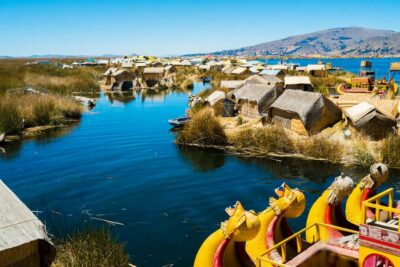 ★ 4.5From Puno: Uros, Amantaní & Taquile Islands 2-Day TourFrom $59452 reviews
 ★ 4.4From Puno: Floating Islands of the Uros Half-Day TourFrom $10394 reviews
 ★ 4.62-Day Tour Colca Canyon in Arequipa with end in PunoFrom $78248 reviews
 ★ 4.4Lake Titicaca 2-Day Tour to Uros, Amantani and TaquileFrom $69199 reviews
 ★ 4.4Puno: Full-Day Tour of Lake Titicaca and Uros & TaquileFrom $33178 reviews
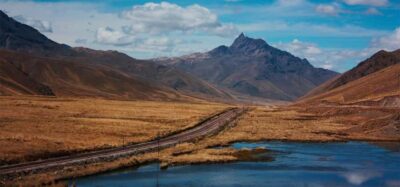 ★ 4.7Puno: Full-Day Route of the Sun Tour to Cusco with LunchFrom $44131 reviews
 ★ 4.2Floating Islands of the UrosFrom $7101 reviews
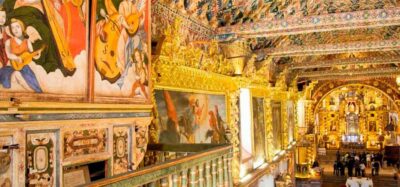 ★ 4.8Cusco: Scenic Route of the Sun to Puno with Buffet LunchFrom $44101 reviews
Also on these Peru lists