
REVIEW · CUSCO CITY
Cusco City Tour with Sacsayhuaman & Inca Sites – Small Group
Cusco can feel like a jigsaw puzzle. This small-group tour strings the big Inca and colonial highlights together around the historic center, so you get the story fast. I love the Plaza de Armas orientation and the way Coricancha shows Inca precision right under Spanish construction.
I also like how the tour gets you out of the city for the jaw-dropping views from Sacsayhuaman, where the stone fitting is the kind you have to see to believe. One possible drawback: it is a moderate amount of walking plus vehicle hops at altitude, and the Cathedral is not included, so you may want to plan that separately if it is high on your list.
In This Review
- Key Points You’ll Care About
- A Smart Way to See Cusco’s Inca-Over-Colonial Highlights
- Plaza de Armas and Loreto Street, the Ceremonial Core
- Coricancha, Inca Precision Under the Santo Domingo Convent
- Sacsayhuaman, Zigzag Stone Walls and Big Cusco Views
- Q’enqo and Puka Pukara, Ritual Carvings and a Strategic Feel
- Tambomachay, Water Fountains and Water Worship at a Calm Pace
- Price and What Makes This Tour Feel Like Value at $98
- Pacing, Comfort, and the “Up to 16” Small-Group Advantage
- Choosing the Right Half-Day Departure in Cusco
- Should You Book This Cusco City Tour?
- FAQ
- How long is the Cusco City Tour with Sacsayhuaman & Inca Sites?
- Where does the tour start and end?
- What time does the tour depart?
- What is included in the price?
- What is not included?
- How big is the group?
- Can I get a full refund if I cancel?
Key Points You’ll Care About
- Small group cap (up to 16) keeps the walking pace manageable and the guide easier to ask questions.
- Half-day structure (about 4 to 5 hours) hits major sites without burning a full day.
- Coricancha entrance included plus a partial ticket covering four major Inca sites on the outskirts.
- Sacsayhuaman panoramic viewpoints are paired with clear explanations of how the fortress worked and why it matters.
- Meaningful stop choices like Qenqo (ritual carvings), Puka Pukara (strategic checkpoint feel), and Tambomachay (water worship vibes).
Qorikancha, Sacsayhuaman, Tambomachay: more Cusco
- City Tour Cusco Qoricancha Sacsayhuaman y Tambomachay
★ 4.7 · 617 reviews - Cusco City Sightseeing, San Pedro Market, Cathedral and Qorikancha Temple
★ 4.5 · 139 reviews - Cusco City Sightseeing and Sacsayhuaman Archeological Park Tour
★ 4.5 · 101 reviews - Cusco 4-Hour Private Tour Including Sacsayhuaman and Qenqo
★ 5.0 · 77 reviews
A Smart Way to See Cusco’s Inca-Over-Colonial Highlights
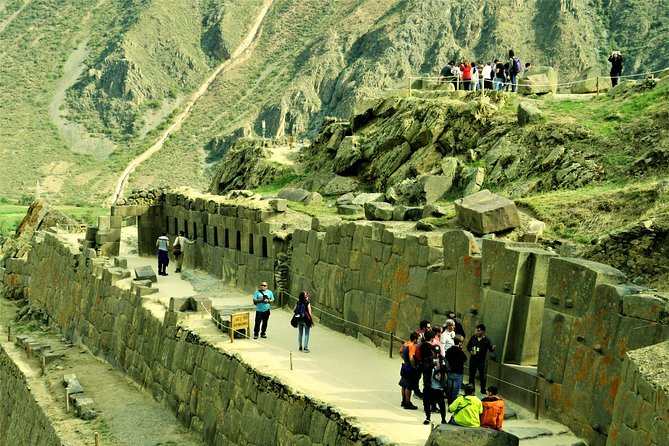
Cusco is one of those places where everything is layered. You look at a wall and you are not sure what is Inca and what is Spanish until someone points it out. This tour is designed to help you read the city without getting lost, and it does it in a tight time window.
You start in the center of town and then move outward. The mix matters: you begin with the ceremonial heart of the Inca world, then shift to the famous Sun Temple, then to the fortress, and finally to smaller ritual and water sites. If you have limited time, this is the kind of plan that helps you come away with a coherent mental map instead of a list of ruins.
The “small group” part is not just a marketing line. With up to 16 people, you are usually close enough to hear details, and the guide can keep traffic moving through entrances. If you are traveling with friends or family, it also feels less rushed than the big cattle-car tours.
Plaza de Armas and Loreto Street, the Ceremonial Core
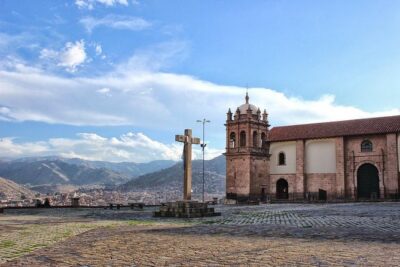
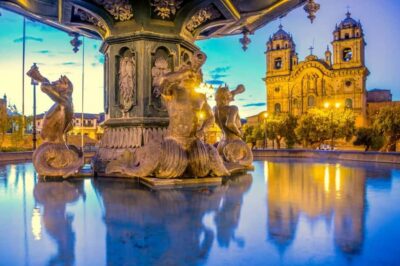
The tour begins at 1:00 pm at the Plaza de Armas. This square is more than pretty stone and colonial balconies. It sits at the center of a much older world, because this area was once the main ceremonial focus for the Inca Empire.
From there you get a guided orientation around the square’s most important buildings. Then you walk toward the 12 Angled Stone, a famous Inca block that still appears perfectly fitted into an ancient wall. It’s the kind of detail that makes you slow down, because the stonework feels engineered, not rough.
You also pass along Loreto Street, known for its Inca urban design, with original stones running along both sides. This is a good early stop because it teaches you what to look for. After Plaza de Armas, you will start spotting Inca stone shapes under later construction instead of seeing Cusco as one uniform “old town.”
Practical note: this is the start of your day, so wear shoes you can walk in comfortably, and expect at least some uneven pavement.
Coricancha, Inca Precision Under the Santo Domingo Convent
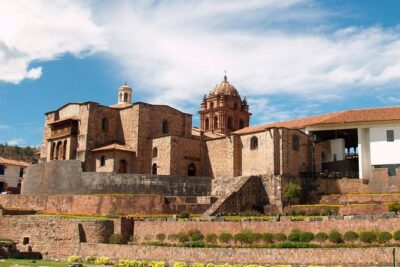
Next up is Coricancha, once the most important Inca temple, dedicated to the Sun. The story here hits in two layers: the Inca foundations are on the ground, and the Spanish build sits on top, visible in the same space. You get a guide-led explanation of how the conquistadors converted the sacred complex, including the way the Santo Domingo convent was built over Inca foundations.
Coricancha is fascinating because you can compare construction styles without leaving the site. The Inca stonework is tight and precise, and once you notice that, the rest of the site makes more sense. Your guide also explains how the temple was once covered in gold and used for ceremonies, astronomy, and worship.
The visit is included, so you do not have to juggle ticket logistics mid-tour. Time is tight, though. With about 30 minutes on site, you will want to choose a couple of focal points: the stone contrasts, and anything your guide highlights as the most telling remains.
If you love architecture or you are curious how empires overwrite each other, Coricancha is often the stop that makes the whole trip click.
Sacsayhuaman, Zigzag Stone Walls and Big Cusco Views
Then you ride by vehicle to Sacsayhuaman, Cusco’s most impressive Inca fortress site above the city. This is where the tour really shifts from “walkable old town” to “dramatic ruins with scale.”
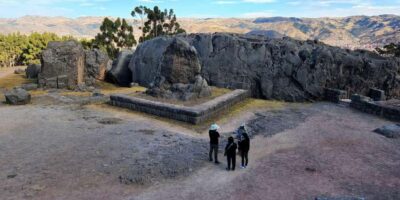
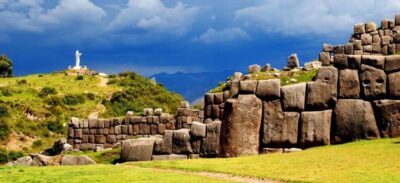
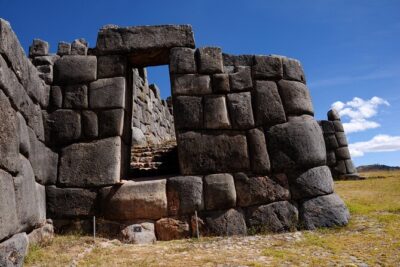
Sacsayhuaman is famous for giant zigzag stone walls made of blocks that were fitted so tightly you cannot even slide a paper between them. That claim gets repeated a lot, but it is the right way to frame what you see. When you stand near the walls, the design feels less like building and more like solving a giant puzzle.
Your guide walks you through the site and shares the fortress role in Inca battles and ceremonies. You also learn how Sacsayhuaman still connects to present-day tradition through the Inti Raymi festival. Add to that the panoramic views of Cusco and the surrounding mountains, and you have a stop that does both story and scenery.
One consideration: this area is outdoors and high up. Bring a layer for wind and be ready for bright sun. If you get cold easily, plan for it even in the daytime.
Nearby in Cusco, these earned their own write-ups
Q’enqo and Puka Pukara, Ritual Carvings and a Strategic Feel
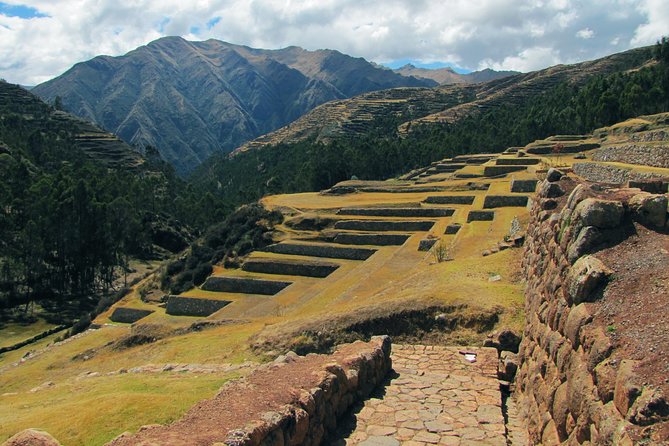
After Sacsayhuaman, the tour heads to Q’enqo (spelled Q’uenqo in some materials). This site is carved almost entirely from rock, and the experience feels more like moving through a sacred space shaped by intention than a typical ruin. You go through winding passages, carved channels, and hidden altars that were likely used for important rituals.
Your guide explains theories about what Q’enqo was used for, and the meaning of the name. Qenqo means “zigzag” in Quechua, and the design makes the name feel obvious once you see the shapes.
Then you continue to Puka Pukara, also known as the Red Fortress. The name Puka Pukara means “Red Fortress” in Quechua. This stop has a different vibe from Q’enqo. Here the emphasis is on practicality, with the feeling that it served as a military checkpoint and resting place on the road that connected Cusco with the Sacred Valley and the jungle.
From the terraces and stone walls, you get open views that help you imagine people moving through the area: messengers, travelers, and watch posts. Your guide points out guard posts, rooms, and walls so you are not just taking pictures. You are understanding how control and communication worked for the capital.
Timing note: with about 30 minutes each, you cannot overthink every theory. Instead, treat this as a “sense check” stop. Pick a couple of features and let the guide’s explanation shape your take.
Tambomachay, Water Fountains and Water Worship at a Calm Pace
Finally, you visit Tambomachay, a peaceful Inca site known for clear water fountains and elegant stonework. You may hear it called the Inca Baths. That nickname captures the vibe, but your guide focuses on the real point, water worship and reverence for nature.
What stands out is the engineering you can still see at work. There are built aqueducts and canals that still carry water after hundreds of years. It is not only pretty, it is functional. And that matters, because it shows the Incas weren’t just making monuments for looking at, they were shaping systems for daily life and ceremonial use.
This stop is the calm finish. It’s a good moment to slow down, take photos, and catch your breath before returning to Cusco. The air can feel cleaner here, and the site often feels less crowded than the headline ruins.
Practical tip: if you are sensitive to altitude, use Tambomachay as your pacing reset. Sit for a minute where you can hear the water and let your body settle before heading back.
Price and What Makes This Tour Feel Like Value at $98
At $98 per person for about 4 to 5 hours, this is priced for people who want a focused Cusco overview without DIY stress. The value mostly comes from what is included, not the sightseeing itself.
You get hotel pickup and drop-off within the Cusco Historic Center, plus a professional guide, plus entry to Coricancha. On top of that, you get a partial Tourist Ticket, Circuit I, which covers these sites: Sacsayhuaman, Q’enqo, Puka Pukara, and Tambomachay. In other words, you pay once and you do not spend your afternoon hunting tickets and lines one by one.
What you do not get is also worth planning for. Cathedral entrance and visit are not included, and there are no meals or snacks. That means the tour is easy to slot into a day, but you still need to cover your own food and any extra must-see like the Cathedral.
If you are on a tight schedule or you simply want your guide to connect the dots, this is a fair deal. If you are the type who already plans tickets in advance and loves wandering solo, you might spend less by DIY. But you would lose the “why this matters” explanations, which is where this tour earns its keep.
A small timing note: it is often booked about 45 days in advance. If your travel dates are firm, booking earlier can help you lock in the departure that fits your rhythm.
Pacing, Comfort, and the “Up to 16” Small-Group Advantage
The tour runs on a schedule with short stop times, roughly 30 minutes per site. That adds up quickly, so it works best if you come ready to move. It is not a slow museum tour where you can linger for an hour at every wall.
The up-side is momentum. You see a lot of Cusco’s key Inca sites in one go, and your guide keeps the story coherent. The down-side is you need to be comfortable with brief visits. If you are the kind of traveler who wants long, quiet time to study inscriptions, plan to supplement with an extra independent visit later.
Transportation helps the pacing. You start in the center on foot, then move to Sacsayhuaman by vehicle, and then continue outward to the remaining sites. That means less downhill fatigue and fewer “wrong turn” moments.
Fitness-wise, the tour asks for moderate physical fitness. That usually means you should be fine on uneven ground and short walks, but you should not treat this as a gentle stroll. If you know you get winded at altitude, pace yourself early and bring water.
Choosing the Right Half-Day Departure in Cusco
You can choose morning or afternoon departures, and the start time shown for this option is 1:00 pm. Afternoon works well if you want a slow start, or if you are trying to avoid a rush with other morning activities.
That said, Cusco weather can change quickly. Sun can be strong, and temperatures can drop as you go higher. If you take the afternoon slot, pack a light layer, even if mornings feel warm.
This is a solid pick for first-time Cusco visitors who want orientation. It also fits travelers who are not doing a full-day Sacred Valley plan at the same time. If Machu Picchu is your main event, this tour can still give you context, because it teaches the Inca logic behind the sites around Cusco.
If you like having a guide who tells stories with real emotion, this operator has a strong track record with guides such as Katia and Jennifer being praised for turning Inca and Quechua history into something you can follow.
Should You Book This Cusco City Tour?
Book it if you want a fast, guided Cusco overview that connects the Inca story from the city center out to fortress, ritual, checkpoint, and water sites. The included ticket bundle and the pickup from the historic center make it practical, especially if you do not want to spend your limited time figuring out entrances.
Skip it or treat it as a partial solution if the Cathedral is a non-negotiable must. Since Cathedral entrance is not included, you will need to add it separately or accept that you only get the tour highlights plus a short walk orientation.
One more smart move: if you book, come with comfortable shoes and a water plan. Cusco altitude can turn “only 30 minutes” into “why is my heart doing this,” so pace yourself.
If you want to feel like you understand Cusco after a few hours instead of after days of random wandering, this is a good bet.
FAQ
How long is the Cusco City Tour with Sacsayhuaman & Inca Sites?
It runs about 4 to 5 hours.
Where does the tour start and end?
It starts at Plaza de Armas in Cusco and ends back at the same meeting point.
What time does the tour depart?
This option starts at 1:00 pm.
What is included in the price?
Hotel pickup and drop-off (Cusco Historic Center), Coricancha entrance, and a partial Tourist Ticket (Circuit I) covering Sacsayhuaman, Q’enqo, Puca Pucara, and Tambomachay, plus a professional guide.
What is not included?
Cathedral entrance and visit, meals and snacks, and travel insurance.
How big is the group?
The tour has a maximum of 16 travelers.
Can I get a full refund if I cancel?
Yes. Free cancellation is available if you cancel at least 24 hours before the experience’s start time.
More Tours in Cusco
- Cusco: Humantay Lake Tour with Breakfast and Buffet Lunch
★ 4.9 · 2,976 reviews - From Cusco: Moray, Maras Salt Mines & Chinchero Weavers Tour
★ 4.8 · 1,925 reviews - From Cusco: Full-Day Group Tour of Machu Picchu
★ 4.7 · 1,767 reviews - Cusco: Half-Day City Tour with Sacsayhuaman and Q’enco
★ 4.6 · 1,129 reviews - Machu Picchu: Full-Day Tour from Cusco with Optional Lunch
★ 4.6 · 927 reviews
More Tour Reviews in Cusco
- Cusco: Humantay Lake Tour with Breakfast and Buffet Lunch
★ 4.9 · 2,976 reviews - From Cusco: Moray, Maras Salt Mines & Chinchero Weavers Tour
★ 4.8 · 1,925 reviews - From Cusco: Full-Day Group Tour of Machu Picchu
★ 4.7 · 1,767 reviews - Machu Picchu Day Trip from Cusco
★ 4.5 · 1,644 reviews - Cusco: Half-Day City Tour with Sacsayhuaman and Q’enco
★ 4.6 · 1,129 reviews
Cusco Street by Street
- Cusco: Half-Day City Tour with Sacsayhuaman and Q’enco
★ 4.6 · 1,129 reviews - City Tour Cusco Qoricancha Sacsayhuaman y Tambomachay
★ 4.7 · 617 reviews - Cusco City Sightseeing, San Pedro Market, Cathedral and Qorikancha Temple
★ 4.5 · 139 reviews - Cusco City Sightseeing and Sacsayhuaman Archeological Park Tour
★ 4.5 · 101 reviews - Cusco 4-Hour Private Tour Including Sacsayhuaman and Qenqo
★ 5.0 · 77 reviews
Freshly reviewed across Cusco
- Excursion Cusco – Puno – Titicaca Observatory Train★ 5.0 · 3 reviews
- Sacred Valley Vip Cusco★ 4.7 · 3 reviews
- Cusco | Humantay Lake 1-Day Tour with Breakfast and Lunch★ 5.0 · 3 reviews
- Full-Day Condor Viewpoint & Inca Sites Tour★ 5.0 · 3 reviews
- Best of Cusco: Private Walking Tour with a Local★ 3.6 · 3 reviews
- From Cusco: Full-Day Private Sacred Valley Tour★ 5.0 · 3 reviews
Cusco City Tours side by side.
 ★ 4.6Cusco: Half-Day City Tour with Sacsayhuaman and Q’encoFrom $131,129 reviews
 ★ 4.7City Tour Cusco Qoricancha Sacsayhuaman y TambomachayFrom $13617 reviews
 ★ 4.5Cusco City Sightseeing, San Pedro Market, Cathedral and Qorikancha TempleFrom $59139 reviews
 ★ 4.5Cusco City Sightseeing and Sacsayhuaman Archeological Park TourFrom $79101 reviews
 ★ 5.0Cusco 4-Hour Private Tour Including Sacsayhuaman and QenqoFrom $8777 reviews
 ★ 4.5Sacsayhuaman Temple, Tambomachay and Puca Pucara Half-Day TourFrom $6959 reviews
 ★ 4.5Half-Day City Tour of Cusco Including TambomachayFrom $1859 reviews
 ★ 5.0Private Cusco City Tour with Sacsayhuaman & Inca SitesFrom $18052 reviews
Also on these Peru lists