
REVIEW · PISCO AND WINE
Cusco: Historic Walking Tour with Pisco Sour and Music Show
Cusco has layers, and this walk shows them. You’ll start in Plaza de Armas, then move through big names like the Cathedral and Qoricancha, plus quieter stops such as the angled stones and the Condor, Puma, Snake carvings. I like that it’s compact and focused, with San Blas giving you real neighborhood feel instead of just checklists. One watch-out: the music stop can vary, so if you’re coming only for a specific show, keep your expectations flexible.
Two strong reasons to do it early in your trip: you get a fast orientation to Cusco’s center, and you learn how the Inca and colonial story overlap in the street itself. The small group size (10 max) also makes it easier to ask questions when you hit places like Qoricancha. If you want a fully accessible tour, this one is not your best match.
The walk ends with a drink and views, typically pisco sour (or a non-alcoholic option like chicha morada). In the past, guides like Erick and Nilo have helped people settle in with good traveler tips along the route, and Niki has led tours that kept energy up without rushing you. Plan on being on your feet for a couple of hours, mostly outdoors.
In This Review
- Key highlights worth your attention
- Cusco in two hours: what this walking tour gets right
- Where you start in Plaza de Armas and why the Inca Fountain matters
- From Cathedral to Qoricancha: walking through Cusco’s layers
- The balcony, the angled stones, and the Condor, Puma, Snake carvings
- San Blas neighborhood stroll: slower pace, better photos
- Luthier workshop plus Andean music: instruments you can see
- 7 Borreguitos Street and the Temple of Manco Capac
- The sunset viewpoint and the final drink: pisco sour or chicha morada
- Price and value: why $10 can feel like a bargain
- Who should book this Cusco walking tour, and who should skip it
- Booking tips and practical expectations
- Should you book this Cusco historic walking tour?
- FAQ
- How long is the Cusco historic walking tour?
- Where do we meet for the tour?
- What languages is the tour offered in?
- What is included in the price?
- Are museum entrances included?
- What drinks are offered at the end?
- Is the tour accessible for wheelchair users or people with mobility issues?
Key highlights worth your attention
- Plaza de Armas to Qoricancha: you connect the famous sights with the street-level details in between
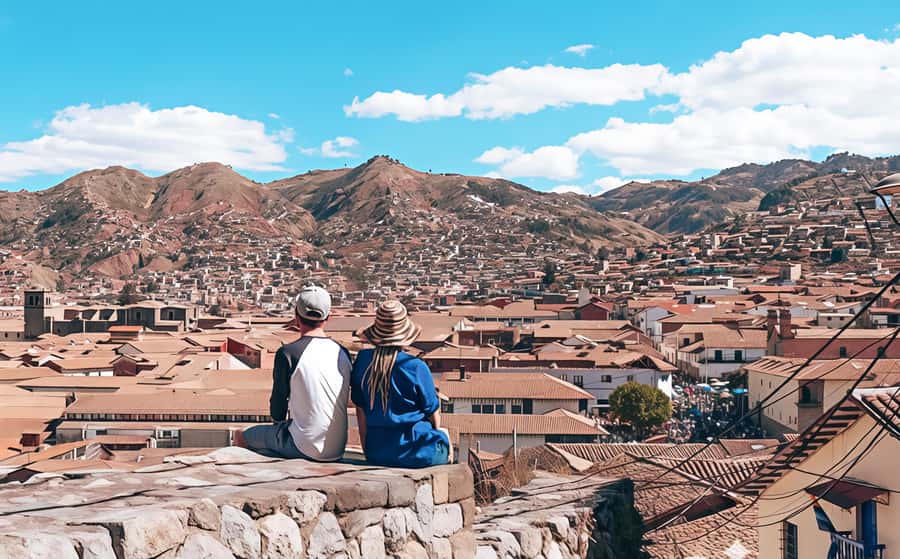
- San Blas: a real neighborhood stroll, with classic photo angles
- The angled stones and Andean Trilogy: symbolism you can actually see, not just hear about
- Luthier workshop and Andean music: instruments and performance in the same arc
- 7 Borreguitos Street and views: a perfect Cusco photo rhythm before the final temple stop
- Pisco sour or chicha morada: the tour finishes in a friendly, local setting
More bodegas and distilleries around Ica
- Cusco: Historic Walking Tour with Pisco Sour and Music Show
★ 4.6 · 65 reviews - Pisco Sour Secrets: Hands-On Mixology in Historic Cusco
★ 4.5 · 50 reviews - Cusco: Legends and History Night Tour with Pisco Sour
★ 5.0 · 9 reviews - Cusco: Planetarium and Night Tour with Dinner and Pisco Sour
★ 4.9 · 9 reviews
Cusco in two hours: what this walking tour gets right
This is the kind of tour I like in Cusco: short enough to fit right after you arrive, but packed with context. You’re not just walking from one labeled landmark to the next. You’re learning how the city’s story shows up in architecture, wall carvings, and even the way people gather in the center.
The price, about $10 for a 2-hour guided walk, is low enough that you can treat it as a smart intro, not a splurge. You’re getting a bilingual guide, a stop at a luthier (instrument maker), an Andean music show, and a drink at the end. Add optional museum entrance if you choose to go in, but you’re not forced into extra costs.
The small group matters. With a limit of 10 participants, you spend less time waiting and more time looking closely. And when you run into questions, you’re more likely to get a real answer instead of a quick generic one.
Where you start in Plaza de Armas and why the Inca Fountain matters
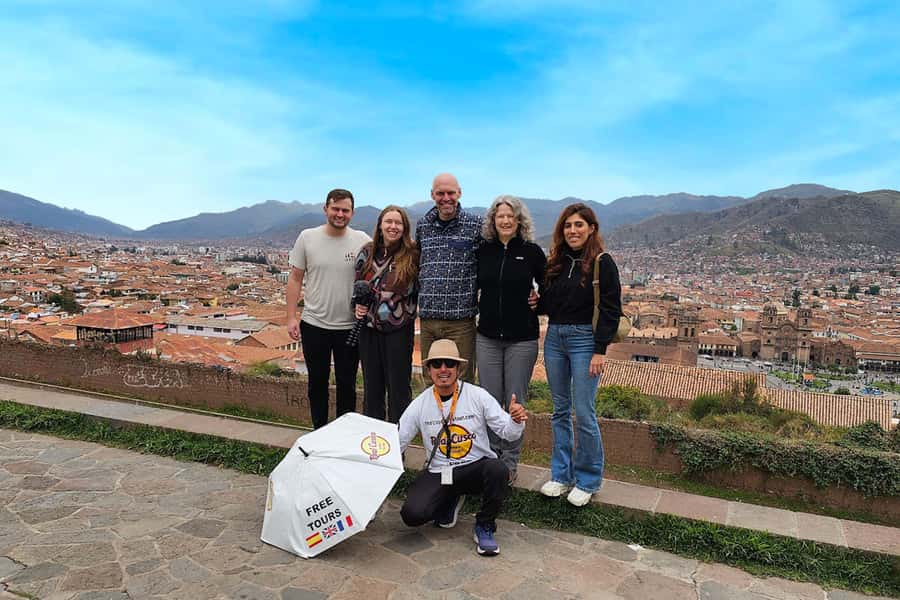
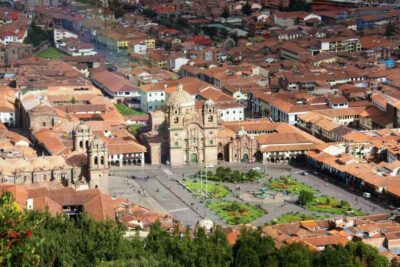
You meet next to the Inca Fountain in Plaza de Armas, with the guide holding a white umbrella. This is a practical start point, because almost every first-day plan in Cusco circles back to the main square.
From there, the tour uses the center like a map. You’ll see the Cathedral area and key colonial-era buildings right away, then use that as a backdrop for understanding what came before. The point is not to memorize facts. It’s to help your brain place Cusco’s landmarks in the right order.
If you’re arriving from altitude, this early stage is a good pace. You’re moving slowly through the core, getting your bearings without a long climb. Just remember, you’re still walking on uneven streets, so good shoes help.
From Cathedral to Qoricancha: walking through Cusco’s layers
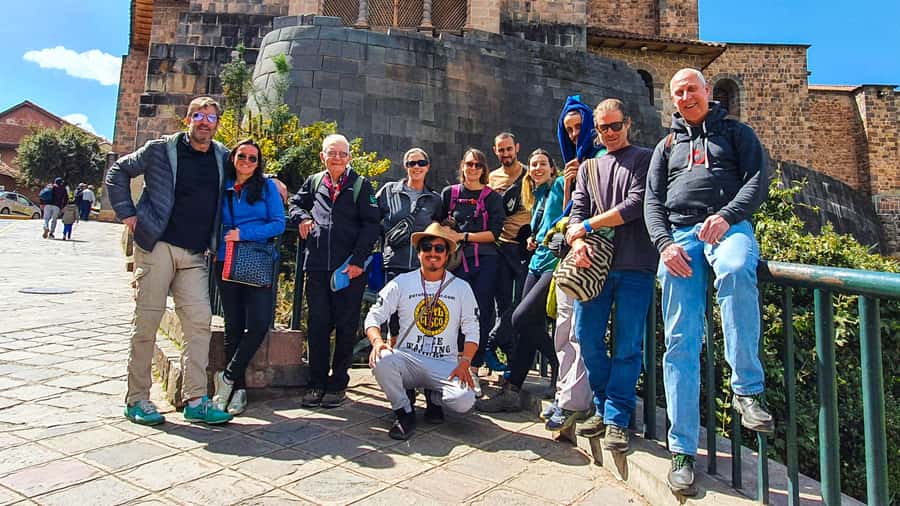
The core of your route is a walk through overlapping eras, Inca and colonial in the same radius. You’ll check out the Cathedral, then the Company of Jesus, and then head to Qoricancha, the Sun Temple.
Qoricancha is often treated like a single stop, but on this tour it becomes a turning point. The guide connects why this site mattered and how the later buildings and renovations reshaped what people see today. That’s what makes the time feel efficient: you’re not only looking at stones and walls, you’re learning the why.
As you move, you’ll also pause for the kinds of details most people skip because they’re staring at bigger landmarks. Think of it as training your eyes. Cusco rewards that kind of attention, and the tour is built to slow you down at the right moments.
The balcony, the angled stones, and the Condor, Puma, Snake carvings
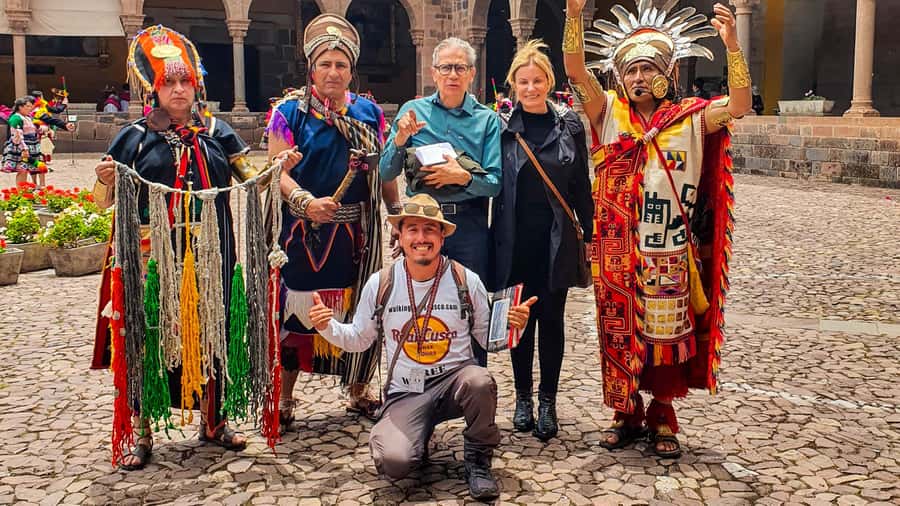
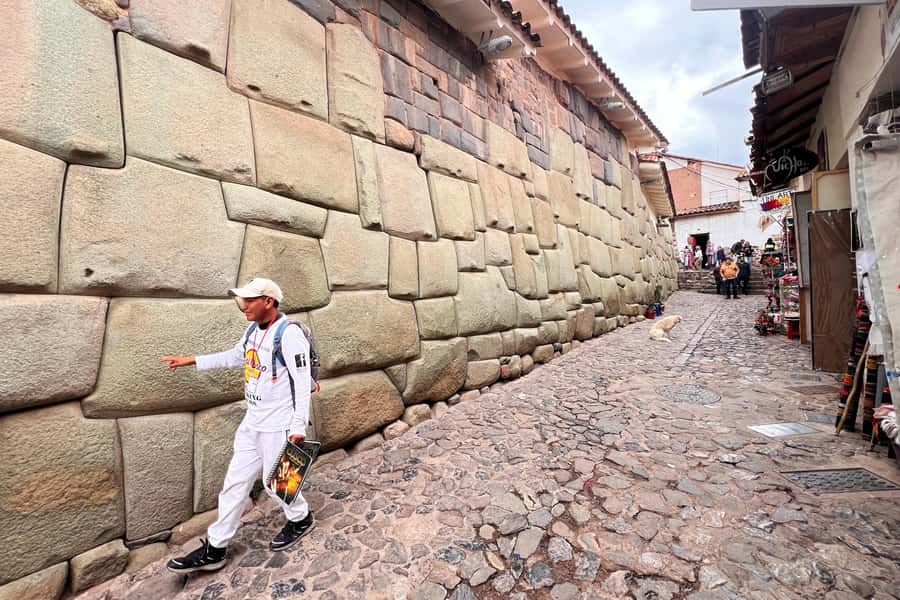
A few of the best moments happen in “in-between” spaces. You’ll gaze up at one of Cusco’s most beautiful balconies, then keep walking until you reach the famous 12 and 13 angled stones.
These stops are more than trivia. They help you understand Inca engineering and how perfectly fitted stones still catch light and draw your eye even centuries later. If you like seeing how design choices were built for durability and precision, you’ll enjoy this section a lot.
Then comes the Andean Trilogy concept, with silhouettes of the Condor, Puma, and Snake carved into an Inca wall. It’s the kind of symbol set that makes Cusco feel personal, not generic. You get the meaning in plain language and then you see it directly in the stone.
Other guided walking routes in Cusco
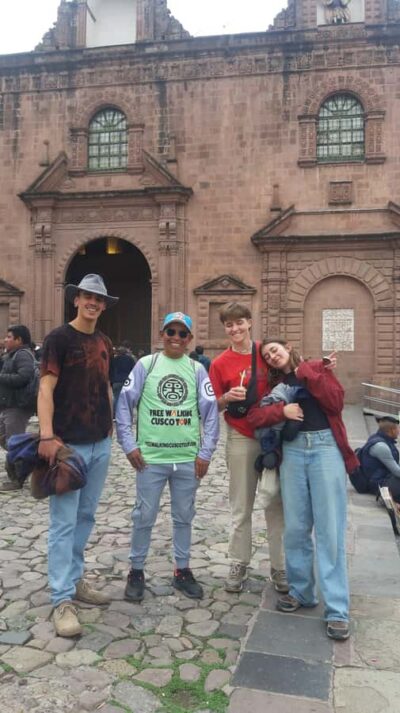
San Blas neighborhood stroll: slower pace, better photos
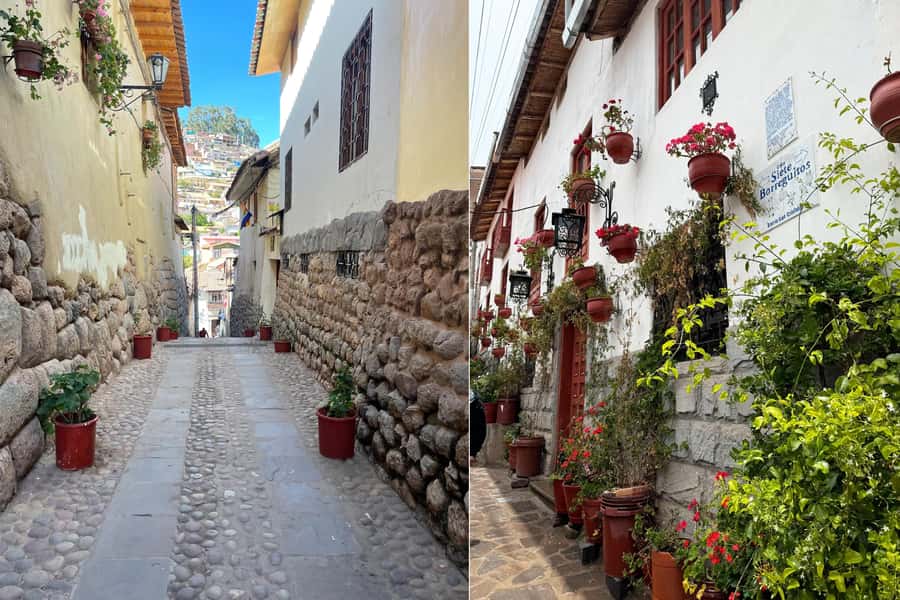
After the heavy hitters in the center, the tour shifts into a more human scale with a walk through San Blas. This is the part I’d use to reset your energy. The streets feel charming and compact, and the neighborhood vibe makes Cusco feel like a living place instead of a museum on wheels.
You’ll stroll the picturesque lanes and pick up little perspective on how artists and locals live around the historic sights. It’s not a long detour. It’s a strategic one, because San Blas is where you start to feel the city beyond the monuments.
If you care about photos, San Blas is your payoff zone. The architecture and street angles are made for simple framing: doors, windows, stairways, and views that pop up between buildings.
Luthier workshop plus Andean music: instruments you can see
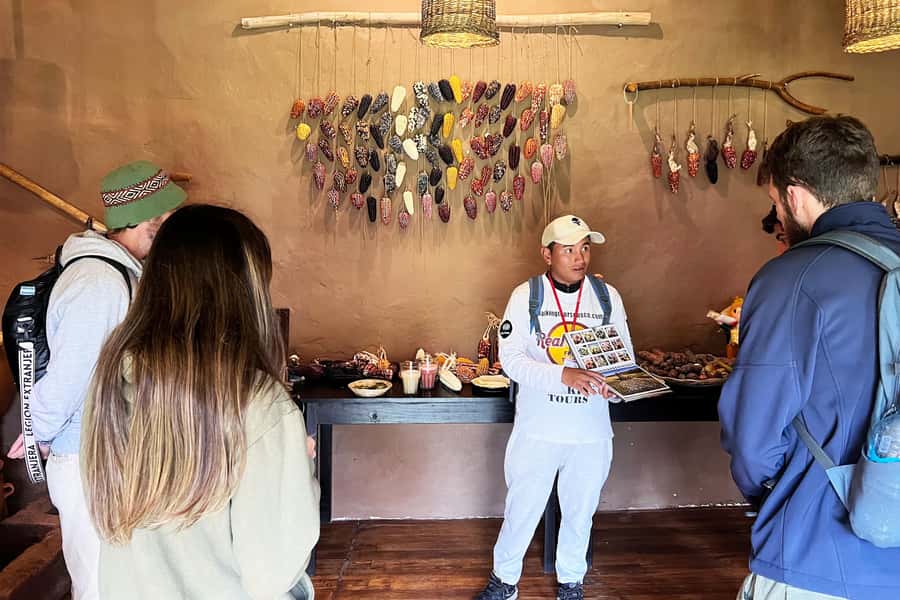
One of the most practical inclusions here is the luthier workshop visit. Instead of treating Andean music as something you only hear from a stage, you get a look at how instruments are made by a skilled maker. That gives the music an extra layer of meaning because you can connect sound to craftsmanship.
Then you’ll attend an Andean music show. This is often a highlight because it ties together what you learned about symbols and Andean culture with something emotional and immediate.
Important reality check: the music portion can depend on local timing and closures. In one case, a music vendor was closed and the guide helped by recommending another dance show afterward. So if music is your main reason to book, I’d still go. But I’d also plan to be happy with the idea that Cusco sometimes adjusts schedules on the fly.
If you want to extend the night, ask your guide for a follow-up recommendation. In the past, guides have pointed people toward a local dance show after the tour, which can be a fun way to keep the energy going.
7 Borreguitos Street and the Temple of Manco Capac
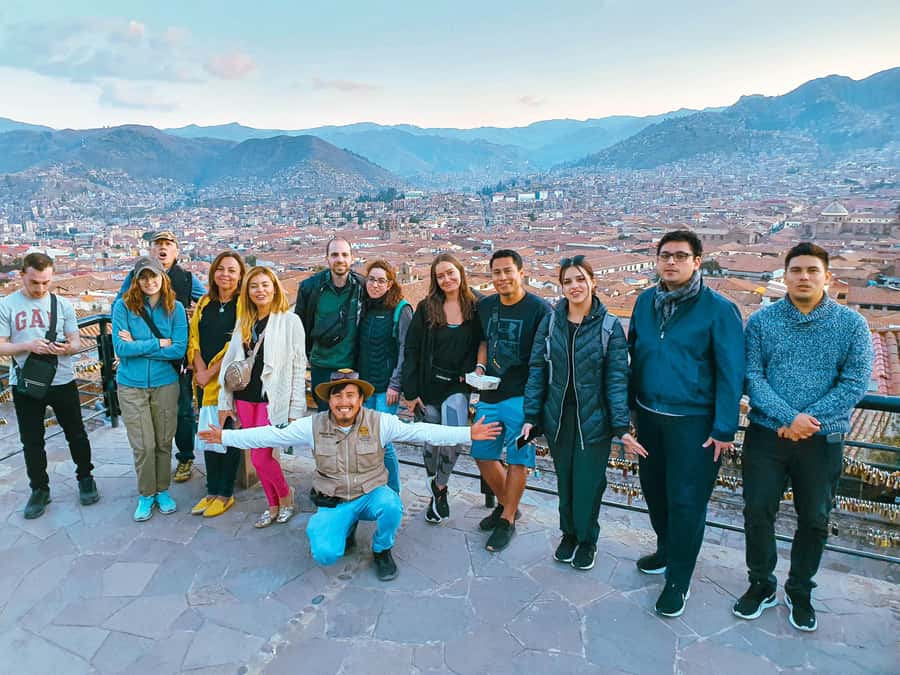
The tour then moves into one of Cusco’s most photogenic stretches, 7 Borreguitos Street, known for being the city’s most picturesque street. The value here is not just photos. It’s the moment when your walk becomes distinctly Cusco, with curves, balconies, and the kind of architecture that makes you slow down without trying.
After that comes a key historical stop: the Temple of the First Inca Ruler, Manco Capac. This final segment turns the walk from “pretty street photos” back into meaning. You see another side of how the city remembers its origins and how those memories live in places you can reach on foot.
If you’re short on time, this is a smart order. You end with a strong historical note so the trip doesn’t fade into just memories of good views.
The sunset viewpoint and the final drink: pisco sour or chicha morada
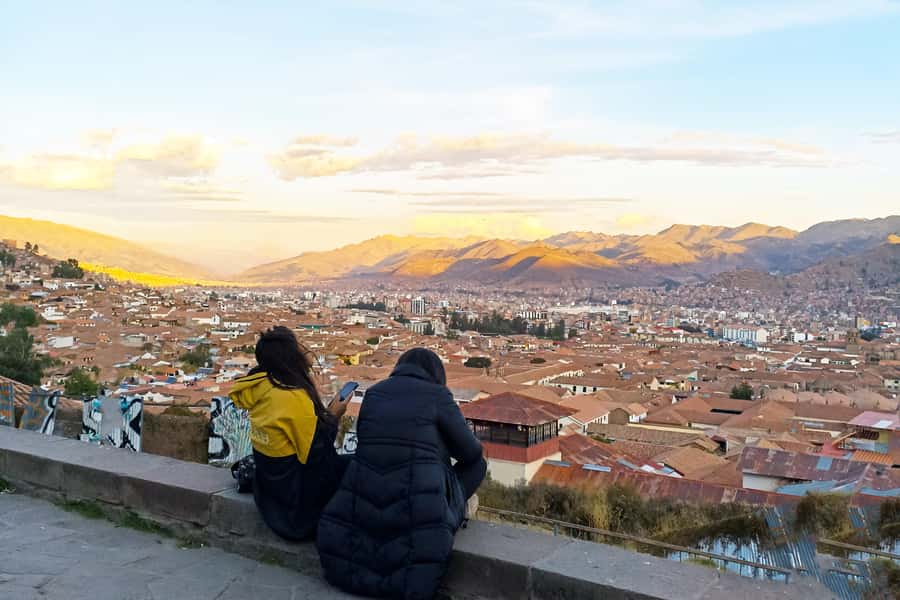
The tour finishes with a drink choice: a Pisco Sour or Chicha Morada, a non-alcoholic Peruvian favorite. This is a classic Cusco move, because you’re not just sightseeing, you’re also tasting what the city is about.
I like that the drink is included. In Cusco, it’s easy to blow your budget on a bunch of small extras. Here, you get the payoff built in, and it helps you debrief the whole walk while things are still fresh in your head.
There’s also often a viewpoint moment in the tour flow. One person mentioned a beautiful sunset viewpoint, and it makes sense with the way the route is paced toward the end. If you want photos with golden light, that’s your cue to be ready with your camera or phone.
Price and value: why $10 can feel like a bargain
Let’s talk value in real terms. For around $10, you get:
- a bilingual guide (English and Spanish)
- a workshop stop at a luthier’s place
- an Andean music show
- and a drink at the end
That’s a lot for the time. The hidden value is that the guide also connects dots for you: why Qoricancha matters, how the angled stones and carvings fit together, and what you should notice as you walk. Guides like Erick, Nilo, and Niki have been highlighted for making tours feel fun and well paced, not like a lecture you endure.
One caution on expectations: a guide can recommend doing something else right after the tour, and sometimes the music vendor might be closed, which changes the exact experience. Still, the core walk and the included drink typically remain the anchor.
Who should book this Cusco walking tour, and who should skip it
This tour is best for you if:
- you want a 2-hour orientation to Cusco’s center
- you like Inca-era symbols explained in plain language
- you want a mix of landmarks plus a neighborhood stroll in San Blas
- you enjoy music and want to see instruments in context at a luthier workshop
It’s not a fit if you need step-free access. The tour is not suitable for people with mobility impairments, wheelchair users, hearing-impaired people, babies under 1 year, or people over 95 years. You’ll be walking on uneven streets and sidewalks, and the rhythm includes stops where mobility limitations would matter.
Also, if you’re coming only for museums, note that museum entry is not included. The tour focuses on outdoor and landmark stops. You might see opportunities to go inside optional places, but you’d need to pay separately if you choose to.
Booking tips and practical expectations
Start by choosing the language you’re comfortable with. Tours run in English and Spanish, and there is also mention of a French guided tour with a minimum number of customers required to proceed. If you’re set on French, check availability before you assume it will run.
For pacing, think “steady walking with frequent looking.” This is a historic walking tour, not a bus tour. Wear comfortable shoes and keep some water handy, especially in Cusco.
If you care about the music portion, be flexible. Even when the plan is strong, local closures can happen. A good strategy is to go for the full experience, then let your guide point you to a replacement show if needed.
Should you book this Cusco historic walking tour?
My vote is yes if you want an efficient, meaningful first pass through Cusco. It hits the high points people come for, then it adds the street-level details that make Cusco feel real: the angled stones, the Andean Trilogy carvings, San Blas streets, 7 Borreguitos, and the Manco Capac temple stop.
If you want a long, museum-heavy day, you’ll likely want something else. And if accessibility is a concern, this one is not designed for that.
If you’re arriving soon and you want to get oriented fast, this tour is a smart start. You’ll leave with better context for the rest of your Cusco days, plus a drink finish that feels like you ended the day like a local, not like a rushed tourist.
FAQ
How long is the Cusco historic walking tour?
The tour lasts 2 hours.
Where do we meet for the tour?
Meet next to the Inca Fountain in Plaza de Armas. The guide will be holding a white umbrella. (Coordinates: -13.516772, -71.9787231)
What languages is the tour offered in?
The tour is offered in English and Spanish. A French guided tour is also mentioned, but it requires a minimum of four customers to proceed.
What is included in the price?
Included items are a bilingual tour guide, a visit to a luthier’s workshop, and a pisco sour or a non-alcoholic drink.
Are museum entrances included?
No. Entry to museums is not included, and it’s optional if you choose to go into any.
What drinks are offered at the end?
You can choose between a pisco sour or chicha morada (non-alcoholic).
Is the tour accessible for wheelchair users or people with mobility issues?
No. It is not suitable for people with mobility impairments and wheelchair users.
More Tours in Cusco
- Cusco: Humantay Lake Tour with Breakfast and Buffet Lunch
★ 4.9 · 2,976 reviews - From Cusco: Moray, Maras Salt Mines & Chinchero Weavers Tour
★ 4.8 · 1,925 reviews - From Cusco: Full-Day Group Tour of Machu Picchu
★ 4.7 · 1,767 reviews - Cusco: Half-Day City Tour with Sacsayhuaman and Q’enco
★ 4.6 · 1,129 reviews - Machu Picchu: Full-Day Tour from Cusco with Optional Lunch
★ 4.6 · 927 reviews
More Tour Reviews in Cusco
- Cusco: Humantay Lake Tour with Breakfast and Buffet Lunch
★ 4.9 · 2,976 reviews - From Cusco: Moray, Maras Salt Mines & Chinchero Weavers Tour
★ 4.8 · 1,925 reviews - From Cusco: Full-Day Group Tour of Machu Picchu
★ 4.7 · 1,767 reviews - Machu Picchu Day Trip from Cusco
★ 4.5 · 1,644 reviews - Cusco: Half-Day City Tour with Sacsayhuaman and Q’enco
★ 4.6 · 1,129 reviews
Pisco Country, Another Stop
- Cusco by Night: Planetarium Cusco, Dinner, and Pisco Sour
★ 5.0 · 75 reviews - Pisco Sour Secrets: Hands-On Mixology in Historic Cusco
★ 4.5 · 50 reviews - Cusco: Legends and History Night Tour with Pisco Sour
★ 5.0 · 9 reviews - Cusco: Planetarium and Night Tour with Dinner and Pisco Sour
★ 4.9 · 9 reviews - Best of Cusco: Night Tour, Pisco Sour Lessons, and Dinner
★ 4.4 · 8 reviews
Freshly reviewed across Cusco
- Excursion Cusco – Puno – Titicaca Observatory Train★ 5.0 · 3 reviews
- Sacred Valley Vip Cusco★ 4.7 · 3 reviews
- Cusco | Humantay Lake 1-Day Tour with Breakfast and Lunch★ 5.0 · 3 reviews
- Full-Day Condor Viewpoint & Inca Sites Tour★ 5.0 · 3 reviews
- Best of Cusco: Private Walking Tour with a Local★ 3.6 · 3 reviews
- From Cusco: Full-Day Private Sacred Valley Tour★ 5.0 · 3 reviews
Pisco and Wine Tastings side by side.
 ★ 5.0Cook an Authentic Ceviche And Peruvian Pisco Sour!From $42107 reviews
 ★ 5.0Winery and Pisco Distillery tourFrom $3082 reviews
 ★ 4.3ICA: Pisco and Wine Route with tasting in 03 WineriesFrom $2980 reviews
 ★ 5.0Cusco by Night: Planetarium Cusco, Dinner, and Pisco SourFrom $9575 reviews
 ★ 4.9Miraflores: Amazing Peruvian Cooking Class Ceviche Seafood and Pisco SourFrom $4057 reviews
 ★ 4.7From Lima: Ballestas Islands, Huacachina, and Vineyard TourFrom $22056 reviews
 ★ 4.5Pisco Sour Secrets: Hands-On Mixology in Historic CuscoFrom $3550 reviews
 ★ 4.7Lima: Huacachina, Winery, & Nazca Lines from Pisco AirportFrom $62031 reviews
Also on these Peru lists