
REVIEW · MACHU PICCHU
From Cusco: Salkantay Trek to Machu Picchu 5D/4N or 4D/3N
There’s nothing casual about walking to Machu Picchu. What I love most is the mix of Salkantay Pass altitude drama and the payoff of a guided Machu Picchu visit, plus the stop at Humantay Lake for those unreal turquoise views. The only real drawback to keep in mind is ticket timing, since Machu Picchu access depends on availability and you may need to adjust.
I also appreciate how the day rhythm feels built for real hiking. You start early, walk high, then recover with scheduled meals, tea, and camp support instead of doing everything on your own. If you’re sensitive to altitude or you dislike long descent days, you’ll want to pace yourself.
This is a private group option with professional guides, and you get English/Spanish support. Plan for 4 days or 5 days of walking, plus the final Machu Picchu morning where timing matters a lot.
In This Review
- Key things I’d focus on before you go
- Cusco to the Trail: what that early start really means
- Day 1, Cusco to Soraypampa and Humantay Lake
- Day 2, the Salkantay Pass to Collpapampa or Chayllay
- Day 3 (5-day trek), Santa Teresa rainforest, La Playa, and Cocalmayo hot springs
- Day 4 (5-day or 4-day start), Llactapata viewpoint and the walk to Aguas Calientes
- Day 5, climbing to Machu Picchu and choosing your circuit
- Guides and food, what support looks like on this trek
- Price and value: what $50 covers, and what you may still pay
- What to pack (and what not to guess on)
- Who should book this trek, and who might prefer another style
- Should you book this Salkantay to Machu Picchu 4D/3N or 5D/4N?
- FAQ
- How long is the trek from Cusco to Machu Picchu?
- Where do the pickups happen in Cusco?
- Is there a Machu Picchu guided tour included?
- What are the Machu Picchu circuit options?
- Do I need to pay for Machu Picchu tickets?
- Are Humantay Lake and hot springs included?
- Do I get meals during the trek?
- Can I get vegetarian or vegan meals?
- What additional transport options are provided for returning from Machu Picchu?
- What should I bring for the trek?
Key things I’d focus on before you go
- Humantay Lake at altitude: the hike to a 4,200 m viewpoint makes the first day feel like a highlight right away.
- Salkantay Pass climb to 4,630 m: the highest point is the big physical marker of the whole trek.
- Llactapata archaeological stop: you get an Inca site with views over Machu Picchu before the main visit.
- Cocalmayo hot springs break: a real chance to reset after rainforest trails and long walking.
- Machu Picchu circuit choices: Circuit 2A/2B is the full visit, while 3B and 1B change what you see.
- Luggage logistics: a duffle bag up to 6 kilos rides with a horse, but some transfers may require extra effort.
Other citadel visits, ticket types and start times
- From Cusco: Full-Day Group Tour of Machu Picchu
★ 4.7 · 1,767 reviews - Machu Picchu Day Trip from Cusco
★ 4.5 · 1,644 reviews - Machu Picchu: Full-Day Tour from Cusco with Optional Lunch
★ 4.6 · 927 reviews - Cusco: 4-Day Inca Trail to Machu Picchu with Accommodation
★ 4.8 · 432 reviews
Cusco to the Trail: what that early start really means
The whole trip kicks off with an early pick-up in Cusco, starting as early as 4:30 a.m., depending on your chosen pickup point. Then you do a scenic drive that lasts about three hours before your first hiking day gets underway. That morning start isn’t just a timing detail, it’s smart. It helps you begin while temperatures are cooler and gives you more daylight to settle into altitude.
Before you hike, there’s a solid breakfast stop. You also get tea as part of the morning routine at camp, including coca tea or coffee depending on the day. For me, that matters because long treks can feel worse when you’re underfed. Here, the plan tries to keep your energy steady.
You should also know this trip is designed around either a 4-day or 5-day pace to Machu Picchu. The walking days are consistent in spirit, but the third and fourth days are what really change your experience.
Day 1, Cusco to Soraypampa and Humantay Lake
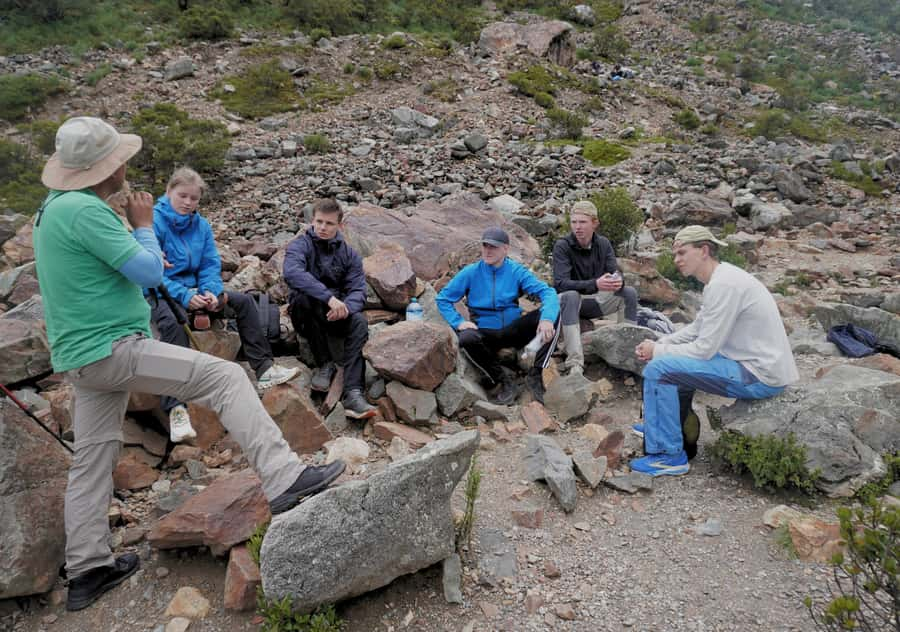
Day 1 is all about reaching height, then rewarding yourself with views. After driving out of Cusco, you hike toward Soraypampa, around 3,800 m. The walking time is about three hours to get there, which gives you a first taste of high-altitude hiking without jumping straight to the toughest elevation.
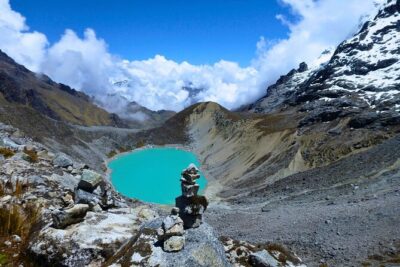
Then you take lunch and push onward to Humantay Lake at about 4,200 m. The trail time here is roughly two hours. This is one of the most “you can’t believe this is real” stops on the route. The lake is famous for its shimmering turquoise color, and you usually get your moment by hiking up, looking around, and taking in the scale of the mountains all around.
The day ends with another two-hour hike to your campsite. That means Day 1 isn’t just a photo stop. You’ll likely feel it in your legs, but the reward is that you sleep after seeing one of Peru’s most photogenic high lakes.
Practical note: you’ll want rain gear and sun protection even if the forecast looks fine. At this altitude, weather can change quickly, and you’re exposed much of the time.
Day 2, the Salkantay Pass to Collpapampa or Chayllay
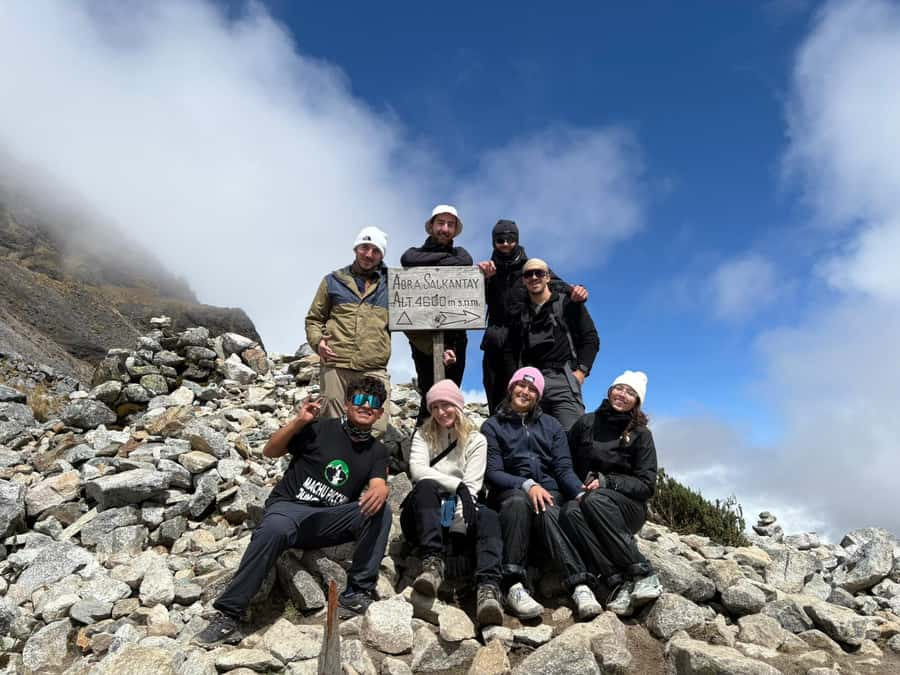
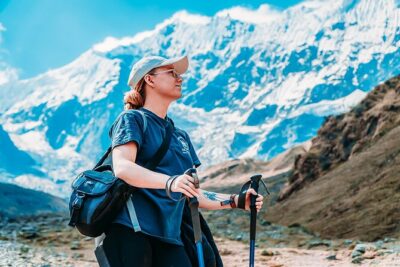
This is the day that defines the trek. You wake up at camp with coffee or coca tea and start hiking toward the highest point of the route at about 4,630 m. The climb takes around three hours, and the whole point is that you’ll be high enough to feel the effort immediately.
Along the way, you’ll also have a stop at a nearby lake, which helps break up the climb mentally. Then comes the descent, roughly three hours to Wayracmachay for lunch. That matters because it’s a built-in recovery point. Instead of descending until you’re completely drained, you fuel and regroup.
After lunch you keep descending for about three more hours through changing terrain and climates. The trek ends at camp near the villages of Chayllay or Collpapampa, around 2,770 m. For many people, this is a “thank goodness we’re lower” moment. Your breathing may still be working, but your body gets a chance to reset.
If you’re the kind of hiker who likes structure, this day fits you. Each segment has a purpose, climb, lunch, then a controlled descent to camp.
Day 3 (5-day trek), Santa Teresa rainforest, La Playa, and Cocalmayo hot springs
Day 3 is your change of pace. Instead of high altitude drama, you move through rainforest trails in the Santa Teresa area. You cross wooden bridges, pass waterfalls, and walk by plantations including bananas, passion fruit, and avocados. That shift can be a relief if you’re tired of cold air and steep slopes.
You hike until you reach La Playa, where you enjoy a buffet lunch. There’s also a moment of separation, since this is where the 4-day hikers typically end their journey. If you like meeting people on the trail, it’s one of those transitions that feels emotional in a quiet way, even when nobody makes a big scene.
In the afternoon, the plan includes a visit to the Cocalmayo hot springs for soaking. If you’d rather conserve energy, the schedule also gives you the choice to rest at camp instead. Either way, the day ends with dinner and a group bonfire, then you return to your room to sleep.
This is the day I’d recommend if you want the trek to feel complete, not just like a hard walk. The hot springs stop gives you a real recovery tool, and the rainforest adds variety so the whole story doesn’t blur into one long mountain grind.
Salkantay by other operators and other night counts
Day 4 (5-day or 4-day start), Llactapata viewpoint and the walk to Aguas Calientes
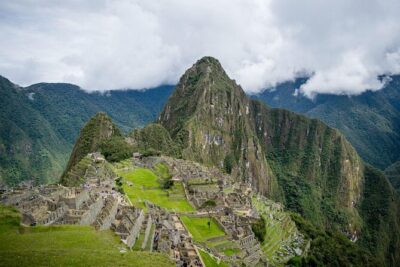
Day 4 is the build-up to Machu Picchu. You follow part of the original Inca Trail, then climb for about two hours to Llactapata, around 2,700 m. Llactapata is an archaeological site, and the big reason to care is that it looks down toward Machu Picchu. You get that “so this is the final destination” feeling before you’re actually inside the sanctuary.
After visiting Llactapata, you descend for about two hours to Hidroeléctrica for lunch. Then you walk onward to Aguas Calientes, where you check into your accommodation and have a group dinner scheduled for 7:00 p.m.
I like this day because it turns your muscles into a preview mode. You’re still hiking, but the objective is now different. The focus becomes orientation, anticipation, and getting your energy set for the Machu Picchu morning.
If you’re the type who needs sleep to enjoy a big day, protect your evening. Tomorrow starts early.
Day 5, climbing to Machu Picchu and choosing your circuit
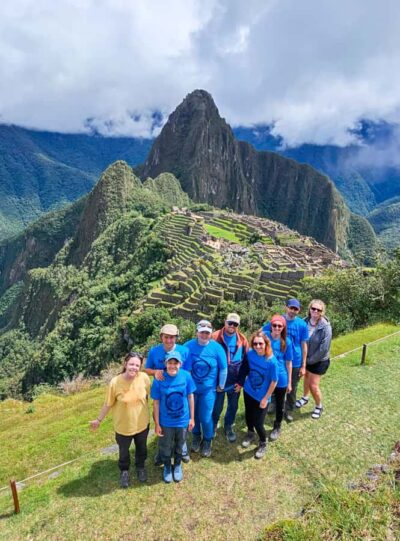
Machu Picchu morning starts with an early breakfast, then a climb of stairs for about one hour to the main gate. You arrive around 6:30 a.m. Then you get a guided visit for about 2.5 hours.
Here’s the part you should pay attention to: the tour uses different Machu Picchu circuits based on availability.
- Circuit 2A or 2B: a full visit, the most popular option.
- Circuit 3B: a lower stop at Machu Picchu plus a middle viewpoint and sacred temples.
- Circuit 1B: focuses on the upper terrace, basically the classic photo perspective.
So even if you do the same trek, your route through the site can feel slightly different. I’d treat that like a feature, not a flaw. If your top goal is the full sweep, aim for Circuit 2A or 2B. If you want a specific viewpoint style, ask what’s available for your date.
After the guided time, you descend and make your way back according to your reservation. If returning by car, your travel window is typically from about 6:00 a.m. to 9:00 a.m. at the latest. If returning by train, you can buy the departure time you want from Aguas Calientes to Ollantaytambo, then take a local car back to Cusco.
Guides and food, what support looks like on this trek
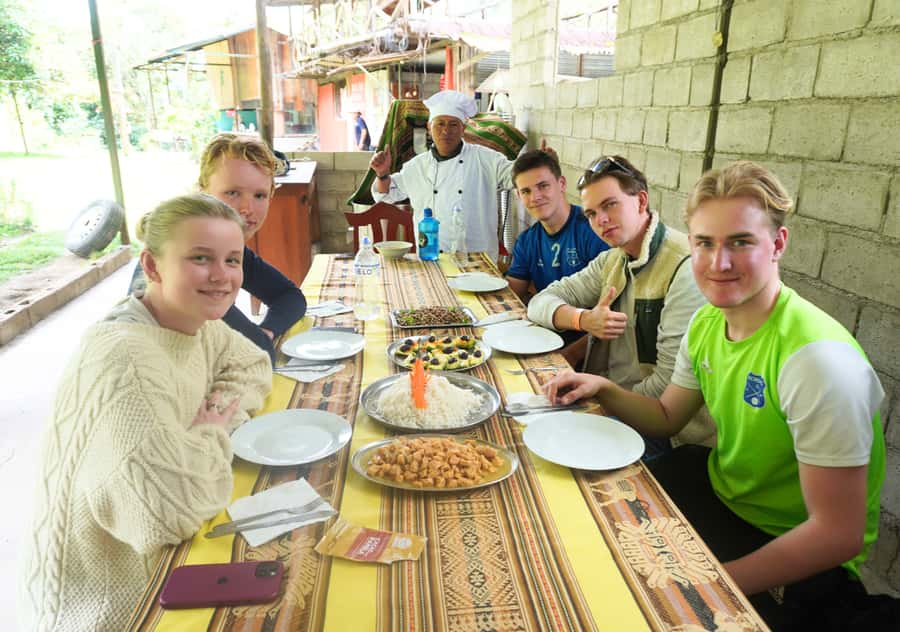
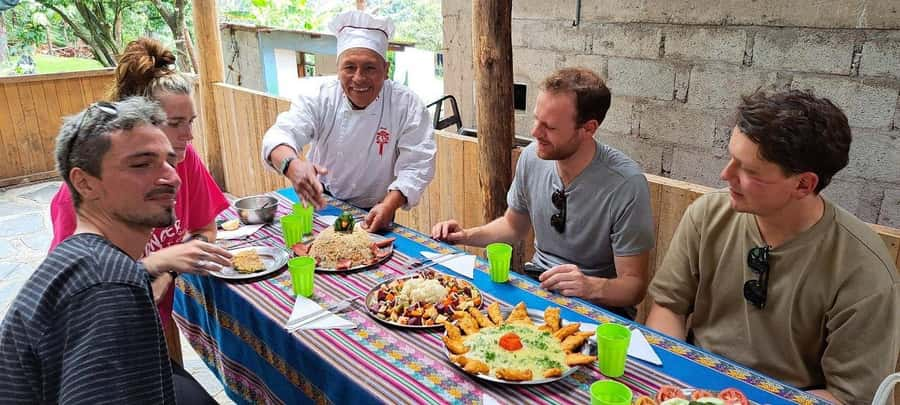
A trek is only as good as the team running it. One verified experience I came across highlighted a guide named Fernandez, praised for being kind and experienced, and for helping people through the trek. It also mentioned Edgar for cooking food that was tasty and healthy, and Eulogio for being eager to help.
Now, you shouldn’t assume you’ll have the exact same crew, but you can use these names as a signal of the type of support this operator is trying to deliver: practical, friendly, and focused on getting you through the hard days safely and well-fed.
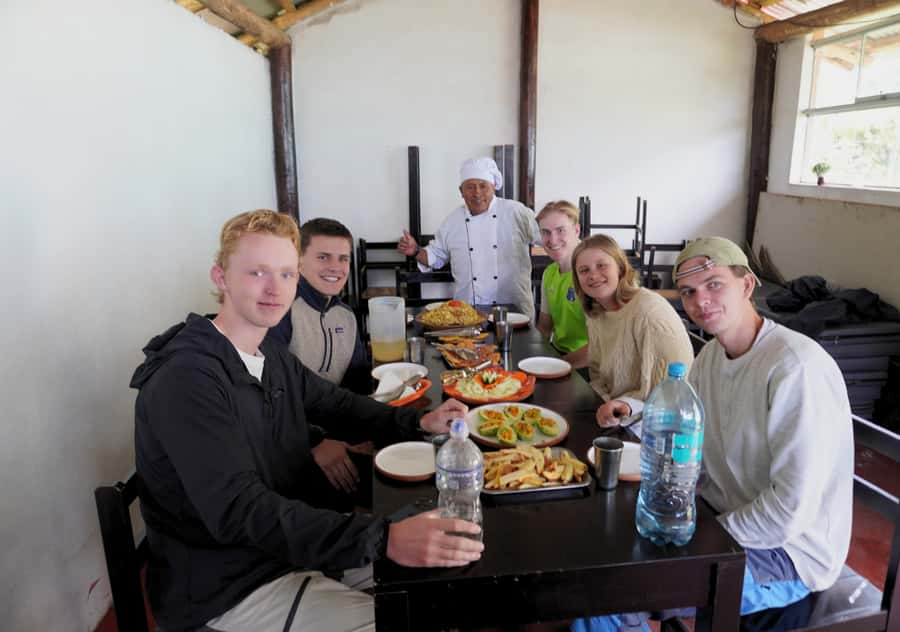
Food is scheduled through the trek:
- For 5 days, you get 4 breakfasts, 4 lunches, and 4 dinners.
- For 4 days, you get 3 breakfasts, 3 lunches, and 3 dinners.
- There are also tea breaks each afternoon with snacks like popcorn, cookies, chocolate, and coffee.
- At camp, coca tea helps you wake up each morning.
That adds up to less stress for you. You’re not constantly budgeting for snacks or trying to guess where the next meal is. It also means you can bring the right clothing and focus on walking, not freelancing logistics.
Price and value: what $50 covers, and what you may still pay
The advertised price is $50 per person, but the real value depends on how you handle the add-ons. Some key costs are explicitly listed as not included, including:
- Humantay Lake entrance fee (PEN 20 per person).
- Machu Picchu entrance fee (and Wayna Picchu is also listed separately).
- Bus up and down from Aguas Calientes to Machu Picchu (listed as US$12 up and US$12 down per person).
- Sleeping bag rental (USD$15 per person for the entire trip).
- Trekking poles rental (USD$10 per person for the entire trip).
At the same time, there is also information that Machu Picchu tickets are handled by the operator, with payment expected later (for example PEN 152.00 at the briefing) if tickets are available. If tickets are not available on the government site, you may need to bring USD 40 or PEN 152 to purchase in Aguas Calientes with your passport.
So my practical advice is this: treat the $50 as a strong starting point for the trek experience, then budget separately for Machu Picchu access and the local transportation. If you do that, you’ll feel the value more clearly because you’re comparing a guided, supported 4 or 5-day trek plus Machu Picchu guiding and entry handling, against the costs of doing the same thing on your own.
What to pack (and what not to guess on)
You’ll want:
- Passport
- Comfortable shoes
- Hat
- Camera
- Sunscreen
- Water
- Rain gear
- Comfortable clothes
Also plan for cold mornings and quick weather shifts. At high elevation, wind and sun can both be intense. Pack layers even if you think you know the season.
For gear, the trip offers rentals:
- Sleeping bag rental is available for USD$15 for the whole trek.
- Trekking poles rental is available for USD$10 for the whole trek.
If you already own poles and a suitable sleeping system, you might skip rentals. But if you don’t, using the included rentals is usually less hassle than trying to source gear last minute in Cusco.
Who should book this trek, and who might prefer another style
This route fits best if you:
- Want a guided trek experience with food and support, not self-organized day-to-day planning.
- Are comfortable hiking in mountain conditions and handling an altitude high point around 4,630 m.
- Want to see more than one “signature Peru view,” including Humantay Lake, a high pass, Llactapata, and Machu Picchu.
- Appreciate recovery time, especially with hot springs for the 5-day itinerary.
You might think twice if you:
- Don’t handle altitude well and you’re looking for a gentler profile.
- Want maximum control over Machu Picchu circuit choices, since circuits depend on availability.
Should you book this Salkantay to Machu Picchu 4D/3N or 5D/4N?
I think this is a smart booking if your priority is a supported, structured Salkantay trek that still delivers a proper Machu Picchu morning with a guided visit and time at key viewpoints. The mix of high lake beauty, the big pass day, and the Llactapata preview makes the story feel complete.
Before you commit, do two things. First, check which Machu Picchu circuit is available for your dates, since Circuit 2A/2B, 3B, and 1B change what you walk through and what you see. Second, budget for the extra listed costs, especially bus transport, park entrance fees, and possible rentals if you don’t already have them.
If you’re aiming to enjoy the trek without improvising logistics every step, this one fits your style.
FAQ
How long is the trek from Cusco to Machu Picchu?
The tour runs 4 days/3 nights or 5 days/4 nights, with an early Machu Picchu visit on the final morning.
Where do the pickups happen in Cusco?
You can choose from 4 pickup location options around Cusco, including Cusco and the Centro Histórico area.
Is there a Machu Picchu guided tour included?
Yes. The Machu Picchu visit is guided with a circuit option, and it’s scheduled for the morning time window after you arrive.
What are the Machu Picchu circuit options?
The options listed are Circuit 2A or 2B (full visit), Circuit 3B (lower stop plus middle viewpoint and sacred temples), and Circuit 1B (upper terrace, classic photo viewpoint).
Do I need to pay for Machu Picchu tickets?
Tickets are arranged based on availability. If tickets are available you will be required to pay the ticket price (example given: PEN 152.00 at the briefing). If tickets are not available on the government website, you may need to bring USD 40 or PEN 152.00 to purchase in Aguas Calientes with your passport.
Are Humantay Lake and hot springs included?
Humantay Lake entrance is not included (listed as PEN 20). For the 5-day option, entrance to the hot springs is included (listed as PEN 10), but transportation to the hot springs depends on the number of people.
Do I get meals during the trek?
Yes. For 5 days you get 4 breakfasts, 4 lunches, and 4 dinners. For 4 days you get 3 breakfasts, 3 lunches, and 3 dinners.
Can I get vegetarian or vegan meals?
Yes. Vegetarian/vegan options are available with no extra charge.
What additional transport options are provided for returning from Machu Picchu?
Return can be by car during the stated morning window, or by train from Aguas Calientes to Ollantaytambo, followed by a local car back to Cusco.
What should I bring for the trek?
Bring your passport, comfortable shoes, hat, camera, sunscreen, water, rain gear, and comfortable clothes.
More Tour Reviews in Cusco
- Cusco: Humantay Lake Tour with Breakfast and Buffet Lunch
★ 4.9 · 2,976 reviews - From Cusco: Moray, Maras Salt Mines & Chinchero Weavers Tour
★ 4.8 · 1,925 reviews - From Cusco: Full-Day Group Tour of Machu Picchu
★ 4.7 · 1,767 reviews - Machu Picchu Day Trip from Cusco
★ 4.5 · 1,644 reviews - Cusco: Half-Day City Tour with Sacsayhuaman and Q’enco
★ 4.6 · 1,129 reviews
Salkantay, Other Itineraries
- Salkantay Trek Challenge – 3 Days / 2 Nights
★ 5.0 · 101 reviews - Small Group 5 Days Salkantay and Machu Picchu by Llactapata Tour
★ 5.0 · 88 reviews - Machu Picchu: 5-Day Salkantay Trek with Panoramic Train
★ 5.0 · 79 reviews - Salkantay Trek 4 Days to Machu Picchu by Glamping Sky Lodge Dome
★ 5.0 · 68 reviews - Salkantay Trek to Machu Picchu in 4 days
★ 4.5 · 50 reviews
Reaching the Citadel, Other Options
- From Cusco: Full-Day Group Tour of Machu Picchu
★ 4.7 · 1,767 reviews - Machu Picchu Day Trip from Cusco
★ 4.5 · 1,644 reviews - Machu Picchu: Full-Day Tour from Cusco with Optional Lunch
★ 4.6 · 927 reviews - Cusco: 4-Day Inca Trail to Machu Picchu with Accommodation
★ 4.8 · 432 reviews - From Cusco: 2-Day Trip to the Sacred Valley and Machu Picchu
★ 4.6 · 265 reviews
Freshly reviewed across Cusco
- Excursion Cusco – Puno – Titicaca Observatory Train★ 5.0 · 3 reviews
- Sacred Valley Vip Cusco★ 4.7 · 3 reviews
- Cusco | Humantay Lake 1-Day Tour with Breakfast and Lunch★ 5.0 · 3 reviews
- Full-Day Condor Viewpoint & Inca Sites Tour★ 5.0 · 3 reviews
- Best of Cusco: Private Walking Tour with a Local★ 3.6 · 3 reviews
- From Cusco: Full-Day Private Sacred Valley Tour★ 5.0 · 3 reviews
Machu Picchu Tours side by side.
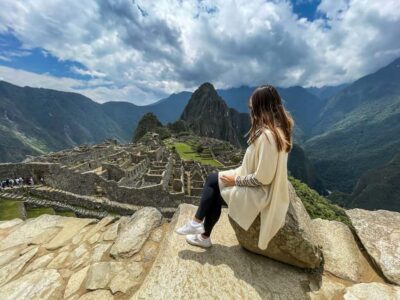 ★ 4.7From Cusco: Full-Day Group Tour of Machu PicchuFrom $3211,767 reviews
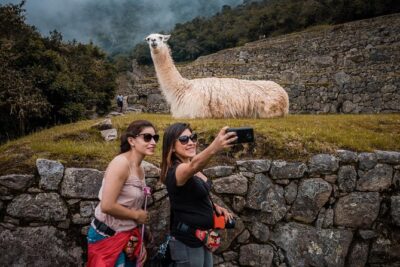 ★ 4.5Machu Picchu Day Trip from CuscoFrom $3361,644 reviews
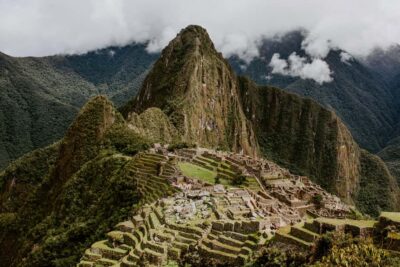 ★ 4.6Machu Picchu: Full-Day Tour from Cusco with Optional LunchFrom $283927 reviews
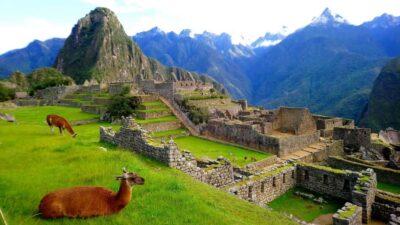 ★ 4.8Cusco: 4-Day Inca Trail to Machu Picchu with AccommodationFrom $470432 reviews
 ★ 4.6From Cusco: 2-Day Trip to the Sacred Valley and Machu PicchuFrom $370265 reviews
 ★ 4.9Cusco: Machu Picchu 2-Day Inca Trail with Panoramic TrainFrom $582260 reviews
 ★ 4.2From Cusco: 2-Day Inca Trail to Machu PicchuFrom $290244 reviews
 ★ 4.9Machu Picchu: Inca Trail 2-Day Overnight Guided TourFrom $585203 reviews
Also on these Peru lists