
REVIEW · HISTORICAL
Historic/music Cusco FreeWalkingTour “free drink” Group Tour
Cusco in 2 hours, in the best way. This historic and music-themed walking tour strings together major stops like Qoricancha and San Blas, while keeping you fed with a complimentary Pisco Sour (or Chicha Morada) along the route. I like that the guide turns stone, street corners, and instruments into stories you can actually remember, and the group size stays small enough to feel personal. One thing to consider is that the audio can be an issue at times, so if you are sensitive to loudspeaker problems, pick a spot near the front.
I also like the mix of big sights and human moments. You are not just staring at walls, you also get to hear Andean music after meeting a luthier, which makes the trip feel like Cusco, not just a checklist. Still, this is a walking route with a tight schedule, so you will want comfortable shoes and a little stamina, especially in the hills.
Key points you will care about
- Small group size (about 10) makes it easier to ask questions and follow the landmarks.
- Pisco Sour tasting is built in, with an option for Chicha Morada if you prefer non-alcoholic.
- Stops that explain Inca details, including the 12 and 13 angled stones and the Andean Trilogy carvings.
- San Blas + live Andean music gives the tour a music-first feel, not just sightseeing.
- Meets at Plaza de Armas at the Inca Fountain, a great starting point for orientation.
In This Review
- Starting At Plaza de Armas, Inca Fountain, and Cusco’s First Big Impressions
- Qoricancha Sun Temple, Sun-Kissed Stories, and What the Stones Mean
- The Balcony, 12 and 13 Angled Stones, and the Andean Trilogy Wall
- San Blas Streets, an Art-Loving Change of Pace
- 7 Borreguitos Street, Photo Worthiness, and the Final Inca Ruler Stop
- The Pisco Sour and Chicha Morada Stop, What to Expect
- Price, Two Hours, and Why This Feels Like Good Value
- Who This Tour Suits Best (and Who Should Rethink It)
- What to Watch for During the Tour (So You Get the Full Experience)
- Should You Book This Cusco FreeWalkingTour?
- FAQ
- How long is the Cusco Historic/music FreeWalkingTour?
- Where is the meeting point?
- What does the tour cost?
- Is a guide gratuity required?
- What is included in the tour?
- What drinks are offered?
- What languages are available?
- Is it suitable for everyone?
- Is there free cancellation and reserve-and-pay-later options?
Starting At Plaza de Armas, Inca Fountain, and Cusco’s First Big Impressions
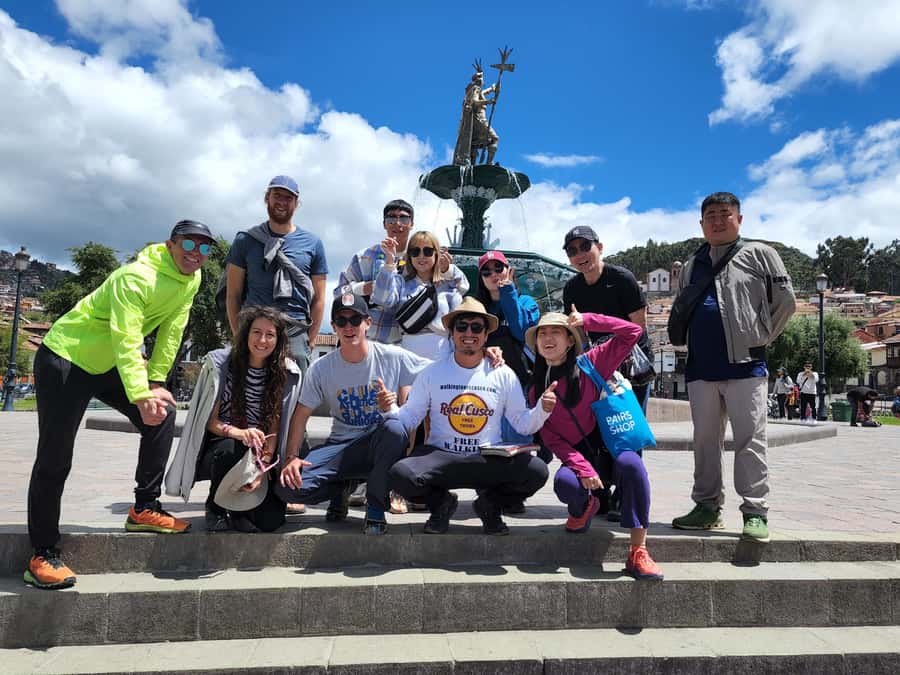
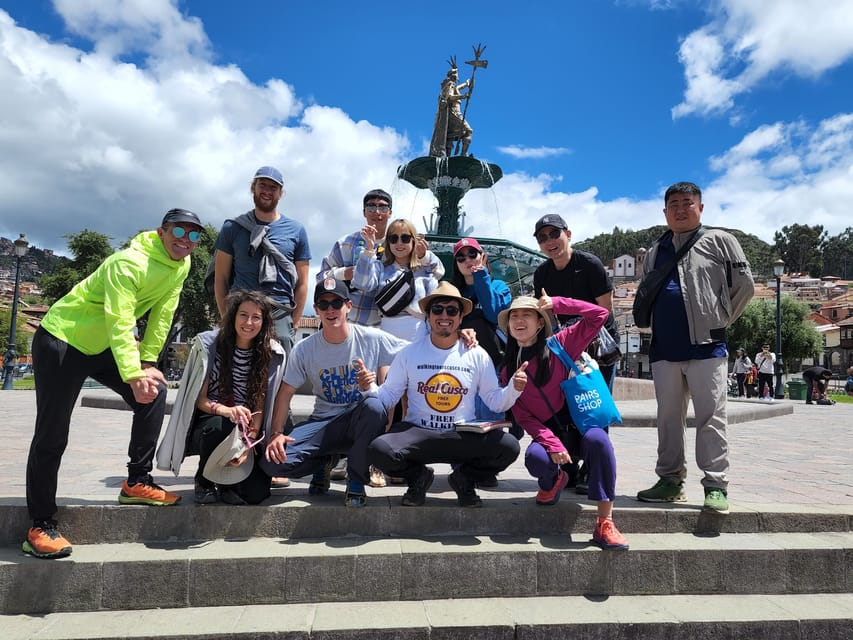
Your tour kicks off at the Inca Fountain in Cusco Main Square (Plaza de Armas). That is a smart choice. Plaza de Armas is where you instantly understand Cusco’s layout, and it is also where you can mentally map what you will see later on the walk.
From the start, you get iconic architecture in view. You will notice the grandeur of the Cathedral and the architectural presence of the Company of Jesus building. Even if you do not usually care about church facades, this matters here because it sets up the cultural overlap Cusco is famous for, where Spanish colonial structures sit alongside much older Inca foundations and traditions.
Then the tour shifts from plaza energy to street-level Cusco. That transition is where I think this tour wins. You spend your first moments getting oriented, and then the guide starts translating details you might otherwise miss.
Practical note: the tour is only 2 hours. That is plenty of time for a tight loop, but it also means the group moves. Wear shoes you trust, and keep your phone handy for quick balcony and alley photos.
Nearby in Cusco, these earned their own write-ups
- Cusco: Historical Guided City Tour with 4 Inca Ruins
★ 4.5 · 99 reviews - 6-Day Cultural Tour to Machu Picchu
★ 5.0 · 76 reviews - Cusco: Historic Walking Tour with Pisco Sour and Music Show
★ 4.6 · 65 reviews - Pisco Sour Secrets: Hands-On Mixology in Historic Cusco
★ 4.5 · 50 reviews
Qoricancha Sun Temple, Sun-Kissed Stories, and What the Stones Mean
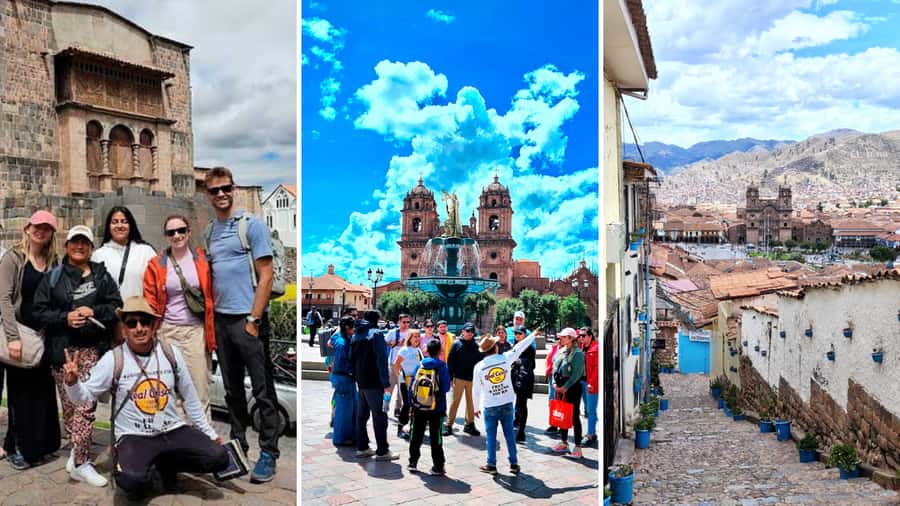
Next up is Qoricancha, often called the Sun Temple. This is one of those Cusco stops where you can look and look and still not know where to focus. The guide’s job here is to point you toward what matters, like how the site connected to Inca beliefs and how it connects to what you see today.
Why it is valuable on a walking tour: Qoricancha is not just a place you pass. It is a place where you need context. The tour gives you that context in a way that sticks, especially if you like to understand why something was built before you take your last photo.
You will also benefit from timing. Early in your Cusco stay, Qoricancha helps you decode later landmarks, because you start recognizing patterns in where power, worship, and city planning show up in the stonework.
If you are the kind of person who likes questions, ask the guide about what you should notice while you are standing there. This tour is built for that back-and-forth.
The Balcony, 12 and 13 Angled Stones, and the Andean Trilogy Wall
After Qoricancha, the walking route turns into a crash course in small Cusco details that are easy to overlook on your own.
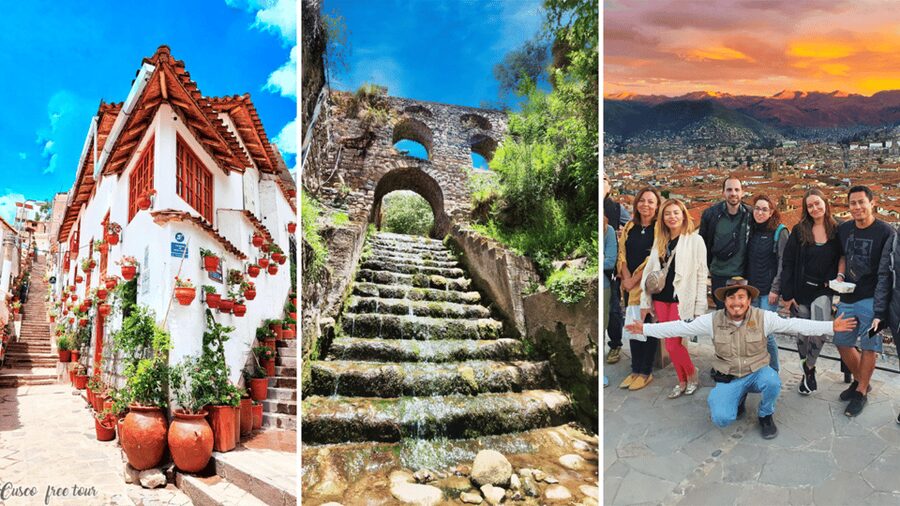
You will stop at the city’s most beautiful balcony. That sounds like a soft, aesthetic detour, but it actually helps you understand Cusco’s look. Balconies in the historic core are part of how the city faces the street, and they shape the light you see on the stones as you walk.
Then comes a pair of famous features: the 12 and 13 angled stones. If you have seen photos online, you know these blocks are visually odd. What makes them worth seeing in person is the explanation, because it is not just a quirky photo op. You learn why the angles matter, and you start to appreciate how Inca builders worked with precision using stone fitting techniques.
Right after that, you get the Andean Trilogy, with Condor, Puma, and Snake carvings on an ancient Inca wall. This is where the tour becomes more than walking and photos. The guide ties the carvings to Andean symbolism, so the mural-like look turns into meaning you can carry.
One small consideration: this part depends on you hearing the guide. There is at least one caution from real-world experience about loudspeaker sound failing to carry everything. If the group audio sounds weak, stay closer to your guide so you do not miss explanations that connect these landmarks.
San Blas Streets, an Art-Loving Change of Pace
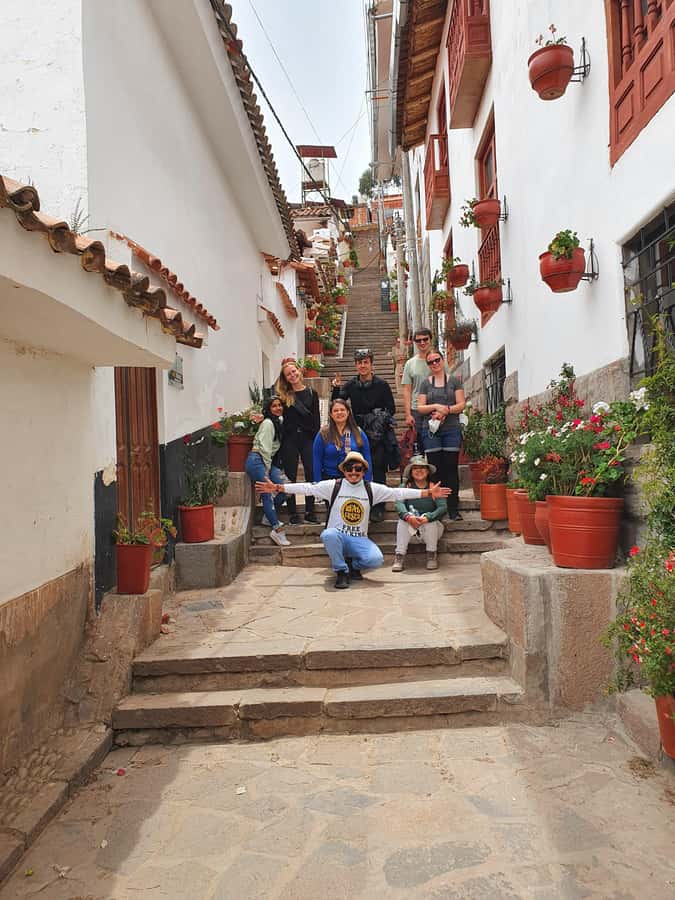
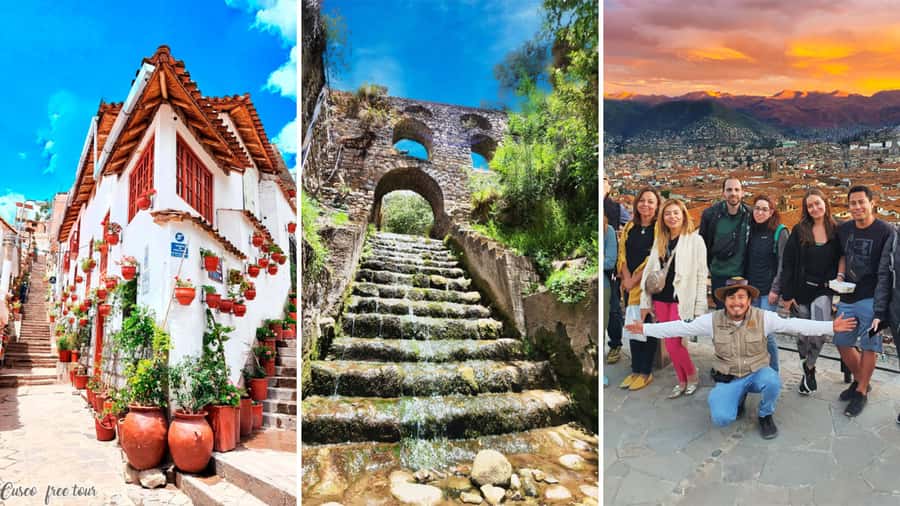
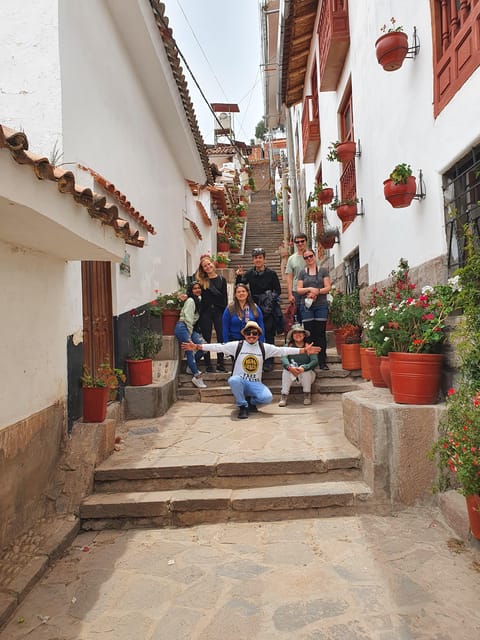
Once you hit San Blas, the energy shifts. The neighborhood is known for its artistic charm, and you feel it in the streets. Instead of only grand monuments, you start noticing the human scale: craft shops, textured doorways, and the sense that Cusco is still working, still making.
This is also a smart place to slow down for a moment. San Blas gives you visual variety, and it helps break up the intensity of early big-sight Cusco. You get the best of both worlds here: landmarks and a neighborhood you could actually wander through later.
Then the tour adds the most memorable non-monument stop: a skilled luthier visit, followed by an Andean musical performance. That combination is a big reason the tour is so highly rated. Instruments are not a random add-on. They connect directly to the Andean soundscape you have been hearing since you arrived, and the performance gives you a reason to stop, listen, and look out at panoramic views of the city.
What I like about this approach is that it makes the culture interactive. You are not just watching a show after sightseeing. You are learning what the instruments are and why they matter, then hearing them in context with views over Cusco.
If you are sensitive to cold at elevation, consider a light layer. Even if the afternoon sun is warm, evening breeze can hit quickly, especially when you are standing still to listen.
7 Borreguitos Street, Photo Worthiness, and the Final Inca Ruler Stop
Cusco wraps up the story on one of the city’s most photogenic stretches: 7 Borreguitos Street. People love this street for its charm because it looks like a postcard, but the tour helps it feel more real by placing it at the point when you have already learned the symbol side of Cusco. By now you know what to look for, and you are more likely to notice the small visual cues rather than just snapping.
Then the walk ends at the Temple of the First Inca Ruler, Manco Capac. Finishing here gives the tour a satisfying arc. You start with plaza grandeur, move through key Inca and blended heritage sites, and end with a stop that brings you back to Inca roots and Cusco leadership narratives.
This ending also works well if you are planning a later day of Cusco exploring. You finish near central areas, so you are not stuck with a complicated transfer right after the tour ends.
The Pisco Sour and Chicha Morada Stop, What to Expect
The tour includes complimentary tastings, and you have a choice at the end between Pisco Sour and Chicha Morada.
Pisco Sour is Peru’s national drink, and the tour uses it as a simple cultural punctuation point. It is a fun way to mark that you have finished the main loop and you are ready to move on to dinner or a second wandering session.
If you prefer to keep things non-alcoholic, Chicha Morada is your alternative. It is sweet and tangy, and it is often a good call in altitude conditions when you want something flavorful but not necessarily strong.
One practical tip: if you plan to continue exploring right after, keep the pace slow. One drink can turn into two without meaning to, and Cusco steps are better taken in control.
Also, water is not included, so grab some before or after. Your body will thank you in the thin air, and it prevents the tour buzz from turning into a headache later.
Price, Two Hours, and Why This Feels Like Good Value
The price is listed at $2.00 per person, which sounds almost too good to be true. Here is the real value equation: for that small amount, you get a guided walking experience that hits multiple major landmarks in a tight loop, plus the tasting portion and an artisan stop.
But here is the honest part. This tour model is not only about the sticker price. You also need to budget for a required gratuity of around 30 soles or 10 USD for the guide service. That matters because it is what keeps the guide experience strong.
So ask yourself a simple question: do you want a guide who explains what you are seeing, or do you prefer to wander with your own research? If you like explanations, the combination of paid guidance plus a tip is still often a great deal in Cusco, especially when you only have a short window.
Duration also supports the value. Two hours is short enough to fit into almost any arrival day plan. It is long enough to learn a lot and still have energy left for another neighborhood walk after you are done.
The small group size, about 10 participants, is another value booster. More of the time feels guided, less feels chaotic.
Who This Tour Suits Best (and Who Should Rethink It)
This is a great fit if you:
- want an efficient introduction to central Cusco
- enjoy history and symbolism, especially tied to Inca stone details
- like pairing sightseeing with music and artisan culture
- prefer small group walks over big bus tours
It may be less ideal if you:
- need wheelchair access, since it is not suitable for wheelchair users
- are over 95 years, since it is not suitable for that age group
Also consider your comfort with walking in altitude. Even if the pace is manageable for most people, the route is packed with stops over two hours. If you get winded easily, plan a slower day the rest of the day, or choose a lighter activity later.
What to Watch for During the Tour (So You Get the Full Experience)
Based on what comes up in real feedback, the biggest thing you control is your position in the group and your attention during explanation-heavy stops.
- Stay close to the guide when explanations begin, especially around Qoricancha, the angled stones, and the Andean Trilogy wall. Those sections are meaning-heavy.
- If you notice the loudspeaker struggling, do not try to power through from the back. Move forward slightly if you can.
- Bring something for comfort, and remember water is not included.
- Expect a guided structure with frequent photo stops. Keep your camera ready, but do not block yourself from listening.
If you handle those details, this tour becomes more than sightseeing. It becomes a quick way to get Cusco’s cultural code.
Should You Book This Cusco FreeWalkingTour?
If you are planning your first hours in Cusco and you want a route that mixes major Inca and blended heritage sites, artistic neighborhood charm in San Blas, and an actual music performance after a luthier visit, I think this is a smart booking.
I would book it if:
- you want to learn while you walk, not after the fact
- you like a small group feel
- you want both a drink tasting and a cultural stop that goes beyond monuments
I would skip or swap for something else if:
- you strongly dislike walking routes on steep streets
- you depend on perfect audio, because loudspeaker problems can happen
- you would rather skip Pisco Sour and prefer a tour with no tasting component (even though Chicha Morada is available)
Overall, this is an excellent starter tour. You get your bearings fast, you learn what you are looking at, and you leave with the kind of Cusco memories that make later exploring easier.
FAQ
How long is the Cusco Historic/music FreeWalkingTour?
The tour lasts 2 hours.
Where is the meeting point?
You meet at the Inca Fountain on Cusco Main Square (Plaza de Armas). Coordinates: -13.5167681, -71.9787795.
What does the tour cost?
The price is listed as $2.00 per person.
Is a guide gratuity required?
Yes. You are informed that a gratuity of around 30 soles or 10 USD for the guide service is required.
What is included in the tour?
The tour includes professional guides with historical and cultural insights, complimentary Pisco Sour tastings, and visits to local artisans.
What drinks are offered?
You can choose between a Pisco Sour or Chicha Morada.
What languages are available?
The live tour guide offers English and Spanish.
Is it suitable for everyone?
It is not suitable for wheelchair users and people over 95 years.
Is there free cancellation and reserve-and-pay-later options?
Yes. You can cancel up to 24 hours in advance for a full refund, and you can reserve now & pay later.
More Historical Tours in Cusco
- Cusco: Historical Guided City Tour with 4 Inca Ruins
★ 4.5 · 99 reviews - 6-Day Cultural Tour to Machu Picchu
★ 5.0 · 76 reviews - Cusco: Historic Walking Tour with Pisco Sour and Music Show
★ 4.6 · 65 reviews - Pisco Sour Secrets: Hands-On Mixology in Historic Cusco
★ 4.5 · 50 reviews - Cusco: Full-Day Sacred Valley History Tour
★ 4.6 · 14 reviews
More Tours in Cusco
- Cusco: Humantay Lake Tour with Breakfast and Buffet Lunch
★ 4.9 · 2,976 reviews - From Cusco: Moray, Maras Salt Mines & Chinchero Weavers Tour
★ 4.8 · 1,925 reviews - From Cusco: Full-Day Group Tour of Machu Picchu
★ 4.7 · 1,767 reviews - Cusco: Half-Day City Tour with Sacsayhuaman and Q’enco
★ 4.6 · 1,129 reviews - Machu Picchu: Full-Day Tour from Cusco with Optional Lunch
★ 4.6 · 927 reviews
More Tour Reviews in Cusco
- Cusco: Humantay Lake Tour with Breakfast and Buffet Lunch
★ 4.9 · 2,976 reviews - From Cusco: Moray, Maras Salt Mines & Chinchero Weavers Tour
★ 4.8 · 1,925 reviews - From Cusco: Full-Day Group Tour of Machu Picchu
★ 4.7 · 1,767 reviews - Machu Picchu Day Trip from Cusco
★ 4.5 · 1,644 reviews - Cusco: Half-Day City Tour with Sacsayhuaman and Q’enco
★ 4.6 · 1,129 reviews
Freshly reviewed across Cusco
- Excursion Cusco – Puno – Titicaca Observatory Train★ 5.0 · 3 reviews
- Sacred Valley Vip Cusco★ 4.7 · 3 reviews
- Cusco | Humantay Lake 1-Day Tour with Breakfast and Lunch★ 5.0 · 3 reviews
- Full-Day Condor Viewpoint & Inca Sites Tour★ 5.0 · 3 reviews
- Best of Cusco: Private Walking Tour with a Local★ 3.6 · 3 reviews
- From Cusco: Full-Day Private Sacred Valley Tour★ 5.0 · 3 reviews
Historical Tours side by side.
 ★ 4.5Lima’s Vibrant Heritage: Exploring the City’s Landmarks Half-dayFrom $39581 reviews
 ★ 4.9Lima: Historic Center Street Food, Market, and Eateries TourFrom $69216 reviews
 ★ 4.4Walking tour in the Historic Center of ArequipaFrom $10180 reviews
 ★ 5.0Historic Downtown, Miraflores & Catacombs Private TourFrom $75100 reviews
 ★ 4.5Cusco: Historical Guided City Tour with 4 Inca RuinsFrom $2399 reviews
 ★ 4.9Arequipa: Walk through the Historic Center of the CityFrom $1587 reviews
 ★ 5.0Machu Picchu Private Archaeological and Historical Guided TourFrom $8086 reviews
 ★ 5.06-Day Cultural Tour to Machu PicchuFrom $99976 reviews
Also on these Peru lists