
REVIEW · AREQUIPA CITY
Arequipa: Walk through the Historic Center of the City
Old Arequipa, told by locals. This 2 hour walk through the Historic Center feels personal, guided by locals like Jose or Joss, and it ends at a volcano viewpoint with Misti, Chachani, and Pichu Pichu in view.
I especially like the blend of big landmarks and story-heavy stops. You start at the Cathedral, then move through colonial cloisters and into tambos, ancient lodgings that shaped daily life for centuries.
One consideration: it is a walking tour, with about 1.5 hours of hiking on the move plus site stops. If you want nonstop narration at every single step, plan to ask questions when there are quiet stretches between places.
In This Review
- Key highlights to look for
- Getting your bearings in Arequipa’s White City in just 2 hours
- Cathedral first, then cloisters: where the city’s power shows up
- Tambos and cobblestone life: the past hiding in plain sight
- Stories, legends, and what to do with them tomorrow
- The viewpoint finale with Misti, Chachani, and Pichu Pichu
- What the small group format changes for you
- Language options: English and Spanish, with real-time interaction
- Morning and afternoon options for your best fit
- Price and value: what $15 actually buys you
- Who should book this walking tour
- Should you book this Arequipa Historic Center walk?
- FAQ
- How long is the Arequipa historic center walking tour?
- What is the price per person?
- Where do I meet the guide?
- What will I see during the walk?
- Is the tour limited to a small group?
- What languages are the live guides available in?
- Is there a morning or afternoon option?
- Can I reserve without paying right away?
- Is free cancellation available?
Key highlights to look for
- Local guides (Jose, Joss, Joseph) who explain architecture and geography in plain language
- Cathedral plus cloisters plus tambos, not just one postcard stop
- Curious facts and legends tied to what you are seeing on the street
- A walk that builds toward the final viewpoint overlooking Misti, Chachani, and Pichu Pichu
- Small group size capped at 6, which makes questions easier
- Practical wrap-up help, including recommendations around Arequipa and tips for Peru
Santa Catalina, Yanahuara and more Arequipa
- From Arequipa: Colca Canyon Full-Day Guided Tour with Meals
★ 4.5 · 982 reviews - Tour to the Salinas Lagoon and National Reserve in Arequipa
★ 4.5 · 548 reviews - From Arequipa: Sillar Route Trek
★ 4.2 · 461 reviews - Arequipa: Chili River White Water Rafting with Hotel Pickup
★ 4.8 · 329 reviews
Getting your bearings in Arequipa’s White City in just 2 hours
Arequipa can feel big at first. The streets wind, the historic center has layers, and everything looks like it belongs to a story. This tour works because it gives you a clear route while you are still fresh enough to absorb details.
The experience starts with pickup at Campo Redondo San Lazaro (coordinates: -16.3934138, -71.5336117). From there, you walk through the heart of the city, with a live guide in English or Spanish. With a group limited to 6 people, you are not shouting questions over a crowd.
What I like about this setup is that it turns orientation into entertainment. You are learning as you go, so the center starts to make sense before you have even planned your next meal or museum stop.
Cathedral first, then cloisters: where the city’s power shows up
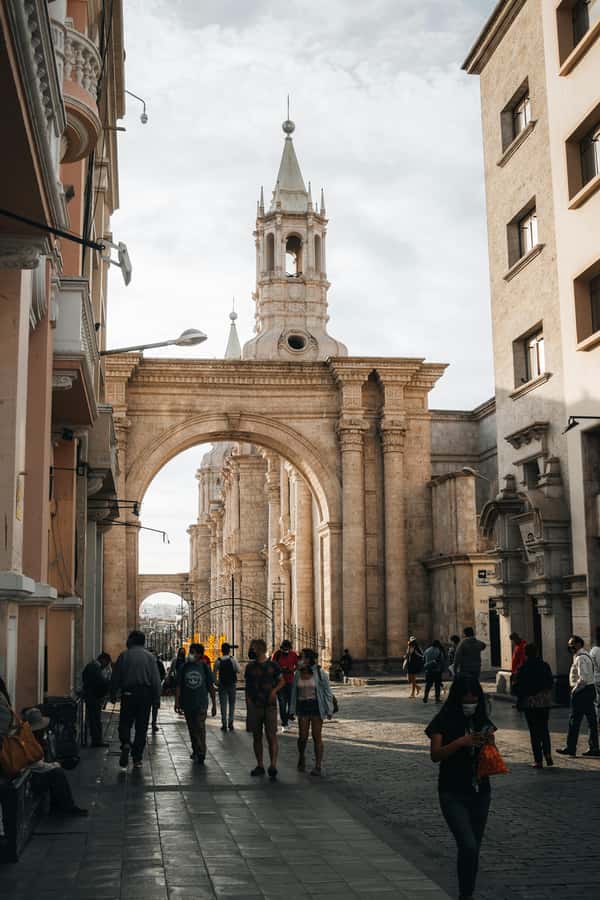
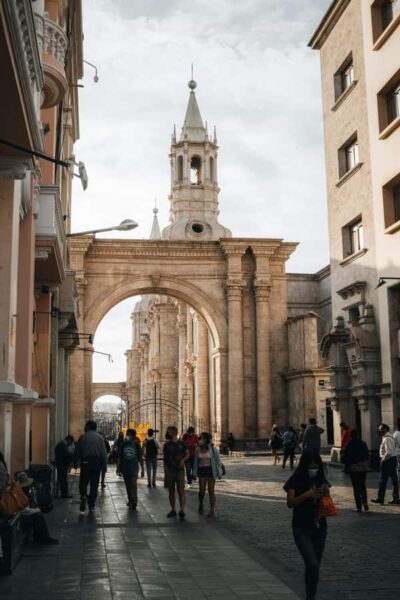
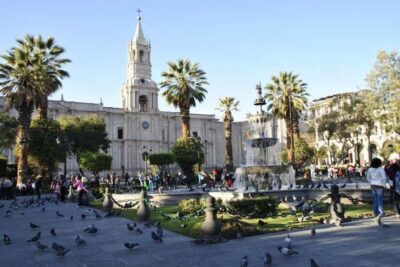
The tour kicks off with the Cathedral, a major emblem of Arequipa. This is a smart first stop because it anchors everything else you will see. When the guide explains what makes the building important, you start noticing the same influences in the surrounding structures.
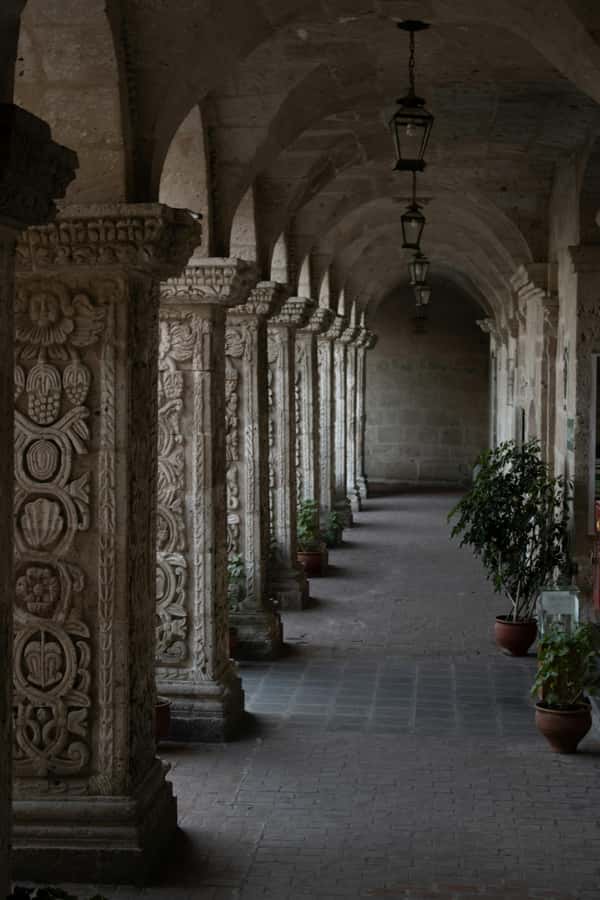
After that, you head into colonial areas, including cloisters. These spaces can be easy to overlook on your own because they are not always the most obvious exterior views. On this walk, the guide connects the architectural details to why they mattered, so the stonework stops being just pretty and starts being meaningful.
A useful tip in this part of the tour: wear comfortable shoes. Cobblestones in historic centers can be uneven, and the tour is designed for steady walking. If your feet are happy, you will enjoy the explanations more because you will actually be able to linger when something catches your eye.
Tambos and cobblestone life: the past hiding in plain sight
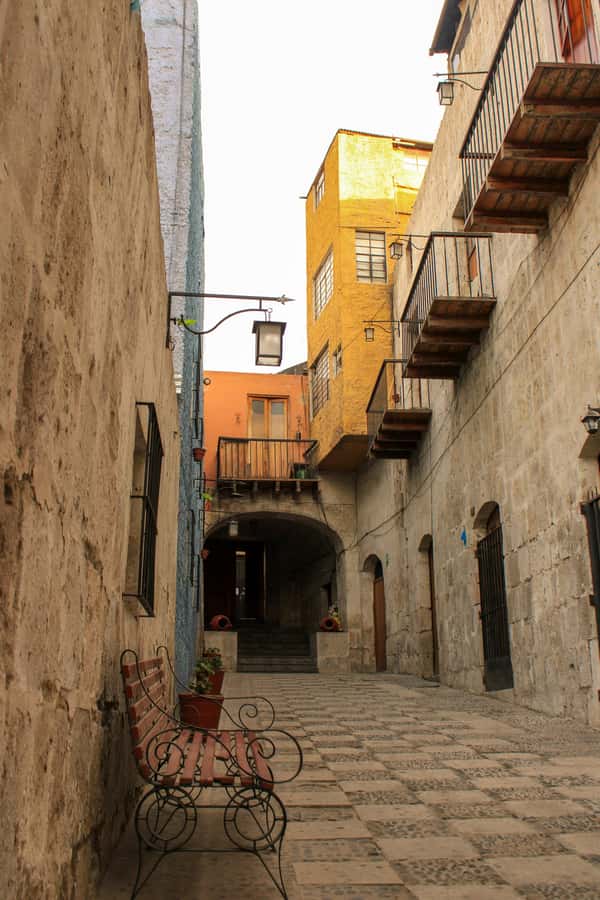
One of the most interesting segments is the stop into the tambos. These were ancient lodgings, and understanding that idea changes how you read the city. Instead of seeing Arequipa as only monuments, you begin to recognize it as a place where people moved, stayed, worked, and passed through for generations.
This matters for travelers who like authenticity. Arequipa is not only about a few highlight photos. When you learn what tambos were for, you notice how the city’s design supported real movement and real needs. It is history that connects directly to how a city functions.
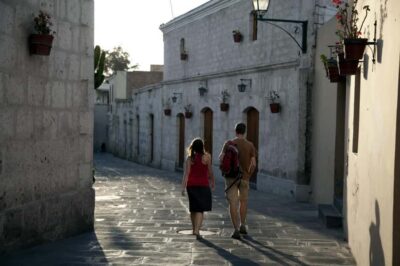
The tour also moves through picturesque cobblestone streets, where you hear traditions and legends passed down over time. This is where the guide’s role becomes more than facts. You are learning how local stories explain the city’s character, even when the details are not written on a sign.
Stories, legends, and what to do with them tomorrow
Guides on this tour are not just reciting dates. They are sharing stories, legends, and curious facts while you walk, and that changes how you experience the rest of your day.
For example, some of the most valuable moments tend to be the small, practical ones: where to spend time later, what to skip, and how to get oriented to areas around the center. The tour includes recommendations in the city, plus tips to do in Peru, which is handy when you are still trying to figure out what fits your schedule.
From the guide experience, I also see a pattern: guides like Joss have a way of answering questions beyond the scheduled stops. If you are the type who asks why a façade looks a certain way or how the geography shapes what you see from the street, this tour is set up to reward that curiosity.
Other guided walking routes in Arequipa
The viewpoint finale with Misti, Chachani, and Pichu Pichu
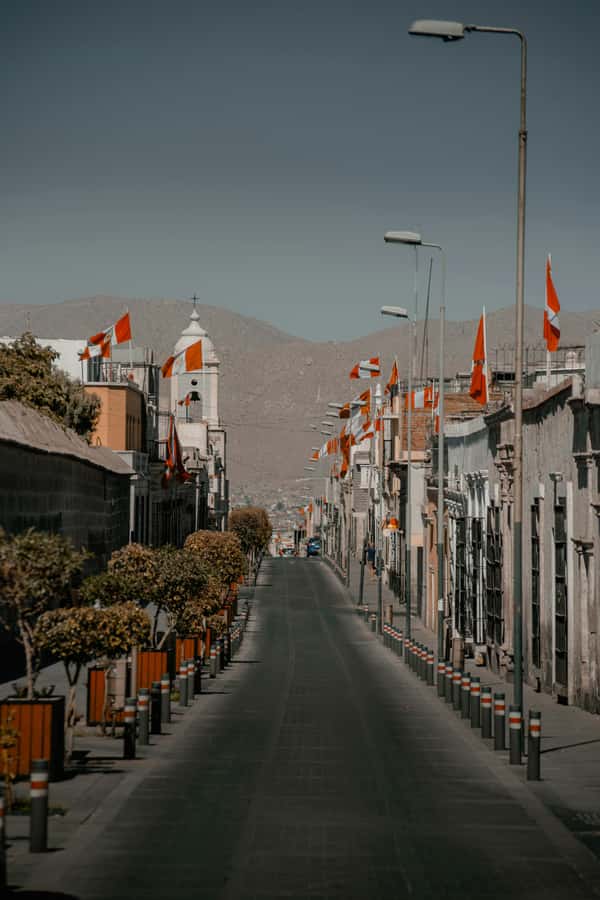
The tour culminates at a lookout point. This is not a random end point. It is timed so the walking route feeds into the view, giving you a big-picture moment after all the details.
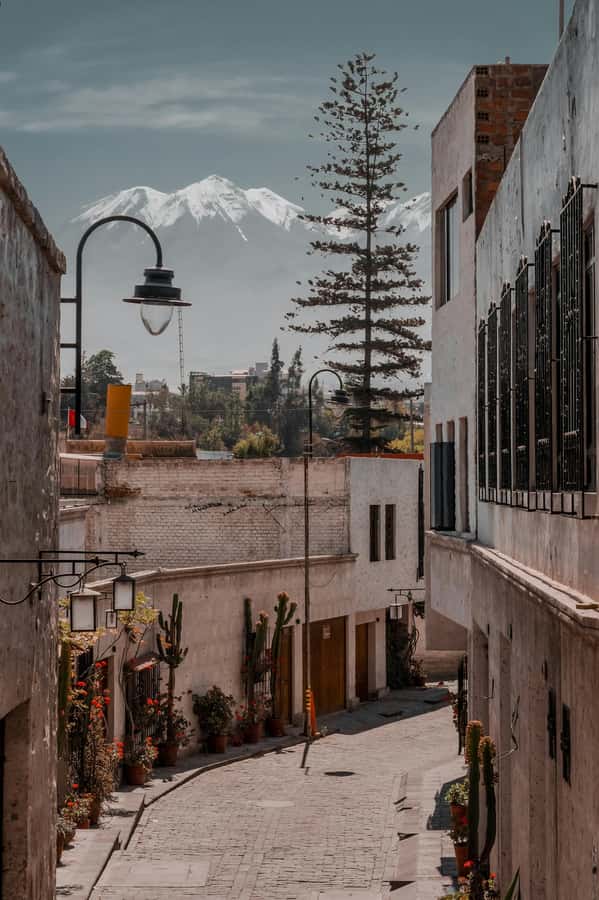
From the viewpoint, you can enjoy panoramic sights of volcanoes surrounding Arequipa, including Misti, Chachani, and Pichu Pichu. Seeing the city in relation to the mountains is one of the fastest ways to understand Arequipa’s geography. It also makes your photos feel more like places you visited rather than just buildings you photographed.
If you like photos, bring a phone or camera you are comfortable holding while you stand and look. The best images here come from pausing, not rushing. Even if you are not a big photographer, the viewpoint is a mental reset after a couple of hours on cobblestones.
What the small group format changes for you
A small group capped at 6 is one of the real quality signals for this kind of walk. With fewer people, the guide can slow down for questions and adjust pace if someone needs a breather.
It also helps you connect with the guide. Multiple accounts highlight guides such as Jose, Joss, and Joseph as professional, friendly, and willing to share after-tour tips. That matters because the first few hours in a new city can be the hardest. If someone gives you a clear list of where to go next, you lose less time guessing.
This is also a tour format that tends to work well for different travel styles. If you want an easy introduction on day one, it does that. If you already know the basics and want context, the stories and architecture explanations help you go deeper without turning the walk into a lecture.
Language options: English and Spanish, with real-time interaction
The guide is available in English and Spanish, and you will be hearing the stories as you walk, not reading a brochure later. Live interpretation is especially useful in places like cloisters and tambos, where architectural terms can mean nothing until someone points out what to look for.
If you are traveling with someone who speaks only one language, this is still a workable option because the tour runs with those language choices built in. You can focus on the experience instead of worrying about whether everyone will understand the same explanations.
Morning and afternoon options for your best fit
This hike is available in the morning and in the afternoon. That flexibility matters because Arequipa days can fill up fast, especially if you also plan market time, museums, or longer excursions outside the center.
Since the tour is about 2 hours total, you can use it as a first anchor for the day. Do it early to get recommendations that guide the rest of your itinerary. Or do it later if you want a slow, cultural walk after you have already seen a couple of key sights on your own.
One practical note: because the tour includes around 1.5 hours of hiking/walking, treat it like real movement, not a casual stroll with long museum stops. Plan a bit of rest afterward if you are sensitive to walking on uneven streets.
Price and value: what $15 actually buys you
At $15 per person, this tour is priced like a smart budget activity, not a premium private guide. The value comes from the mix of things included: 5 historical sites, walking guidance, and the storytelling that connects it all.
A lot of walking tours charge a similar amount, but not all of them deliver the same structure. Here, the stops are purposeful: Cathedral, colonial cloisters, tambos, then a finishing viewpoint tied to the volcanoes around Arequipa. That arc gives you a sense of progression, not just a scattered set of buildings.
The small group cap at 6 also supports the value. You are not paying the same price as a big-group bus-style experience. You are paying for time with a guide who can keep it moving while still answering questions.
Who should book this walking tour
I think this tour is a great match if you:
- Want a solid first introduction to Arequipa’s historic center
- Like architecture and want it explained in plain terms
- Prefer small group experiences over crowd-led walks
- Enjoy stories tied to place, like traditions and legends
- Want direct recommendations for where to go next in the city
If you dislike walking on cobblestones or you need very frequent seating breaks, this may feel like more effort than you want. It is short, but it is still a walk, and the design assumes you can keep moving.
Should you book this Arequipa Historic Center walk?
If you want a quick, high-impact way to understand Arequipa beyond the obvious photo stops, I say book it. The combination of Cathedral plus cloisters plus tambos, then a volcano viewpoint gives you both history and geography in one smooth flow.
The biggest reason to choose it is also the simplest: you get a local guide experience in a small group, and you leave with ideas for what to do next. If that sounds like how you like to travel, this is a very sensible $15 bet in the White City.
FAQ
How long is the Arequipa historic center walking tour?
The tour lasts 2 hours.
What is the price per person?
The price is $15 per person.
Where do I meet the guide?
Pickup happens at Campo Redondo San Lazaro (coordinates: -16.3934138, -71.5336117).
What will I see during the walk?
You will visit 5 historical sites, including the Cathedral, colonial cloisters, tambos, and you will end at a viewpoint with views of volcanoes such as Misti, Chachani, and Pichu Pichu.
Is the tour limited to a small group?
Yes. It is limited to 6 participants.
What languages are the live guides available in?
The live tour guide is available in English and Spanish.
Is there a morning or afternoon option?
Yes. The hiking portion of about one and a half hours is available in both the morning and the afternoon.
Can I reserve without paying right away?
Yes. You can reserve now and pay later.
Is free cancellation available?
Yes. You can cancel up to 24 hours in advance for a full refund.
Walking Routes Across Arequipa
- Walking tour in the Historic Center of Arequipa
★ 4.4 · 180 reviews - Arequipa Walking Tour city center and drinks experience
★ 5.0 · 72 reviews - Arequipa: Walking Tour and Santa Catalina Monastery
★ 4.4 · 7 reviews - Arequipa Walking Tour and Santa Catalina Monastery
★ 5.0 · 4 reviews - Walking tour through the Historic Center of Arequipa
★ 4.0 · 3 reviews
More Tour Reviews in Arequipa
- From Arequipa: Colca Canyon Full-Day Guided Tour with Meals
★ 4.5 · 982 reviews - Tour to the Salinas Lagoon and National Reserve in Arequipa
★ 4.5 · 548 reviews - From Arequipa: Sillar Route Trek
★ 4.2 · 461 reviews - Arequipa: Chili River White Water Rafting with Hotel Pickup
★ 4.8 · 329 reviews - From Arequipa: 2-Day Colca Canyon Trekking Tour
★ 4.8 · 243 reviews
Arequipa Under El Misti
- From Arequipa: Colca Canyon Full-Day Guided Tour with Meals
★ 4.5 · 982 reviews - Tour to the Salinas Lagoon and National Reserve in Arequipa
★ 4.5 · 548 reviews - From Arequipa: Sillar Route Trek
★ 4.2 · 461 reviews - Arequipa: Chili River White Water Rafting with Hotel Pickup
★ 4.8 · 329 reviews - From Arequipa: 2-Day Colca Canyon Trekking Tour
★ 4.8 · 243 reviews
Freshly reviewed across Arequipa
- Excursion Salinas Lagoon and National★ 5.0 · 3 reviews
- From Arequipa: Full Day Colca Canyon Tour★ 4.5 · 3 reviews
- Arequipa: Colca Canyon Trekking 2 days and 1 night + food★ 4.8 · 3 reviews
- Walking tour through the Historic Center of Arequipa★ 4.0 · 3 reviews
- Arequipa: Catarata de Pillones and Bosque de Piedras Tour★ 4.3 · 3 reviews
- Cooking Class Typical Food in Arequipa★ 3.9 · 3 reviews
Arequipa City Tours side by side.
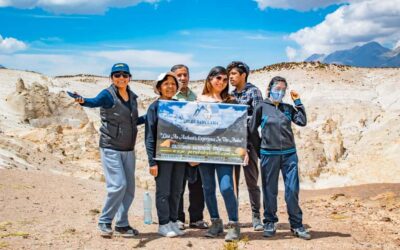 ★ 4.5From Arequipa: Colca Canyon Full-Day Guided Tour with MealsFrom $42982 reviews
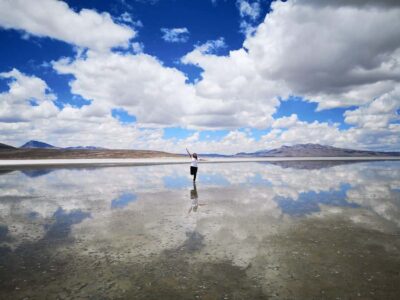 ★ 4.5Tour to the Salinas Lagoon and National Reserve in ArequipaFrom $27548 reviews
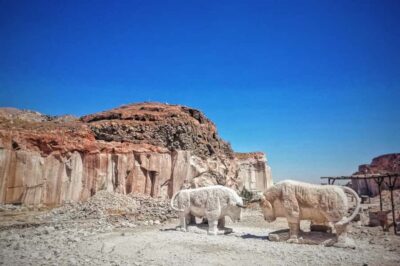 ★ 4.2From Arequipa: Sillar Route TrekFrom $12461 reviews
 ★ 4.8Arequipa: Chili River White Water Rafting with Hotel PickupFrom $20329 reviews
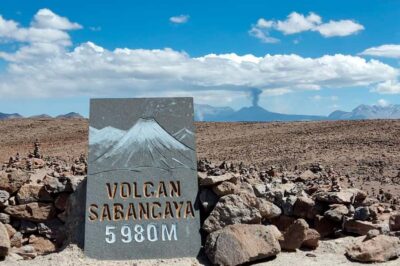 ★ 4.62-Day Tour Colca Canyon in Arequipa with end in PunoFrom $78248 reviews
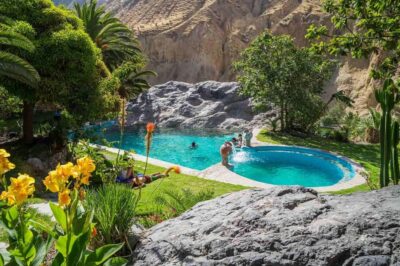 ★ 4.8From Arequipa: 2-Day Colca Canyon Trekking TourFrom $30243 reviews
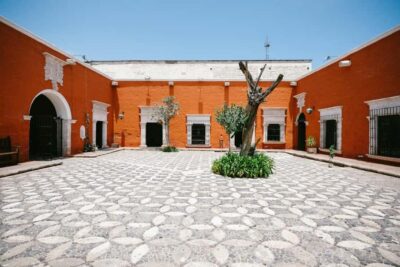 ★ 4.4Walking tour in the Historic Center of ArequipaFrom $10180 reviews
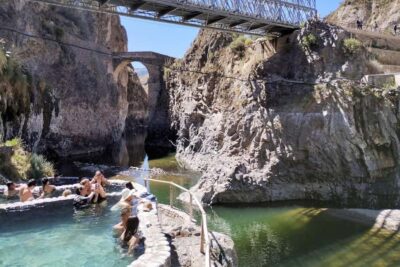 ★ 4.4From Arequipa: Full Day Tour of Colca Canyon with MealsFrom $27146 reviews
Also on these Peru lists