
REVIEW · HUARAZ
Huaraz: Bike tour | Mountain Biking in the Andes
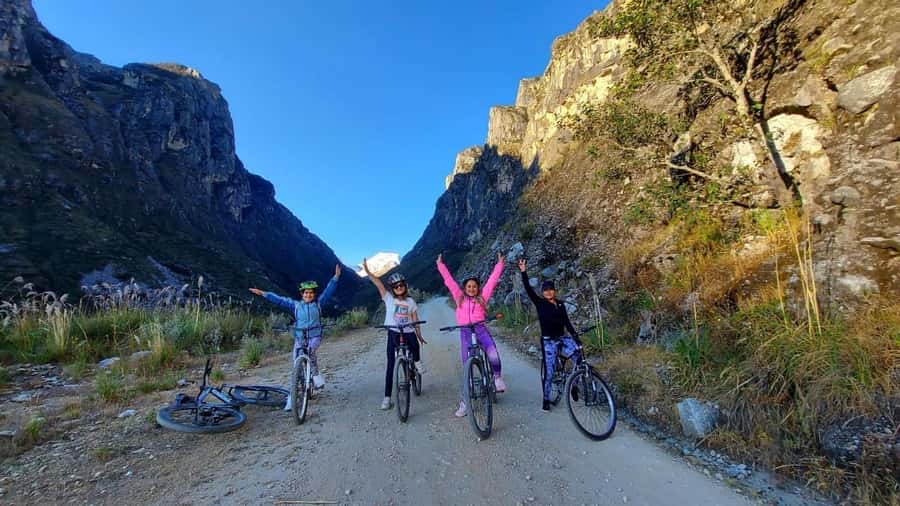
Andes air plus bike tires equals pure motion. This half-day ride from Huaraz to the Wilcahuain area brings fresh mountain air and Cordillera Blanca views. You pedal from about 3,100 m up toward roughly 3,750 m, then work your way back through familiar Huaraz valley villages in Ancash.
I also like the small group setup, capped at 8 people, because the pace feels more personal and the guide can keep an eye on everyone. One thing to plan for, though, is that the uphill can feel longer and harder than many people expect, even if the downhill is the part you’re most excited about.
In This Review
- Key things to know before you ride from Huaraz
- Huaraz to the Andes: what this half-day biking day feels like
- Price and value: why $89 adds up for an Andes bike day
- The small-group ride with guide Marco, Spanish or English
- Route breakdown: Huaraz to Wilcahuain, Portada de Cojup, then Pitec
- Starting point: Wilcahuain or Huaraz (depending on your fitness)
- Wilcahuain: your first real foothold in the ride
- Portada de Cojup: a named waypoint to break the effort
- Pitec: the part of the day that tests endurance
- Back to Huaraz: arrive before the day gets long
- Elevation and effort: the uphill surprise you should respect
- What you’ll see: Cordillera Blanca, villages, and scenic viewpoints
- Included gear and safety: what’s handled for you
- What to bring for Andes weather and energy management
- Who this tour suits best, and who might want a different plan
- Should you book this Huaraz bike tour?
- FAQ
- What time does the tour start and when do we return to Huaraz?
- How long is the experience?
- Where does the route go during the bike tour?
- Is pickup from my hotel included?
- What is included in the price?
- What should I bring, and what about cancellation?
Key things to know before you ride from Huaraz
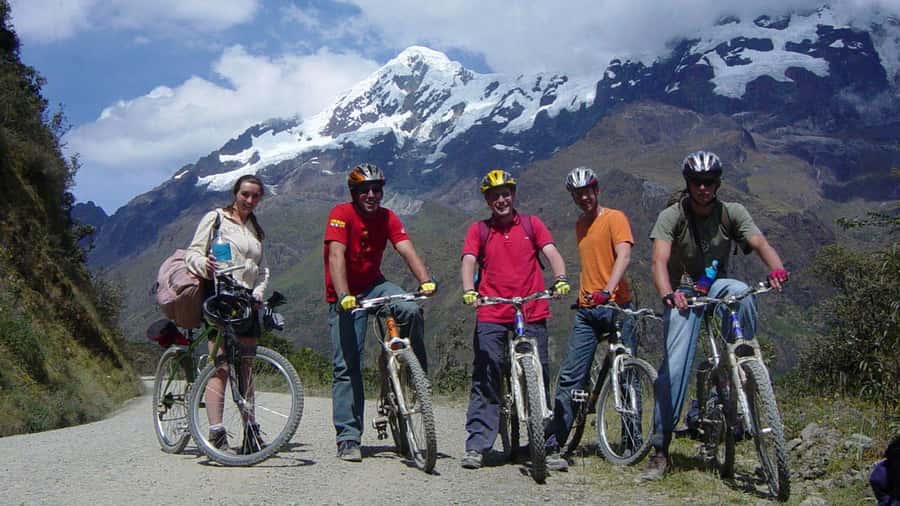
- 8:00 am start keeps the day active: you get moving early, then you’re back in Huaraz around 2:00 pm.
- Wilcahuain and Huaraz can be your starting point: the ride can start in Wilcahuain or in Huaraz depending on your physical condition.
- Portada de Cojup and Pitec are key waypoints: they break up the route and help shape the experience, not just the distance.
- Elevation climbs from 3,100 m to about 3,750 m: expect breathing to matter, especially on the uphill.
- Downhill is fun, but the uphill is the test: go in with realistic effort expectations.
- You get the essentials for a safer ride: bike, helmet, gloves, spare tube, tools, and first aid are included.
Laguna 69 and other Cordillera Blanca days
- From Huaraz: Tour to the Pastoruri Glacier and Puya Raimondi
★ 4.3 · 68 reviews - 69 Lake – Cordillera Blanca
★ 5.0 · 62 reviews - Parón Lake – Cordillera Blanca
★ 4.5 · 35 reviews - Pastoruri Glacier
★ 4.5 · 34 reviews
Huaraz to the Andes: what this half-day biking day feels like
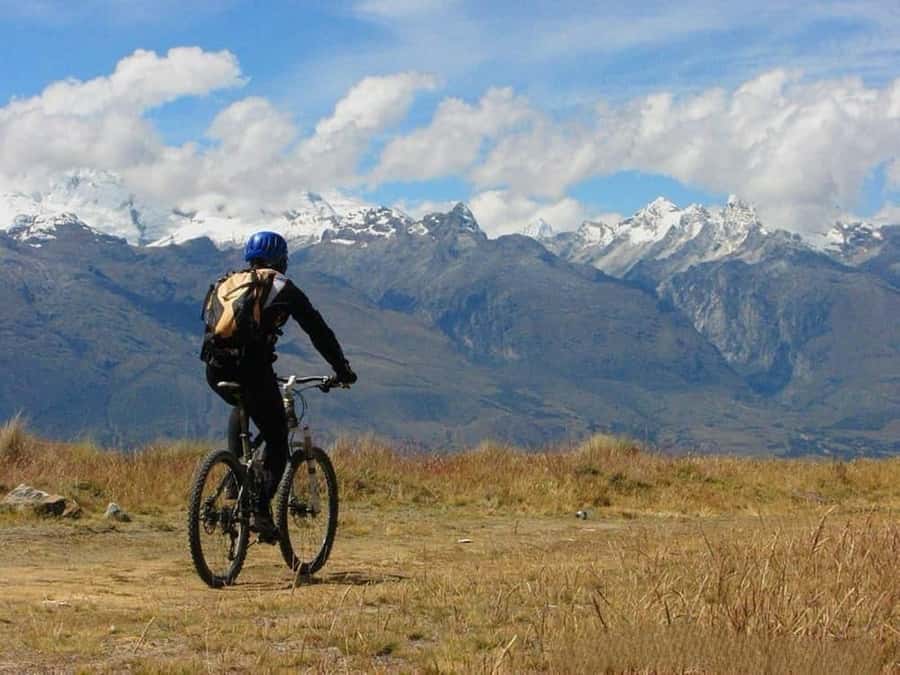
This is a true half-day outdoors plan. You trade city time for fresh air, changing terrain, and a ride that connects Huaraz with the lower foothills of the Cordillera Blanca region. The total time is listed as 6 hours, and the ride itself takes about 4 to 5 hours, so you’re not stuck out all day.
What makes it interesting is the mix. You’re not only grinding uphill or only flying downhill. You’re moving through a changing route that naturally shifts from easier rolling sections into the kind of climbing that makes you slow down, focus on cadence, and earn the views.
Price and value: why $89 adds up for an Andes bike day
At $89 per person, the value mostly comes from what you don’t have to organize. You get the mountain bike, helmet, gloves, a spare tube plus tools, and a first aid kit. You also get entrance coverage for a national park and/or places to visit, which often becomes an annoying extra cost when you piece things together yourself.
The other big value piece is the guide. You’re not doing this solo. You’ll ride with a live guide in Spanish or English, and the group is limited to 8 participants, which usually means fewer people competing for attention on a technical or altitude-affected route.
One practical note: food and drinks are not included. That means your cost is low up front, but you must plan for snacks, water, and any fueling you need during the climb.
The small-group ride with guide Marco, Spanish or English
The experience is set up for small-group attention. With a limit of 8 participants, it’s easier to regroup, get safety reminders, and keep the ride flowing without turning it into a long line of bikes.
Guide support matters most when conditions get tough. With the elevation jump from around 3,100 m to about 3,750 m, you’ll likely feel it in your breathing and legs, especially on the uphill stretches. Having a friendly guide, like Marco (the name you’ll see associated with excellent guidance), can make a big difference in how confident you feel on uneven ground and when the pace changes.
You also get an express security check, which sounds minor but helps when you’re on a tight half-day schedule. If you hate losing time to admin, that’s one less friction point.
Route breakdown: Huaraz to Wilcahuain, Portada de Cojup, then Pitec
Let’s walk the route as a traveler would, stop by stop. This tour runs from the Huaraz area northeast toward Wilcahuain, with a loop back into the city. You’ll be back in Huaraz around 2:00 pm.
Starting point: Wilcahuain or Huaraz (depending on your fitness)
After pickup, you leave at 8:00 am. From there, the tour can start in Wilcahuain, or it can start in Huaraz depending on physical condition. That flexibility is valuable because the route is already designed with altitude in mind, and starting closer to the city can help if you’re still building comfort with the climb.
If you’re newer, you’ll want to treat the first portion as a warm-up, even if you feel good. At altitude, feeling okay in minute one doesn’t always mean your legs will agree five kilometers later.
Wilcahuain: your first real foothold in the ride
Wilcahuain is where the tour heads next, and it’s where the experience starts pedaling for many people. The main idea here is simple: you get into the rhythm early, then you build toward the higher point as the day progresses.
You’ll also start getting those Andes visuals that make a bike ride feel like more than transportation. The Cordillera Blanca shows up in the background, and you get that sense of space that’s hard to replicate from inside a car.
Portada de Cojup: a named waypoint to break the effort
Next on the route is Portada de Cojup. You treat it as a meaningful checkpoint, not just a dot on a map. Named stops like this matter because they give you something concrete to work toward, and they help your brain handle the effort better.
If your legs are already talking back, a waypoint stop is exactly when you’ll benefit from a guide’s pacing cues. This is also where you can reset your focus on form, not just speed.
Pitec: the part of the day that tests endurance
After Portada de Cojup, you ride on to Pitec. By the time you reach this stage, you’ve already worked through the elevation gain, and your effort level will likely feel more serious than at the start.
The terrain is described as diverse, so expect it to keep asking for small adjustments. Think about keeping your breathing steady on climbs and staying smooth on sections that require balance.
Back to Huaraz: arrive before the day gets long
You finish the ride back in Huaraz, roughly around 2:00 pm. That’s a nice finishing time if you still want to eat well, shower, and do a short second activity without burning the whole day.
It’s also a practical schedule for altitude travelers. You get your outdoor time, then you still have the afternoon to rest and recover.
Elevation and effort: the uphill surprise you should respect
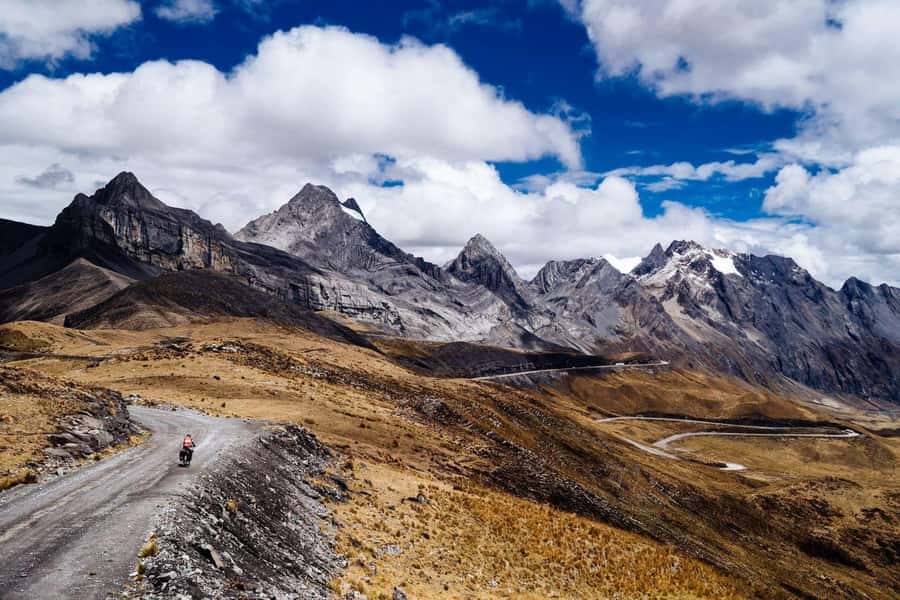
The ride climbs from about 3,100 m to about 3,750 m over 4 to 5 hours. Even if you’re fit, that kind of elevation jump can change how your body responds. Your heart and lungs work harder, and your legs can feel heavy on the climbs.
The downhill is often the headline, and it’s easy to get optimistic. But you should plan for the uphill to be the part that decides whether the day feels smooth or tough. One of the most consistent pieces of feedback associated with the experience is that the uphill can run longer and feel harder than expected.
So here’s my practical advice. If you’re unsure, ride this like an endurance day, not a race. Use a slower, steady cadence, take short breaks if the guide encourages them, and treat any view as a reward you earn by staying calm.
What you’ll see: Cordillera Blanca, villages, and scenic viewpoints
You’re riding with the Cordillera Blanca and typical villages around Huaraz as part of the day. That means you get more than scenery at a single pull-off. You see the mountains in the background while the route threads through a more lived-in setting.
This is one of the reasons a guided bike ride is so satisfying here. On foot, you might move slowly enough to admire things constantly, but you lose distance. In a car, you move fast but you miss the rhythm of traveling. On a mountain bike, you get both the pace and the contact with the place.
The tour also includes an entrance ticket to a national park and/or places to visit. Even if you’re not a “site collector,” it’s a benefit because it reduces friction and ensures you’re riding on the routes that connect to those protected areas.
Included gear and safety: what’s handled for you
The tour includes the mountain bike plus tools and a spare bicycle tube. That matters because a bike day without quick fixes is when problems turn into a ruined afternoon.
You also get safety accessories: helmet and gloves. Those items are not optional on a mountain bike day. If you’re thinking of skipping a helmet because you ride bikes at home, don’t. This route includes changing terrain and altitude fatigue, which makes small mistakes more likely.
A first aid kit is included too. It doesn’t mean you should feel worried. It just means the provider is planning for the reality of outdoor activity.
What to bring for Andes weather and energy management
Food and drinks are not included, so your packing list is not just comfort. It’s energy and hydration. The tour specifically suggests bringing snacks and drinks, plus sunglasses and rain gear.
Here’s how I’d think about it:
- Snacks: pack enough for the uphill portion, not just the downhill reward.
- Drinks: altitude makes you feel thirsty in weird ways, and biking makes you use more water.
- Rain gear: mountain weather shifts fast, and clouds can turn a comfortable morning into a cold, damp one.
- Insect repellent: bring it because you’re riding through village areas.
- Comfortable shoes: you want grip and stability, especially when you stop and restart.
If you’re prone to cold hands, consider extra layers. The ride is outdoors all morning, and your body cools between uphill work and slower sections.
Who this tour suits best, and who might want a different plan
This tour has variants for beginner and/or experienced cyclists, and the starting point can change based on physical condition. That tells me it’s designed to adapt, not just run a fixed route at full intensity for everyone.
You’ll likely enjoy it most if you:
- Want a half-day outdoor activity with views of the Cordillera Blanca
- Are comfortable riding a bike on mixed terrain, with some climbs
- Like the idea of a small group and a guided pace with safety support
You might reconsider if you:
- Hate long uphill efforts, because the uphill can feel harder than expected
- Want a tour where food is provided, because it isn’t
- Are uncomfortable managing altitude for 3,100 m to about 3,750 m
Should you book this Huaraz bike tour?
I’d book it if you want an efficient Andes experience: half-day timing, a small group up to 8, and a ride that blends scenic stops with real effort. The value is strongest when you care about what’s included, not just the bike itself, because safety gear, spare tube support, guide time, and entrance coverage are all part of the deal.
I would not book it if you’re aiming for a mostly easy ride with minimal climbing, since the uphill can surprise you. Also, don’t treat it like a tour where you can wing food and hydration, plan on bringing snacks and drinks so the day stays fun.
If you’re okay respecting the climb, you’ll come away with that rare feeling of biking through the Andes with views that stay with you for the rest of your day in Huaraz.
FAQ
What time does the tour start and when do we return to Huaraz?
After pickup, the tour leaves at 8:00 am. You will be back in the city of Huaraz at about 2:00 pm.
How long is the experience?
The duration is 6 hours. The ride itself is described as taking approximately 4 to 5 hours.
Where does the route go during the bike tour?
The route is Huaraz to Wilkahuain to Portada de Cojup to Pitec, then back to Huaraz.
Is pickup from my hotel included?
Yes. Pickup is included from your hotel in Huaraz or from your chosen meeting point, depending on the arrangement.
What is included in the price?
Included are the mountain bike, tools and a spare bicycle tube, safety accessories (helmet and gloves), an entrance ticket to the national park and/or places to visit, and a first aid kit.
What should I bring, and what about cancellation?
Bring comfortable shoes, sunglasses, snacks, drinks, rain gear, and insect repellent. This activity is non-refundable.
More Tours in Huaraz
- From Huaraz: Tour to the Pastoruri Glacier and Puya Raimondi
★ 4.3 · 68 reviews - Tour Climbing Nevado Mateo | Your First 5,150 m Summit | 12 Hours
★ 5.0 · 40 reviews - From Huaraz: Tour to Llanganuco Lakes (Chinancocha Lake)
★ 3.6 · 19 reviews - From Huaraz: Lake 69 Trek Day Tour – White Mountain Range
★ 4.7 · 7 reviews - From Huaraz: Tour to Archeological Complex of Chavin
★ 4.2 · 6 reviews
More Tour Reviews in Huaraz
- From Huaraz: Tour to the Pastoruri Glacier and Puya Raimondi
★ 4.3 · 68 reviews - 69 Lake – Cordillera Blanca
★ 5.0 · 62 reviews - Climbing Mateo – Your first 5 thousand
★ 5.0 · 52 reviews - Tour Climbing Nevado Mateo | Your First 5,150 m Summit | 12 Hours
★ 5.0 · 40 reviews - HHuayhuash-One of the most impressive hikes in the world
★ 5.0 · 39 reviews
Cordillera Blanca Lagoons
- From Huaraz: Tour to the Pastoruri Glacier and Puya Raimondi
★ 4.3 · 68 reviews - 69 Lake – Cordillera Blanca
★ 5.0 · 62 reviews - Parón Lake – Cordillera Blanca
★ 4.5 · 35 reviews - Pastoruri Glacier
★ 4.5 · 34 reviews - From Huaraz: Tour to Llanganuco Lakes (Chinancocha Lake)
★ 3.6 · 19 reviews
Freshly reviewed across Huaraz
- From Huaraz: Chavín de Huantar & Chavín Museum Day Trip★ 5.0 · 3 reviews
- Huaraz: Full Day Rocotuyoc Lagoon + Frozen Lagoon★ 5.0 · 3 reviews
- Huaraz: Bike tour | Mountain Biking in the Andes★ 4.8 · 3 reviews
- Ancash: Trekking to Paron Lagoon with Entrance | Full day|★ 3.2 · 3 reviews
- Huaraz: Full-day Tour to Lake Parón with Optional Lunch★ 4.9 · 4 reviews
- Huaraz-Excursion to the Pastoruri Snows and Puyas Raymondi★ 3.3 · 4 reviews
Huaraz and Cordillera Blanca side by side.
 ★ 4.4From Huaraz: Hike to the Lagoon 69From $31121 reviews
 ★ 4.3From Huaraz: Tour to the Pastoruri Glacier and Puya RaimondiFrom $3168 reviews
 ★ 5.069 Lake – Cordillera BlancaFrom $3062 reviews
 ★ 4.5Parón Lake – Cordillera BlancaFrom $4435 reviews
 ★ 4.5Pastoruri GlacierFrom $3034 reviews
 ★ 3.6From Huaraz: Tour to Llanganuco Lakes (Chinancocha Lake)From $3319 reviews
 ★ 4.5Huaraz: Laguna 69 | Cordillera Blanca | Hike to Lake 69From $299 reviews
 ★ 5.0Huaraz: Pastoruri Glacier Day TripFrom $2658 reviews
Also on these Peru lists