
REVIEW · MARAS AND MORAY
Maras Moray
Salt and stone, all in one morning. This half-day tour is interesting because you learn the real logic behind salt extraction at Maras, then you get to see the Inca circular terraces at Moray, not just admire them from a distance. One watch-out: if it is your first day in Cusco and the altitude has you a bit heavy, the guide can speak a little fast at times, so you may need to lean in and slow your breathing.
You start with a pickup around 08:30 and travel out of Cusco by bus, with a meaningful stop in Chinchero for traditional textile dyeing using natural materials. Then it is on to Moray, and later the Maras salt mines, where salt production stretches across thousands of small plots at more than 3,000 meters above sea level. It is a classic Cusco combo of culture and work-adapted landscapes.
The tour is not physically intense, but it is not suitable for people with mobility impairments, since it involves uneven ground and time outdoors. If you do it, plan for sun and altitude, and bring the basics like sunscreen and a few bills in cash. You can also bring a snack and water because it runs about half a day.
In This Review
- Key points before you go
- Entering the Maras-Moray circuit without feeling rushed
- The Chinchero textile stop: color-making that starts with natural materials
- Moray circular terraces: the Inca farming lab you can actually walk through
- Maras salt mines: sodium chloride water, thousands of small plots, real extraction
- Timing, pace, and altitude: how to avoid the tired-morning trap
- Price and value: what the $18 covers, and the real budget math
- What you will learn from the guides at each stop
- What to bring for a smooth, no-stress half day
- Who should book Maras Moray, and who should skip it
- Should you book Maras Moray?
- FAQ
- What is the duration of the Maras Moray tour?
- What time is hotel pickup?
- What is included in the price?
- Are entrance fees included?
- Is feeding included?
- Does the tour require high physical effort?
- Can I cancel and get a refund?
Key points before you go
- Chinchero textiles first: you learn how wool is dyed with natural materials like dyes from plants, using techniques traced back through generations.
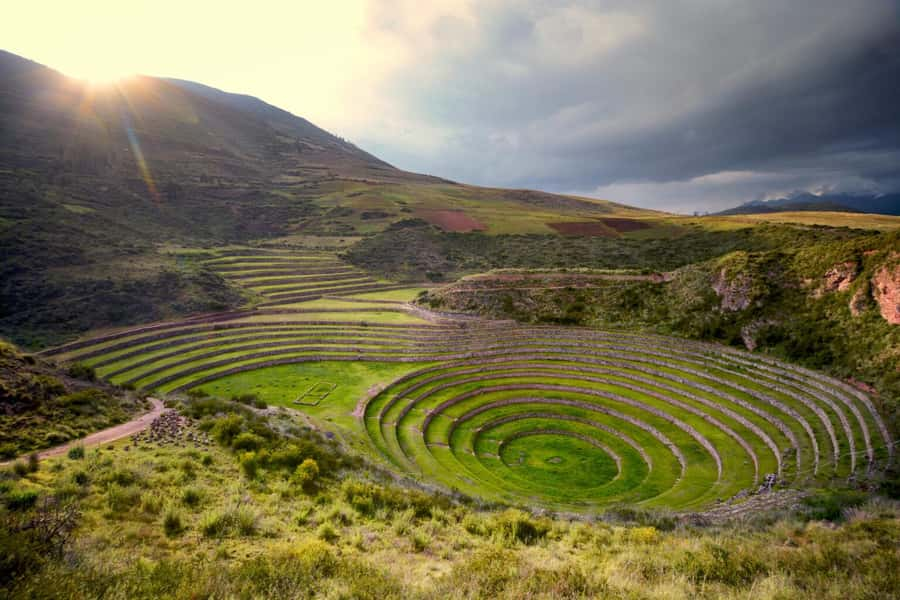
- Moray’s circular terraces: the Inca used these round platforms as an experimental agricultural site for crops like corn, potatoes, and olluco.
- Maras salt mines at altitude: salt extraction relies on sodium chloride water sources coming from the mountains.
- About 3,800 salt production plots: the scale is part of the wow factor, and the scenery is genuinely dramatic.
- Small timing wins: in one recent tour, the guide named Raul adjusted for photo-heavy guests and gave free-walk time when others were in group explanations.
Maras salt and Moray terracing, other trips
- Cusco: Maras Salt Mines & Inca Moray Half Day Trip
★ 3.9 · 6 reviews - Half day tour: Maras Salt Mines and Moray Terraces
★ 4.5 · 4 reviews - Maras Moray
★ 5.0 · 3 reviews - Cusco: Aventura Cuatrimoto en Moray y Salineras medio dia
★ 4.0 · 3 reviews
Entering the Maras-Moray circuit without feeling rushed
This is one of the best ways to see two major Cusco-area sights without committing to a full day. The schedule is built around a smooth morning loop: you get collected around 08:30, ride out to the sites, learn at each stop, then return to Cusco after about six hours total.
That six-hour rhythm matters. It means you can fit Maras and Moray in while still keeping your afternoon open, whether that is for acclimatizing, exploring central Cusco, or simply resting your legs. The pace is generally friendly, with enough time at each main point to take photos and ask questions.
One thing to keep in mind is that you are moving between different viewpoints and working areas. You are outside for long stretches, and you are at elevation. So think in terms of comfort planning: shoes you trust on uneven ground, sun protection, and water.
The Chinchero textile stop: color-making that starts with natural materials
Most people come to Chinchero for crafts, but the smarter way to enjoy this stop is to treat it like a living workshop. Before you head to Moray, you pause in the town of Chinchero, known for artisanal textile production with techniques passed down for generations, including influences connected to Inca-era traditions.
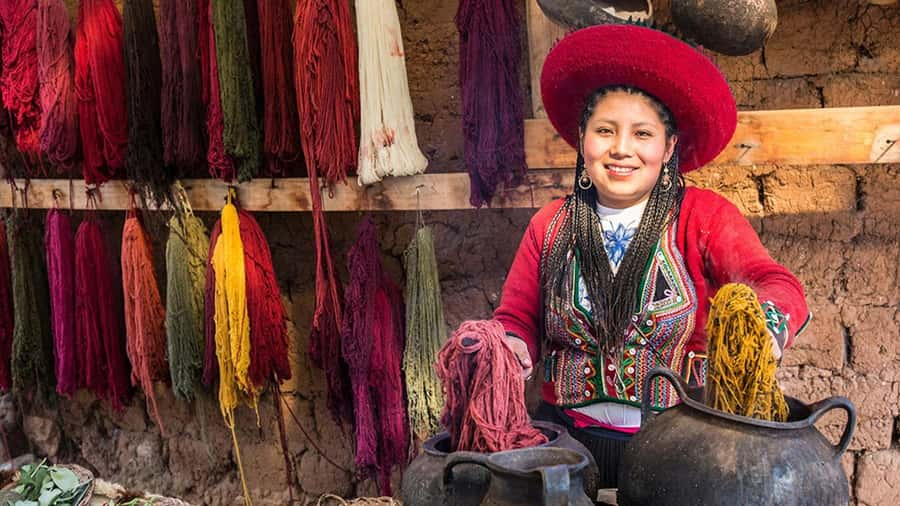
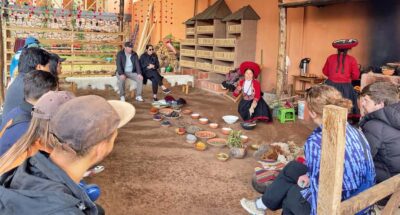
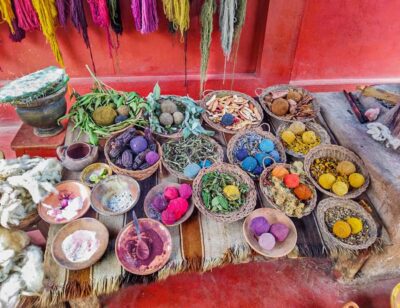
At the textile center, you can appreciate how color gets made for different types of wool. You will see processes for dyeing wool from llamas and alpacas, using natural materials for those colors. Even if you are not buying anything, watching the chain of steps helps you understand why these textiles matter culturally. They are not just souvenirs, they are a skill system.
Practical note: one tour experience reported that the village time focused mainly on the alpaca wool process and a sales area, rather than lots of free walking around. So if you want more wandering time, ask your guide how the stop is organized and how much time you get to move around.
Moray circular terraces: the Inca farming lab you can actually walk through
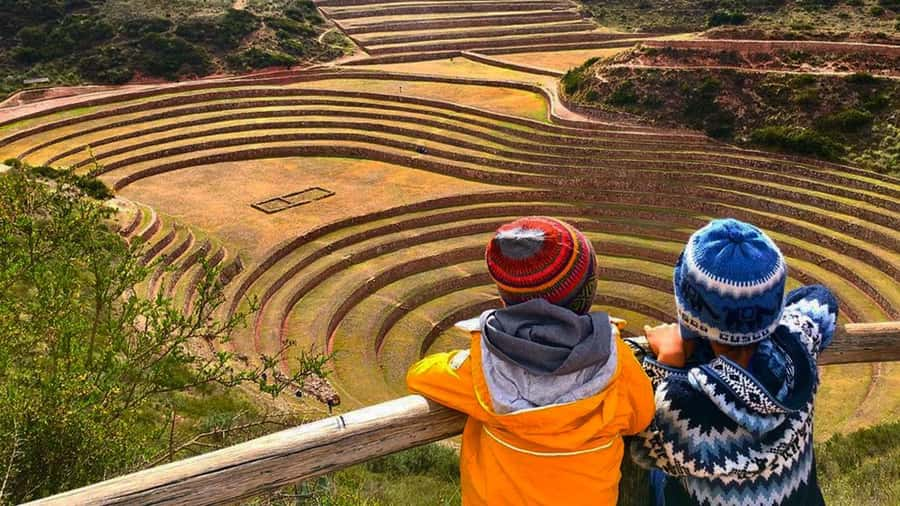
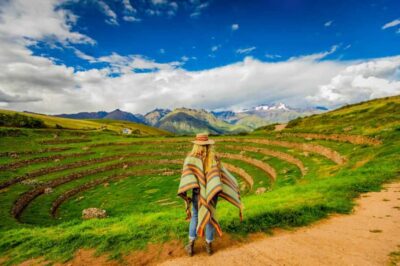
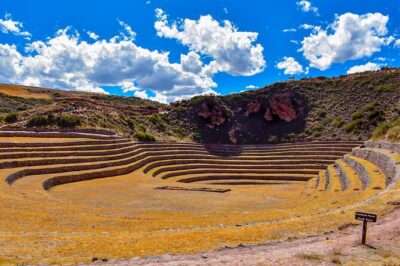
Next comes Moray, the archaeological park where you see those circular terraces up close. What makes Moray special is not just the shape. These are round platforms unlike the typical layout of many Inca terrace systems, and they were used as an experimental type site for agriculture.
The tour frames it clearly: Moray was used for obtaining and domesticating products and varieties such as corn, potatoes, and olluco. That means this is not only a scenic ruin. It is a working model of how the Inca experimented with crops and adapted them to local conditions.
As you move around, you also get strong mountain views. The snow-capped peaks around Cusco were considered apus, deities in Inca times, so Moray also functions as a kind of spiritual backdrop. Even if you do not treat it as a religious site, it is hard not to feel how intentionally placed these terraces are in relation to the surrounding high Andes.
What to watch for here:
- You want time to look, but also time to listen. The best part is how the guide ties the circular form to the purpose of experimentation.
- Bring your camera, but also pause long enough to notice the terraces as a system, not just a photo background.
Maras salt mines: sodium chloride water, thousands of small plots, real extraction
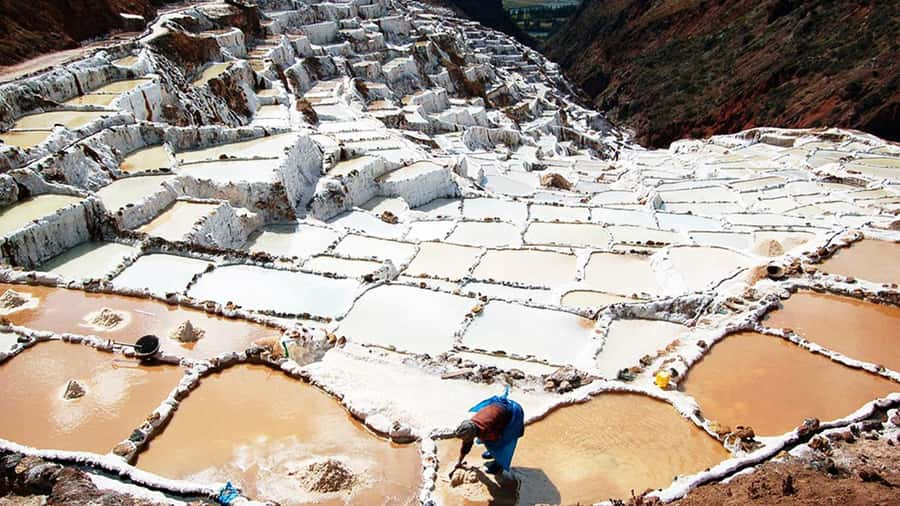
Then you reach the Maras salt mines, and the view does the heavy lifting fast. The mines are defined by water sources with sodium chloride that come from the mountains. Those salty springs allow salt production at very high altitude, more than 3,000 meters above sea level.
The tour highlights that the salt production lands number around 3,800 plots. That scale is part of the experience. Instead of one big “site,” you are looking at a whole working pattern of small extraction areas that create a patchwork across the slope. It is the kind of place where you understand why it is considered exceptional scenic beauty, because the geometry of the salt plots is visible at a glance.
You do not need technical knowledge to appreciate it. What clicks is the relationship between nature and labor. Mountain water supplies the chemistry, the altitude shapes the production conditions, and the plots make the output tangible. It feels like a system you can understand just by watching it.
Also, keep in mind that this is salt extraction country. It can feel a bit like an industrial landscape in the middle of dramatic mountains. If you like places where people work with what the land gives them, Maras hits that interest directly.
Timing, pace, and altitude: how to avoid the tired-morning trap
The tour starts around 08:30 with hotel pickup. That is ideal if you want daylight for photos and enough time to return to Cusco while you still have energy. It is also smart for logistics, because you are traveling out early and avoiding the worst congestion later.
In one review, a guide named Raul was praised for translating everything into clear English, and for maintaining a great overall speed of the tour. The same review also noted a small issue: in the morning, the guide sometimes spoke fast because it was the first day in Cusco and the group had altitude heaviness. That is a very normal scenario. Altitude can slow your mental processing, even when you feel physically okay.
My practical advice:
- If it is your first day, go easy the night before. Eat light, drink water, and plan for a slower morning brain.
- Do not be shy about asking for repetition. A good guide will slow down when needed.
- Bring your own snack and water so you do not get shaky if you are delayed by stairs, crowds, or just the time it takes to take photos.
The good news is that the tour does not require high physical effort. So while you will walk, you are not doing a hard hike. Still, you should expect some uneven outdoor terrain, especially around historical and working areas.
Price and value: what the $18 covers, and the real budget math
The listed price is about $18 per person for a six-hour tour. That sounds like a bargain, and in a lot of ways it is. What you are paying for includes pickup from your hotel, tourist transport, and a professional guide who speaks English and Spanish.
But you should budget for entrances too. Entrance costs are not included: you may need to pay a tourist ticket around USD 20 plus an entrance to Maras around USD 7. There is also no feeding included, so plan on a snack you bring.
So what is the value?
- You get two major sights that are far from Cusco, plus a cultural stop in Chinchero.
- You get interpretation, not just a bus drop-off.
- You save time by having transport handled, and you avoid figuring out complicated local connections.
In other words, it is not just a cheap ride. It is a guided “attention economy” morning. You see a lot, but you also learn why those places matter, instead of collecting checkmarks.
What you will learn from the guides at each stop
The tour includes a professional guide with English and Spanish. That matters because the stops are not simple. Each one has a purpose, and the guide ties it together in a way you can actually understand.
Here is what the guide focus gives you:
At Chinchero, you learn how dyeing works with natural materials and how wool from llamas and alpacas becomes colored textile. That helps you see the craft as technology and tradition, not only as a sales table.
At Moray, you learn that the circular terraces were designed for experimental agriculture, connected to domestication and obtaining crop varieties like corn, potatoes, and olluco. This turns the terraces from scenery into a story about experimentation.
At Maras, you learn the salt extraction logic: sodium chloride water sources from the mountains create salt production in thousands of plots at high elevation. You leave with a clearer mental model of how this works.
In a praised example, the guide Raul gave extra time for guests who took lots of photos. The guide recognized it and still moved the group along, first explaining in Spanish to others, then translating into English for the group. That kind of pacing makes the tour feel more human, and it is a big reason these half-day runs can feel satisfying rather than frantic.
What to bring for a smooth, no-stress half day
You will be outside and you will be at elevation, so pack for sun and comfort. The tour guidance is straightforward, and it is worth following.
Bring:
- Camera
- Sports shoes (good grip)
- Cash (for entrances)
- Sunscreen
- Passport or ID card
- Personal medication
I also recommend you plan for small hunger and thirst even though food is not included. The tour lasts half a day, so bringing a snack and a bottle of water makes a real difference in how you feel during the day. If you are prone to sunburn, bring extra sunscreen and apply before you leave Cusco.
Who should book Maras Moray, and who should skip it
This is best for you if:
- You want a half-day tour that still covers two major Cusco-area highlights
- You like guided learning, not just sightseeing
- You enjoy hands-on culture, like textile dyeing processes in Chinchero
- You are curious about how people extract and grow things at high elevation
This is probably not for you if:
- You have mobility impairments. The tour is listed as not suitable for that.
- You want a slow, minimal-walking day with lots of downtime. It is not high effort, but it is still a packed morning with multiple stops.
If you are arriving in Cusco and altitude is your main concern, this tour can still work, but treat it as a gentle day. Go with hydration, snacks, and the expectation that your brain may feel a bit slower early on.
Should you book Maras Moray?
If you want smart value, this tour is a strong pick. For about $18, you get hotel pickup, transport, and a guide who explains Chinchero textiles, Moray’s experimental terraces, and the salt extraction logic at Maras. Add the entrance fees and you have a realistic total budget, but you are still buying a guided, structured day that saves you time.
I would book it if your goal is learning plus scenery in one morning. I would think twice if you are very sensitive to the morning altitude phase or if you need accessibility-friendly terrain.
If you do book, make it work for you: bring sunscreen and good shoes, pack a snack, and if you care about photos or free-walk time, ask your guide how they plan the timing at each stop. That one small conversation can turn a solid tour into a truly comfortable one.
FAQ
What is the duration of the Maras Moray tour?
The tour lasts about 6 hours, which is roughly a half-day.
What time is hotel pickup?
Pickup is approximately at 08:30. You should be at your hotel reception about 5 minutes before the scheduled pickup time, and the guide will call your name.
What is included in the price?
Included are hotel pickup, tourist transport, and a professional guide who speaks English and Spanish.
Are entrance fees included?
No. Entrance to all tourist points is not included, and you should plan for a tourist ticket (USD 20.00) plus an additional entrance to Maras (USD 7.0).
Is feeding included?
No. Feeding is not included, so you may want to bring a snack and a bottle of water since the tour lasts half a day.
Does the tour require high physical effort?
No. The tour does not require high physical effort.
Can I cancel and get a refund?
Yes. Free cancellation is available up to 24 hours in advance for a full refund.
More Tour Reviews in Maras
- from Cusco: Atv Tour Maras, Moray, and Salt Mines
★ 4.6 · 17 reviews - Cusco: Maras Salt Mines & Inca Moray Half Day Trip
★ 3.9 · 6 reviews - Half day tour: Maras Salt Mines and Moray Terraces
★ 4.5 · 4 reviews - Cusco: Aventura Cuatrimoto en Moray y Salineras medio dia
★ 4.0 · 3 reviews
Maras Salt and the Moray Rings
- from Cusco: Atv Tour Maras, Moray, and Salt Mines
★ 4.6 · 17 reviews - Cusco: Maras Salt Mines & Inca Moray Half Day Trip
★ 3.9 · 6 reviews - Half day tour: Maras Salt Mines and Moray Terraces
★ 4.5 · 4 reviews - Cusco: Aventura Cuatrimoto en Moray y Salineras medio dia
★ 4.0 · 3 reviews
Freshly reviewed across Maras
- Maras Moray★ 5.0 · 3 reviews
- Cusco: Aventura Cuatrimoto en Moray y Salineras medio dia★ 4.0 · 3 reviews
- Half day tour: Maras Salt Mines and Moray Terraces★ 4.5 · 4 reviews
- Cusco: Maras Salt Mines & Inca Moray Half Day Trip★ 3.9 · 6 reviews
Maras and Moray Tours side by side.
 ★ 4.8From Cusco: Sacred Valley & Maras Salt Mines Tour with LunchFrom $282,227 reviews
 ★ 4.8From Cusco: Moray, Maras Salt Mines & Chinchero Weavers TourFrom $151,925 reviews
 ★ 4.6Cusco: Sacred Valley, Pisac, Ollantaytambo, Salt Mines MorayFrom $281,058 reviews
 ★ 4.8Cusco:Chinchero,Moray & Salt Mines drop-off in OllantaytamboFrom $27793 reviews
 ★ 4.8Sacred Valley: Chinchero, Moray, Ollantaytambo & Pisac+LunchFrom $25501 reviews
 ★ 4.6Sacred Valley: Maras & Moray by Quad Bike from CuscoFrom $39418 reviews
 ★ 4.7From Cusco: Quad bike tour Moray and Salt MinesFrom $27314 reviews
 ★ 5.0From Cusco: Moray, Maras Salt Mines & Chinchero Weavers Half-DayFrom $15126 reviews
Also on these Peru lists