
REVIEW · COLCA CANYON
Private 3 Day Colca Canyon Trekking tour (superior Service)
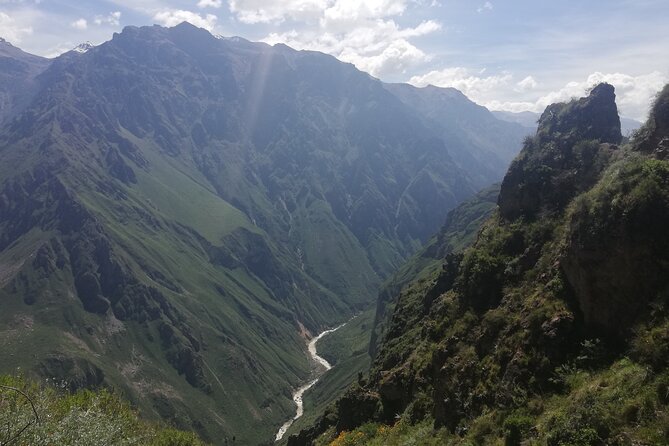
Colca Canyon hits fast, right at sunrise. This private 3-day trek is built around classic Colca moments, but it keeps the rhythm calmer than the big-group circus, with long nature time, cultural stops, and meals handled by locals.
What I love most is the mix of human-scale experiences and big scenery, like breakfast with a local family in Yanque and hiking sections where you actually pass small communities and see how people live with the canyon.
The one thing to consider up front: expect early starts and a moderate-to-challenging physical effort at altitude, especially on the final sunrise climb.
In This Review
- Key Points You’ll Care About
- Day 1 From Arequipa to Yanque: Dawn, Terraces, and the Valley of Fire
- What to watch for on Day 1
- Cruz del Condor: The View, the Waiting, and the Condor Moment
- A practical tip for condor time
- Day 1 Hiking to Pallca: 1,200 M Drop, Big Views, and a Free Afternoon
- The best and hardest part of this day
- Day 2 Llahuar Lodge to Oasis Sangalle: Bridges, Apacheta Views, and Ancient Farming
- Oasis Sangalle: Pool time and a lighter afternoon
- Why Day 2 is worth it
- Day 3 Cabanaconde Sunrise Ascent: Mountaineer Rhythm and Big-Demand Timing
- What to expect after the climb
- Chivay and the Volcano Viewpoints: Food, Vicuñas, and Abra Patapampa
- Salinas y Aguada Blanca: A respectful end to the trek
- Value and Logistics: Why This $400 Price Often Makes Sense
- Guides Matter: The Names People Keep Bringing Up
- What to Pack (and Why Your Feet Will Thank You)
- Who This Trek Is Best For (And Who Should Rethink It)
- Should You Book This Colca Canyon Trek?
- FAQ
- How long is the Colca Canyon trek?
- Where does the tour start?
- What time is the pickup in Arequipa?
- Is this tour private?
- How many people can join?
- What meals are included?
- Where do you stay during the trek?
- What does the guide provide?
- Is medical support included?
- What should I bring, and is a mule available?
Key Points You’ll Care About
- 3:15am to 3:30am pickup from Arequipa, then straight into the Colca Valley at dawn
- Yanque breakfast with a local family, plus time in the Valley of Fire and pre-Inca terraces
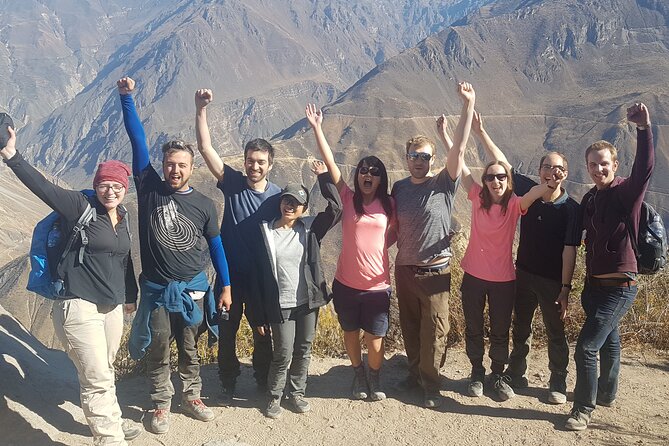
- Cruz del Condor viewpoint for condor watching (around 40 minutes on site)
- Oasis Sangalle day with a real natural pool break, plus fruit-tree shade and a Colca sour
- Two nights in a family home with private bath and hot water
- A safety-minded setup with medical oxygen and a first aid kit, plus English-Spanish hiking guides
Colca departures from Arequipa and Chivay
- From Arequipa: Colca Canyon Full-Day Guided Tour with Meals
★ 4.5 · 982 reviews - From Arequipa: 2-Day Colca Canyon Trekking Tour
★ 4.8 · 243 reviews - Colca Canyon Plus
★ 5.0 · 198 reviews - From Arequipa: Full Day Tour of Colca Canyon with Meals
★ 4.4 · 146 reviews
Day 1 From Arequipa to Yanque: Dawn, Terraces, and the Valley of Fire
Your trek starts in Arequipa before most people have even switched on their brains. Pickup is between 3:15am and 3:30am from your hotel. Your guide welcomes you, covers biosecurity protocols, and walks you through the day’s flow. Then you point the van toward the Colca Valley.
That early drive matters. By the time daylight hits the mountains, the whole region feels awake. You’re not just “getting to the hike,” you’re already experiencing the Andes.
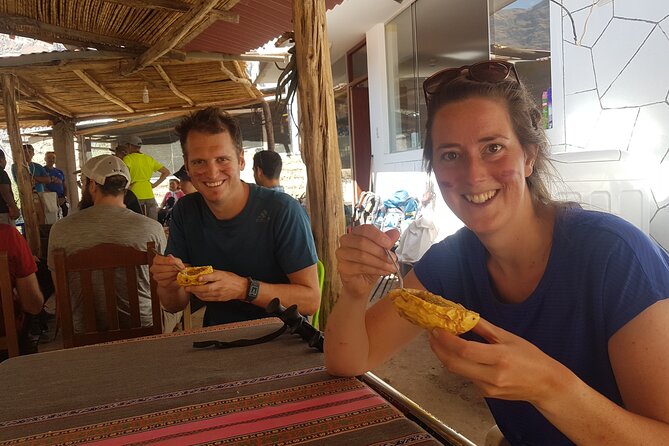
In the morning, your first major stop is Yanque, a traditional town tied to the colonial era. Around 6:30am, you get a traditional breakfast prepared by a local family. This isn’t a generic buffet stop. It’s simple, local, and very “how the day actually begins” in the canyon area.
Next comes the Valley of Fire area (Colca). You’ll spend time spotting pre-Inca terraces built through generations. The point of those terraces was survival: farming useful land in harsh conditions, fighting erosion, and producing core crops for subsistence. You’ll also notice how closely the valley work matches the environment, including the river channel cutting through the canyon walls and the Chila mountain range rising in the distance.
What to watch for on Day 1
This day is both gentle and demanding. The drive and stops are easy, but you’re already starting altitude-wise. I’d treat Day 1 like an acclimation day. Don’t sprint. Keep your pace steady and save your legs for the walking that comes next.
Cruz del Condor: The View, the Waiting, and the Condor Moment
Around 8:00am, you arrive at Mirador Cruz del Condor, the big viewpoint people come for. This spot is considered important by local tradition, almost like a sanctuary. From here, you can understand the scale of the canyon fast, because you’re seeing depth and distance at the same time.
Then you get about 40 minutes specifically for condor watching. If luck is with you, you’ll spot the Andean condor gliding in slow circles. The guide also frames what you’re seeing in a cultural and conservation way, including that this bird is at risk of extinction today.
A practical tip for condor time
Bring your eyes, not just your camera. The condors often show up as “quiet shapes” rather than a big movie entrance. Stay still, watch the airflow, and be patient. The viewpoint time isn’t huge, so good attention helps.
Nearby in Arequipa, these earned their own write-ups
Day 1 Hiking to Pallca: 1,200 M Drop, Big Views, and a Free Afternoon
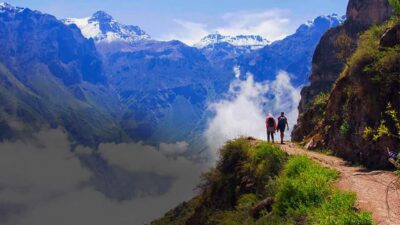
After condors, you shift into the main hike of Day 1. Once you’re ready, you start a walk of about 5 hours, with an approximate drop of 1,200 meters. The trail uses winding paths that put you into deeper canyon territory.
As you go down, you’ll get repeated chances to pause for photos and take in the canyon sections. There’s also time to rest and taste local fruits along the route. That small detail matters because it slows the hike down enough to feel like travel, not just exercise.
Your destination on Day 1 is Pallca, where the day ends with lunch made with local products. After lunch, the afternoon is free. This is where you can relax, recover, and let your muscles cool off, including a chance to use thermal baths if that’s part of your schedule on the ground.
The best and hardest part of this day
The best part is how quickly you go from valley views to real canyon depth. The harder part is the descent itself. If your knees get cranky on downhill trails, plan a slower pace and take the breaks your guide suggests.
Day 2 Llahuar Lodge to Oasis Sangalle: Bridges, Apacheta Views, and Ancient Farming
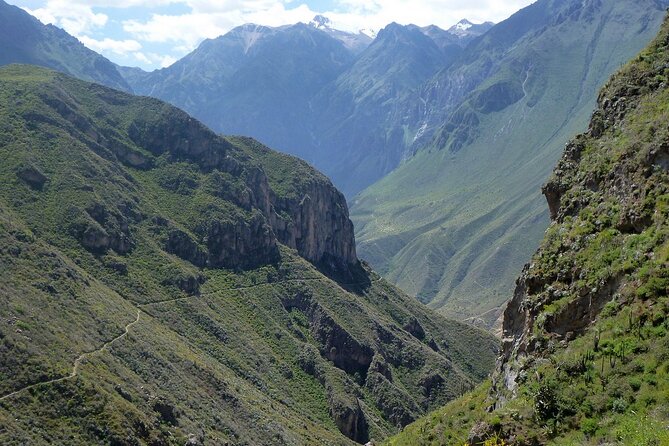
Day 2 is the “workday with rewards.” You walk around 5 hours, and you start with breakfast, then head toward Sangalle and its oasis area.
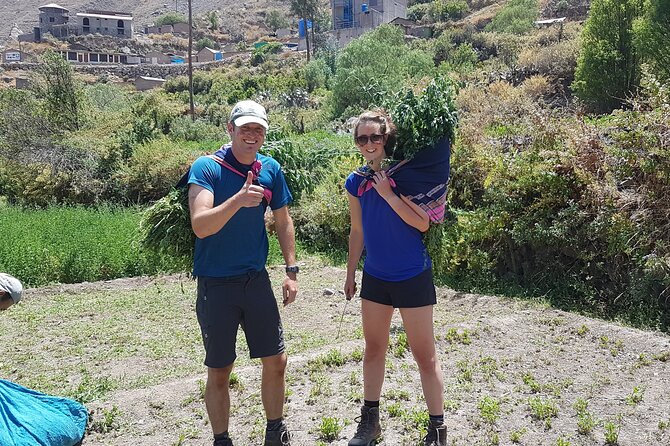
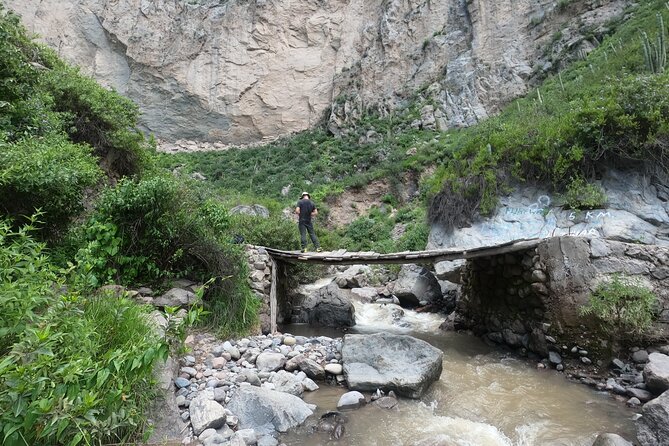
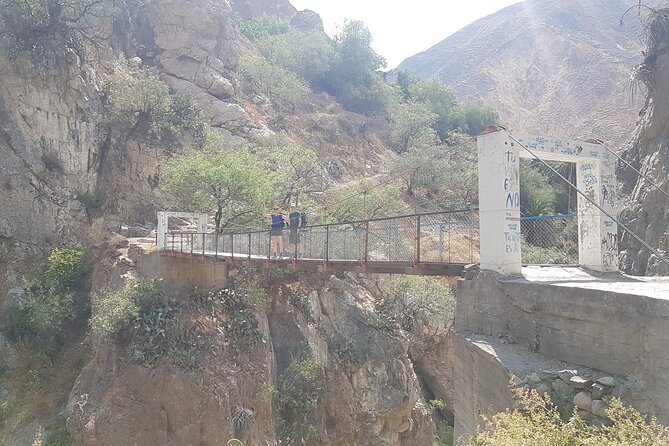
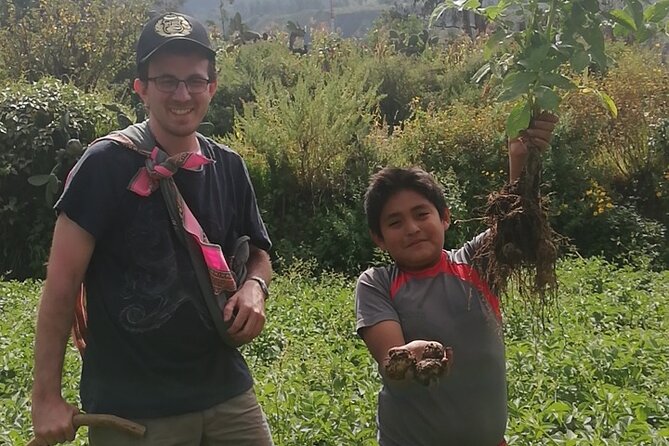
The first part is mostly ascent time toward a viewpoint called Apacheta. Along the way, you cross hanging bridges and pass small communities. One of the most memorable threads here is seeing people’s everyday labor, especially how inhabitants carry water to agricultural fields. You’re not just hiking through scenery, you’re walking through active life.
Your guide also explains what you’re seeing: flora, fauna, and the canyon’s shape. That kind of context makes the “same rocks I see in photos” feeling disappear.
Then you move into the descent through the Amphitheater, an archaeological site tied to agricultural use dated to 1200 to 1500 BC. This is a rare moment where the hike connects to long-term human adaptation, not just modern tourism.
After a break for rehydration, you continue toward Oasis Sangalle, arriving around 1:00pm.
Oasis Sangalle: Pool time and a lighter afternoon
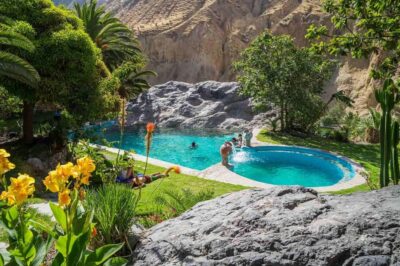
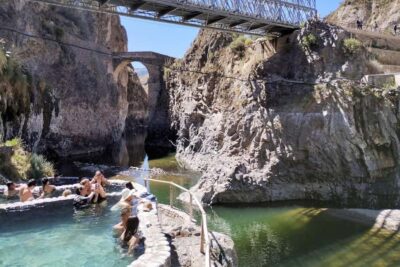
Oasis Sangalle is known for a natural pool. You get time to cool off in that water, plus lunch right after arrival. Then your afternoon opens up. You can explore around the fruit-tree area, or you can just sit and reset with the kind of calm that’s hard to find elsewhere in Peru.
There’s also an optional social moment: people often drink a Colca sour here, if it’s offered during your stay.
Dinner comes in the evening, and your guide uses that meal time to talk through the next day’s key challenge: the ascent to the canyon top.
Why Day 2 is worth it
Day 2 is where the trek shifts from “route” to “experience.” You get a pool break, real community walking, and the sense that the canyon isn’t a backdrop. It’s a living system.
Day 3 Cabanaconde Sunrise Ascent: Mountaineer Rhythm and Big-Demand Timing
On Day 3, the schedule takes a sharp turn at 4:00am. You start a hike around 5km, with about 3 hours of walking on the ascent. This is the part people remember, mostly because you’re moving while the world is still waking up.
The approach is built around a mountaineer-style rhythm. Your guide encourages steady effort, not frantic speed. The goal is to reach the canyon top, then watch the light change as the sunrise opens up the canyon views.
Along the ascent, you’ll pause for rests and take the view from different angles. After about an hour, you reach the top, then you continue down to Cabanaconde. There’s time to recover, enjoy breakfast, and then head back by transport toward Chivay.
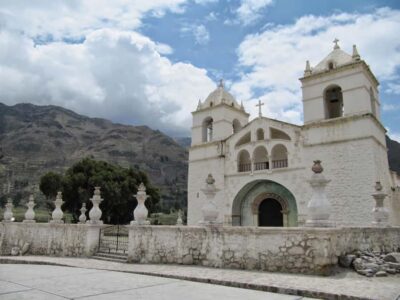
On the way, you stop in a Colca Valley town to see a colonial church and have time for basic browsing and purchases, depending on what’s open at the time you pass through.
What to expect after the climb
Even if you trained for it, your legs will feel it. That’s normal. The schedule then balances effort with recovery, letting you eat, ride, and keep the day from becoming a suffer-fest.
Chivay and the Volcano Viewpoints: Food, Vicuñas, and Abra Patapampa
Around 1:00pm, you arrive in Chivay, where the trek shifts into taste-focused travel. This is your chance to try traditional stews and the kind of dishes Colca and Arequipa are known for. The itinerary specifically calls out Arequipeña cuisine as a strong highlight.
After lunch and tasting time, you continue toward viewpoints of the volcano area and the national reserve of vicuñas.
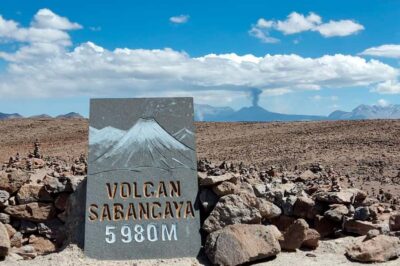
Your highest altitude stop is Abra Patapampa at 4910m. This is a panorama moment with views of the central Andes volcanic range, including volcanoes such as Misti, Chachani, Sabancaya, Walka Walka, and Ampato. Your guide also frames the area as an Inca sacred site tied to Juanita, the Inca princess associated with sacrifice traditions.
Salinas y Aguada Blanca: A respectful end to the trek
The final stop is Salinas y Aguada Blanca National Reserve, around the vicuña habitat. You get off the bus for photos and short learning time about the animals and their behavior. This part of the trip has a strong respect message, basically: watch quietly, don’t disturb, and help protect the reserve by doing the right thing.
Then you ride back to Arequipa, arriving around 5:00pm.
Value and Logistics: Why This $400 Price Often Makes Sense
At $400 per person, you’re paying for more than walking days. You’re getting a full package that includes:
- 2 nights in a family home with private bath and hot water
- An official hiking guide specialized in hiking, in English and Spanish
- All tickets included
- Medical oxygen and a first aid kit
- Breakfast (3), lunch (3), dinner (2) across the three days
- A trekking snack for the hike
- Shared tourist transport, while keeping the experience otherwise private
This is where value shows up. Many budget treks cover the basics, but you end up handling too much yourself: meals, entry fees, coordination, and medical readiness. Here, those pieces are built into the plan.
Also, the group setup helps. It runs a minimum of 2 and maximum of 8 participants. The only part that’s shared is the tourist mobility, while everything else is private. That matters for hiking, because you’ll get more personalized timing and fewer stop-and-start delays.
Guides Matter: The Names People Keep Bringing Up
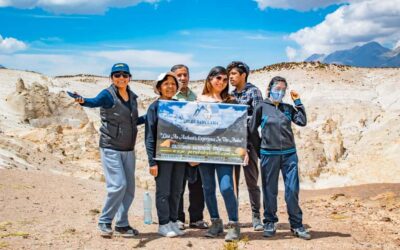
One of the strongest signals from past experiences is how much guests appreciated the guides’ personalities and teaching style. Names that came up include Jarley, Miguel, Marcello, and especially José, also called Pepe.
What I’d take from those reviews, and what you should look for in your own mindset, is that the guide role isn’t just “keep moving.” People praised guides for explaining local plants and animals, making time for conversation during meals, and keeping the group safe and comfortable.
If you want a trek that feels like learning while you walk, this type of guide matching is a big deal.
What to Pack (and Why Your Feet Will Thank You)
The trek has clear gear expectations. You’ll need a 40 liter backpack, hiking boots, and trekking sticks. For the canyon weather swings, pack:
- Sunscreen, sunglasses, and a hat
- A jacket and poncho if you’re hiking during rainy conditions
- Mosquito repellent
- Swimwear (you’ll want it for the Oasis pool time)
- Flashlight and extra batteries
- Personal items and extra money for small needs
- Water and something for rehydration
Also, you’ll get the “bring cash” reminder from real-world experience. Even when tickets are included, you may still want money for practical items like water or emergencies. I always do.
And if you hate carrying weight, there’s a partial fix: the itinerary mentions an optional mule to carry group backpacks on the last day. You can also rent a mule to climb to the top of the canyon, if you choose that route.
Who This Trek Is Best For (And Who Should Rethink It)
This Colca trek is a good fit for people with moderate physical fitness, who can handle early mornings and altitude conditions. If you like nature, cultural context, and a hiking plan that doesn’t feel rushed, you’ll probably have a great time.
It’s also a strong choice if you want a more personal group size. With 2 to 8 people, you avoid the chaos that can happen when everyone pours out of a giant bus at once.
That said, it’s not recommended for anyone coming with babies. And if your knees or breathing struggle at altitude, you should talk with the operator before booking and be honest about your limits.
Should You Book This Colca Canyon Trek?
Yes, if you want Colca Canyon in three days with private service, real meal breaks, and built-in recovery time, this tour is a solid call. The combination of condor viewing, Oasis Sangalle pool time, and the sunrise ascent gives you the classic highlights without feeling like you’re constantly rushing.
Book it if:
- You want a guide-led hike in English or Spanish
- You appreciate family-run meals and community encounters
- You can handle early pickups and steady climbing on Day 3
Skip it (or at least ask tough questions first) if:
- You’re looking for an easy stroll with no altitude pressure
- You want a flexible pace with no fixed schedule components
If that sounds like you, you’ll likely leave Colca with the kind of memories that stick, the kind where you remember a view, a meal, and a feeling, all on the same trip.
FAQ
How long is the Colca Canyon trek?
It runs for 3 days (approximately).
Where does the tour start?
The tour is based in Arequipa, Peru. You’ll receive pickup from your hotel.
What time is the pickup in Arequipa?
Pickup is scheduled between 3:15am and 3:30am.
Is this tour private?
Yes. It’s described as a private tour/activity. Only the tourist mobility is shared.
How many people can join?
The experience has a minimum of 2 and a maximum of 8 participants.
What meals are included?
Breakfast is included 3 times, lunch is included 3 times, and dinner is included 2 times.
Where do you stay during the trek?
You get 2 nights of accommodation in a family home with a private bath and hot water.
What does the guide provide?
You’ll have an official tourism guide specialized in hiking in English and Spanish, plus all tickets included.
Is medical support included?
Yes. The tour includes medical oxygen and a first aid kit for all participants.
What should I bring, and is a mule available?
Bring a 40 liter backpack, hiking boots, trekking sticks, sun protection, layers, and swimwear for the Oasis pool. An optional mule is available to carry group backpacks on the last day.
More Tours in Arequipa
- From Arequipa: Colca Canyon Full-Day Guided Tour with Meals
★ 4.5 · 982 reviews - Tour to the Salinas Lagoon and National Reserve in Arequipa
★ 4.5 · 548 reviews - From Arequipa: 2-Day Colca Canyon Trekking Tour
★ 4.8 · 243 reviews - Walking tour in the Historic Center of Arequipa
★ 4.4 · 180 reviews - From Arequipa: Full Day Tour of Colca Canyon with Meals
★ 4.4 · 146 reviews
More Tour Reviews in Arequipa
- From Arequipa: Colca Canyon Full-Day Guided Tour with Meals
★ 4.5 · 982 reviews - Tour to the Salinas Lagoon and National Reserve in Arequipa
★ 4.5 · 548 reviews - From Arequipa: Sillar Route Trek
★ 4.2 · 461 reviews - Arequipa: Chili River White Water Rafting with Hotel Pickup
★ 4.8 · 329 reviews - From Arequipa: 2-Day Colca Canyon Trekking Tour
★ 4.8 · 243 reviews
Colca, Other Departures
- From Arequipa: Colca Canyon Full-Day Guided Tour with Meals
★ 4.5 · 982 reviews - From Arequipa: 2-Day Colca Canyon Trekking Tour
★ 4.8 · 243 reviews - Colca Canyon Plus
★ 5.0 · 198 reviews - From Arequipa: Full Day Tour of Colca Canyon with Meals
★ 4.4 · 146 reviews - Full-Day Colca Canyon Tour from Arequipa
★ 4.3 · 112 reviews
Freshly reviewed across Arequipa
- Excursion Salinas Lagoon and National★ 5.0 · 3 reviews
- From Arequipa: Full Day Colca Canyon Tour★ 4.5 · 3 reviews
- Arequipa: Colca Canyon Trekking 2 days and 1 night + food★ 4.8 · 3 reviews
- Walking tour through the Historic Center of Arequipa★ 4.0 · 3 reviews
- Arequipa: Catarata de Pillones and Bosque de Piedras Tour★ 4.3 · 3 reviews
- Cooking Class Typical Food in Arequipa★ 3.9 · 3 reviews
Colca Canyon Tours side by side.
 ★ 4.5From Arequipa: Colca Canyon Full-Day Guided Tour with MealsFrom $42982 reviews
 ★ 4.62-Day Tour Colca Canyon in Arequipa with end in PunoFrom $78248 reviews
 ★ 4.8From Arequipa: 2-Day Colca Canyon Trekking TourFrom $30243 reviews
 ★ 5.0Colca Canyon PlusFrom $103198 reviews
 ★ 4.4From Arequipa: Full Day Tour of Colca Canyon with MealsFrom $27146 reviews
 ★ 4.3Full-Day Colca Canyon Tour from ArequipaFrom $39112 reviews
 ★ 4.52 Day 1 Night Trek / Colca CanyonFrom $12492 reviews
 ★ 4.6From Arequipa: Colca Canyon Day Trip with Transfer to PunoFrom $6590 reviews
Also on these Peru lists