
REVIEW · CHAN CHAN
Shore Excursion from Salaverry port
Five hours, three empires, one ancient coastline. This Salaverry shore excursion strings together the big hitters around Trujillo, starting with the Moche-built Huaca del Sol and Huaca de la Luna and then moving on to Chimú sites. I like that the stops are not random, they connect through how these cultures used adobe spaces, platforms, and ceremonial architecture.
Two things I really enjoy: the chance to stand in front of massive adobe mounds and actually understand their purpose, and the quality of guiding. On past departures, guides like Alfredo and William are praised for giving clear, timed explanations instead of endless rambling, which makes the archaeology easier to follow. You also get interpretation in English and Spanish, so you can keep up even if your group has mixed language comfort.
The main consideration is budgeting. Entrance fees and food and drinks are not included, so you will want cash ready and a plan for a meal after the tour if you are still hungry.
In This Review
- Key highlights at a glance
- Port-to-ruins in 5 hours: the real pace
- Getting to the meeting point from Salaverry without stress
- Huaca del Sol and Huaca de la Luna: Moche power made visible
- Huacas de Moche Museum: ceramics and tomb finds that make ruins click
- Huaca Arcos Iris (Rainbow Temple / El Dragon): Chimú sacred design
- Chan Chan UNESCO World Heritage Site: the adobe city scale you can feel
- Transport, small-group comfort, and how guides affect the day
- Price and value: $80 for the big sites, plus what to budget
- What to bring and what to leave behind
- Who this tour fits best
- Should you book this Salaverry to Trujillo archaeology tour?
- FAQ
- What time does the tour start from Salaverry port?
- How long is the shore excursion?
- Where do I meet the guide?
- What sites are included in the itinerary?
- Are entrance fees included in the price?
- What languages are offered for the guide?
- What should I bring, and what is not allowed?
- Is the tour suitable for everyone?
Key highlights at a glance
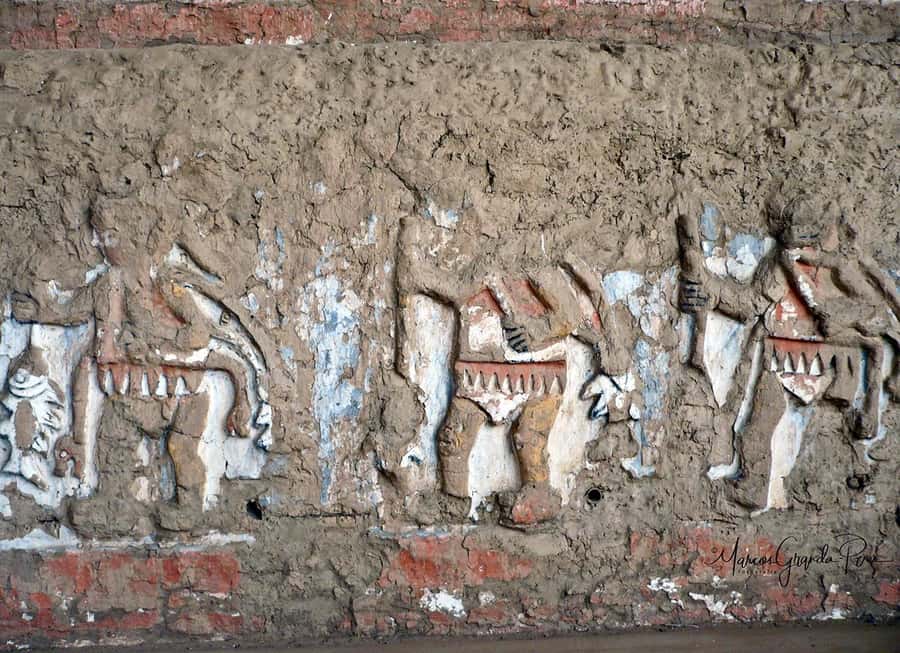
- Huaca del Sol and Huaca de la Luna: huge Moche adobe platforms with centuries of rebuilding layered in the structure
- Huacas de Moche Museum: artifacts, ceramics, utensils, and tomb finds that add context fast
- Huaca Arcos Iris (Rainbow Temple / El Dragon): Chimú-era architecture with carved adobe panels and ritual niches
- Chan Chan UNESCO World Heritage Site: the largest pre-Columbian adobe city in America, once the Chimú capital
- Port logistics that work: round-trip transport from Salaverry and a small group format
Chan Chan, Huanchaco and the Moche huacas
- Full Day Tour Huacas, Chan Chan & Huanchaco – Trujillo
★ 4.5 · 64 reviews - Pyramids of the Sun and the Moon, Huanchaco and Chan Chan
★ 4.1 · 9 reviews - Trujillo Shore Excursion from Salaverry Port
★ 5.0 · 9 reviews - From Trujillo: Temple of the Moon and Sun and Chan Chan
★ 3.3 · 5 reviews
Port-to-ruins in 5 hours: the real pace

This is a classic “shore excursion that makes sense” format: you leave Salaverry, hit the top archaeology sites around Trujillo, and you are back in time to rejoin your ship. The total duration is about 5 hours, so you should think focused, not leisurely. You will walk a bit, look closely at exposed adobe details, and get enough explanation to understand why each site matters.
If you love ruins, but you also like structure, you are in the right place. A strong part of this tour is that the route follows a storyline: Moche religious and administrative power, then a Chimú continuation of sacred architecture, and finally a big-picture view at Chan Chan as a capital city.
The group setup is small with English and Spanish interpretation, which helps on a port schedule. It also means the guide can keep an eye on timing and keep the visit organized.
Getting to the meeting point from Salaverry without stress
This tour starts at 8:30 AM from Salaverry port. First, you use the cruise ship’s shuttle bus service for about a 10-minute ride to Salaverry Plaza. At the plaza, you look for the sign JD ADVENTURE.
You will get full meeting details about 2 days before your arrival, and you will want to keep checking emails because departure time updates can happen. The operator also asks you to provide a valid mobile number for WhatsApp contact, which is a good sign for smooth day-of coordination.
A practical tip: set aside time before you head to the shuttle area. In ports, delays can happen, and the tour’s whole point is staying on a tight schedule. If your ship docks late or the shuttle system is slower than expected, you want buffer time.
Huaca del Sol and Huaca de la Luna: Moche power made visible
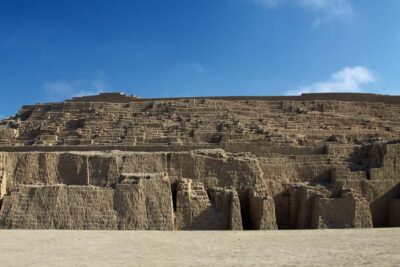
Your morning drive heads to the Sun and Moon Huacas, known as Huaca del Sol (Temple of the Sun) and Huaca de la Luna (Temple of the Moon). These were built during the Moche empire and they are not small monuments. Think of them as enormous adobe mounds that functioned as religious and administrative spaces.
What I like about this first stop is how the tour explains the “layering” idea. Over centuries, the Moche sealed the bodies of dead rulers into the temple and then covered older platforms with new ones. Over about 700 years, the result is a stepped pyramid effect, with history stacked inside the architecture.
The guide also separates the roles:
- Huaca de la Luna worked as a religious complex
- Huaca del Sol functioned more like an administrative center
When you are there in person, that difference helps your brain connect the dots. You stop looking at “cool walls” and start recognizing function.
Huacas de Moche Museum: ceramics and tomb finds that make ruins click
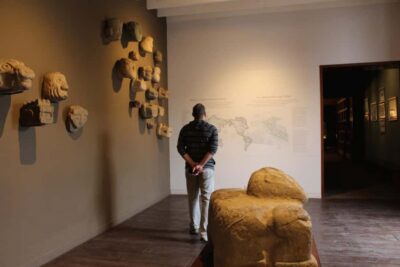
After seeing the huacas outside, the tour visits the Huacas de Moche Museum. This stop matters because it turns the structures into real people and real routines. You get to see artifacts like ceramics, utensils, and items connected to tombs, all of which help you interpret what you saw in the architecture.
If you tend to miss meaning at archaeology sites, this museum is your shortcut. Outdoors, you can only observe so much. Indoors, the guide can point you toward why certain objects existed, what daily or ritual life might have looked like, and how burial practices relate to the temples’ repeated rebuilding.
It also helps with time management. In a 5-hour shore excursion, a museum stop can be a high-value use of limited time, especially if you do not have the chance to visit a separate museum on your own.
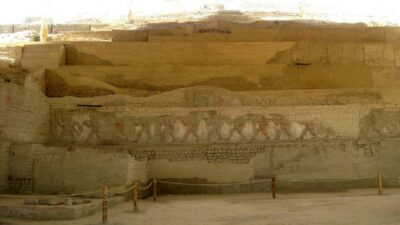
Huaca Arcos Iris (Rainbow Temple / El Dragon): Chimú sacred design
Next up is Huaca Arcos Iris, also called the Rainbow Temple or El Dragon. The tour frames this as a Chimú temple built around A.D. 1200, and it gives you a reason to look closely at the adobe.
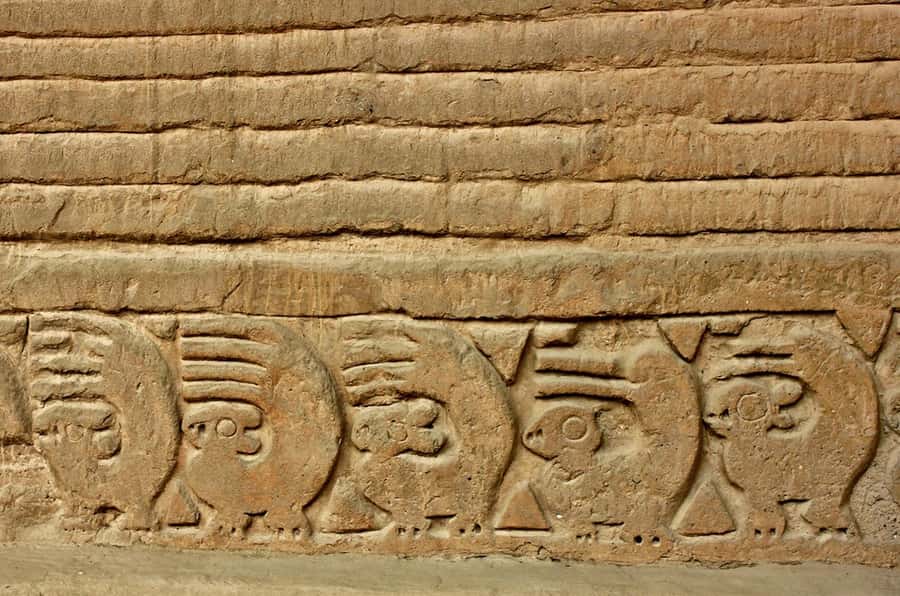
Here, the highlights are the carved and recessed details. You explore the temples’ two platforms and get views of carved adobe panels and niches that were used to store ritual objects. That is a key moment for anyone who likes “how did they use this?” thinking. Niches are not decorative. They are functional.
You also hear local legends tied to the site, including the story of Takaynamo, the mythical founder figure believed to have founded Chan Chan. Even if you treat legends as legends, they still tell you how people connected sacred places with cultural origins.
This stop is shorter than Chan Chan, but it adds variety. It also helps you see the cultural shift from Moche to Chimú through temple design and symbolism.
Chan Chan UNESCO World Heritage Site: the adobe city scale you can feel
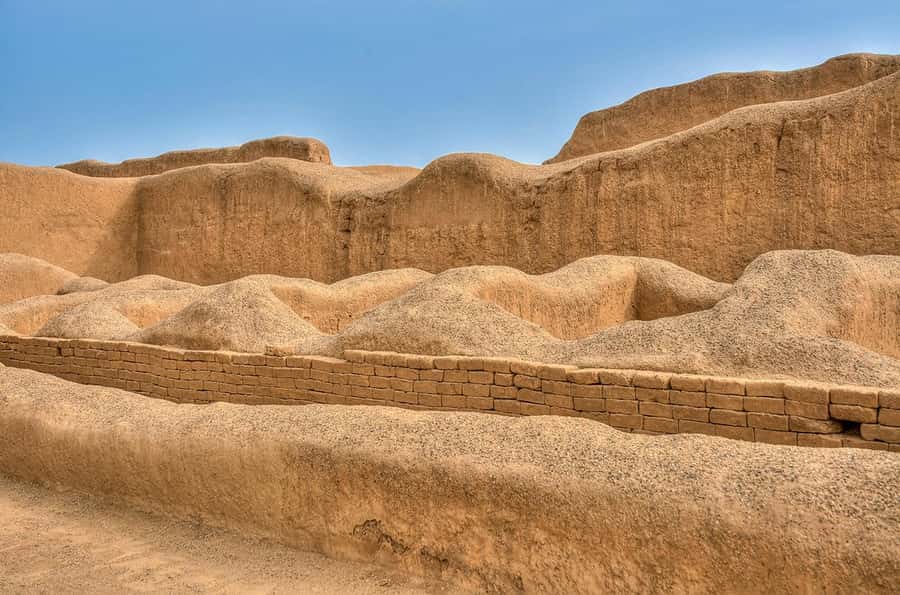
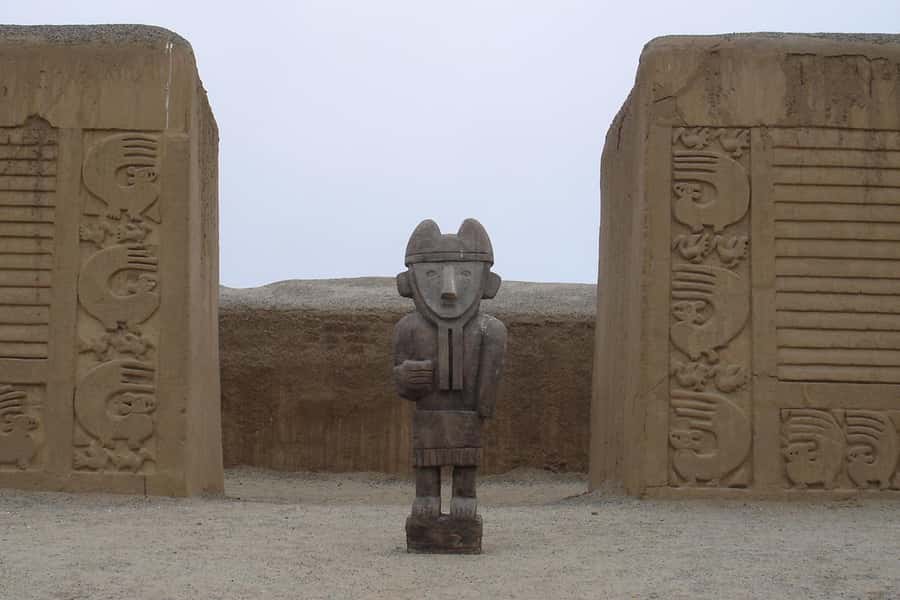
The tour ends with Chan Chan, the UNESCO World Heritage Site declared in 1986. If you only have one chance for a big-vision Chimu stop in this region, this is it.
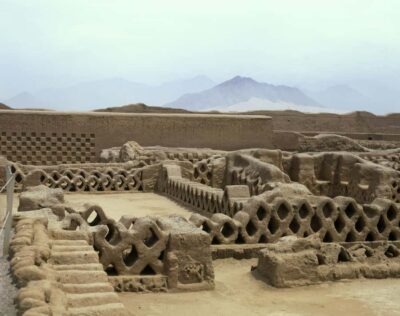
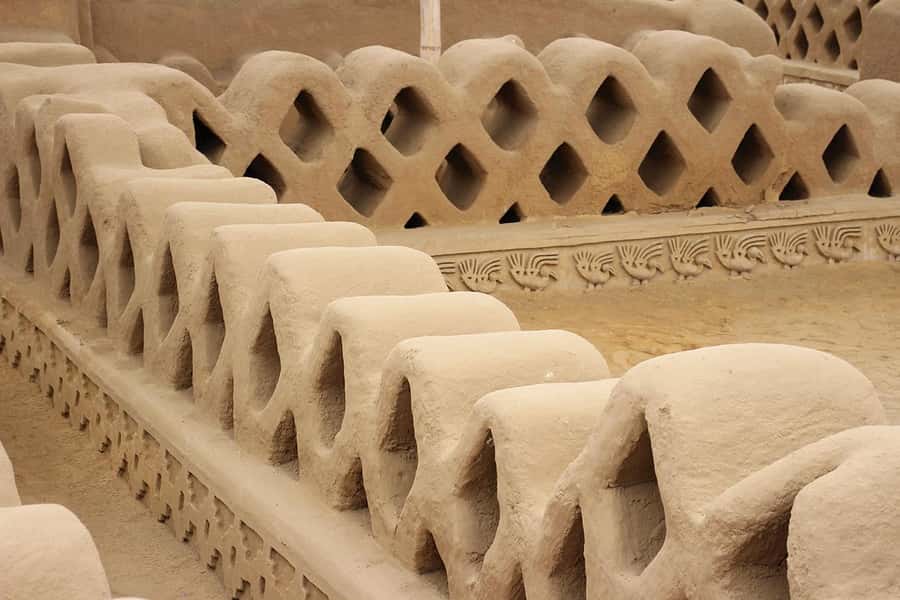
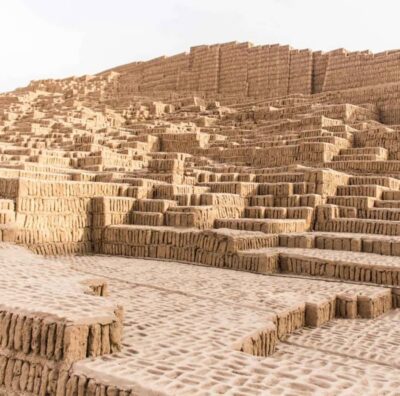
Chan Chan is described as the largest pre-Columbian adobe city in America. It served as the capital of the Chimú empire, and the complex once included courtyards, terraces, palaces, and gardens. The population estimate given is 30,000 to 60,000 people, which is astonishing when you realize this is all built from adobe on a human scale you can walk through.
What makes Chan Chan feel different from the earlier huacas is that you are not only looking at a religious or symbolic structure. You are seeing city planning, elite spaces, and how power expressed itself in an urban layout. It is the kind of place where your brain starts building mental maps, because courtyards and terrace spaces give you natural navigation anchors.
As for practical timing, you will not get days here. But within a shore excursion window, the guide is aiming for the “big impact” version: seeing how large-scale adobe architecture could function as a real city, not just as ruins.
Transport, small-group comfort, and how guides affect the day
A lot of shore excursions fail because the logistics are sloppy or the guide talk is too long and too vague. This one is built around small group transport and guided interpretation, with pick up and drop off from and to Salaverry port.
You also get guides who can switch into English or Spanish, which matters when your group includes cruise passengers with different backgrounds. Based on how past guides are described, the strongest guiding style here is structured explanations at the right moments. That is how you avoid the archaeology “information fog.”
Another smart factor is the skip the ticket line feature. On a port day, saved minutes can mean saved stress, especially when you are working against ship reboarding schedules.
Price and value: $80 for the big sites, plus what to budget
At $80 per person for about 5 hours, you are paying for more than just a driver. You get:
- round-trip transport from Salaverry port
- an English and Spanish speaking guide
- visits that include major Moche and Chimú sites, plus the Huacas de Moche Museum
- small group handling
- skip the ticket line
Now the value calculation needs one adjustment: entrance fees and food and drinks are not included. Since you are also told to bring cash, you should plan for on-site payments without scrambling.
If you compare what you would do on your own, the biggest cost isn’t only tickets. It is time, routing, and finding an efficient way to cover multiple archaeology priorities before your ship leaves. This tour is priced like a time-saver with structured interpretation.
So if you want a single port-friendly hit list, this $80 can be a fair deal. If you hate paying extra for entrances and you prefer open-ended wandering, you may want to plan a different approach.
What to bring and what to leave behind
The tour is simple, but it has rules. Here is what you should do before you meet the guide:
Bring:
- Cash, since entrance fees are not included
Know the restrictions:
- No backpacks
- No pets
- No alcohol and drugs
Also, you need a planning mindset for communications. You must provide a valid mobile number for WhatsApp, and you should keep checking your emails for updates of the departure time.
Wear for archaeology:
- comfortable shoes, since you will be walking through outdoor ruins
- sun protection, since adobe sites are typically exposed
- a light layer if you get cooler air after morning sun
And one more important practical note: this excursion is listed as not suitable for pregnant women, people with mobility impairments, people with altitude sickness, people with pre-existing medical conditions, and people over 95 years. That is not just policy. It affects how safe and comfortable the day will be, given the pace and physical demands.
Who this tour fits best
This shore excursion is a good match if you:
- have only a few hours in the area and want the main archaeology stops
- like guided context that explains what you are seeing, especially around Moche and Chimú sites
- prefer English or Spanish interpretation rather than trying to figure everything out solo
- want round-trip transport taken care of from Salaverry port
It is also a strong choice for history-minded travelers who want the “why” behind adobe temples and how repeated construction changes what the site becomes over time.
If you are traveling with mobility limitations, altitude sensitivity, or serious pre-existing conditions, the tour is not recommended based on the listed suitability. In that case, you would likely do better with a gentler shore plan that avoids physical ruins and tight timing.
Should you book this Salaverry to Trujillo archaeology tour?
I would book it if your priority is a smart, port-friendly way to see Huaca del Sol, Huaca de la Luna, Huaca Arcos Iris, and Chan Chan in one day, with a guide who can keep the explanations organized. The route is logical, the stops connect, and the UNESCO city payoff at Chan Chan is real scale, not just “a quick photo stop.”
Skip it if you:
- do not want to pay extra for entrance fees
- need a slower pace than an efficient shore excursion allows
- expect a hands-off day with no rules, since there are clear restrictions like no backpacks and a cash requirement
If you do book, set yourself up for success: bring cash, plan for a 5-hour sprint, and stay on top of email and WhatsApp updates. That way you can spend the day focused on what matters, the adobe architecture, the changing Moche to Chimú story, and the sheer impressiveness of Chan Chan as you wrap up back at Salaverry.
FAQ
What time does the tour start from Salaverry port?
The tour begins at 8:30 AM.
How long is the shore excursion?
The duration is 5 hours.
Where do I meet the guide?
You first take the cruise ship shuttle bus for about 10 minutes to Salaverry Plaza, then look for the sign JD ADVENTURE. Full details are provided 2 days before your arrival.
What sites are included in the itinerary?
The tour includes Huaca del Sol, Huaca de la Luna, the Huacas de Moche Museum, Huaca Arcos Iris, and Chan Chan.
Are entrance fees included in the price?
No. Entrance fees are not included.
What languages are offered for the guide?
The tour includes a live guide in English and Spanish.
What should I bring, and what is not allowed?
You should bring cash. Backpacks, pets, and alcohol and drugs are not allowed.
Is the tour suitable for everyone?
It is not suitable for pregnant women, people with mobility impairments, people with altitude sickness, people with pre-existing medical conditions, and people over 95 years.
More Tours in Trujillo
- Full Day Tour Huacas, Chan Chan & Huanchaco – Trujillo
★ 4.5 · 64 reviews - Trujillo Shore Excursion from Salaverry Port
★ 5.0 · 9 reviews - From Trujillo: Complete full day tour with museums
★ 5.0 · 5 reviews - Trujillo: El Brujo Complex Archaeological Tour with Tickets
★ 4.6 · 3 reviews
More Tour Reviews in Trujillo
- Full Day Tour Huacas, Chan Chan & Huanchaco – Trujillo
★ 4.5 · 64 reviews - Pyramids of the Sun and the Moon, Huanchaco and Chan Chan
★ 4.1 · 9 reviews - Trujillo Shore Excursion from Salaverry Port
★ 5.0 · 9 reviews - From Trujillo: Complete full day tour with museums
★ 5.0 · 5 reviews - From Trujillo: Temple of the Moon and Sun and Chan Chan
★ 3.3 · 5 reviews
Adobe Cities of the North
- Full Day Tour Huacas, Chan Chan & Huanchaco – Trujillo
★ 4.5 · 64 reviews - Pyramids of the Sun and the Moon, Huanchaco and Chan Chan
★ 4.1 · 9 reviews - Trujillo Shore Excursion from Salaverry Port
★ 5.0 · 9 reviews - From Trujillo: Temple of the Moon and Sun and Chan Chan
★ 3.3 · 5 reviews - Trujillo: El Brujo Complex Archaeological Tour with Tickets
★ 4.6 · 3 reviews
Freshly reviewed across Trujillo
- Trujillo: El Brujo Complex Archaeological Tour with Tickets★ 4.6 · 3 reviews
- From Trujillo: Temple of the Moon and Sun and Chan Chan★ 3.3 · 5 reviews
- Shore Excursion from Salaverry port★ 4.5 · 8 reviews
- Pyramids of the Sun and the Moon, Huanchaco and Chan Chan★ 4.1 · 9 reviews
- Trujillo Shore Excursion from Salaverry Port★ 5.0 · 9 reviews
- Full Day Tour Huacas, Chan Chan & Huanchaco – Trujillo★ 4.5 · 64 reviews
Chan Chan and Northern Ruins side by side.
 ★ 4.5Lima Bike Tour Miraflores – Barranco + Huaca Pucllana!From $30137 reviews
 ★ 4.5Full Day Tour Huacas, Chan Chan & Huanchaco – TrujilloFrom $2764 reviews
 ★ 4.9Lima: Huaca Ruins and Larco Museum at Night with DinnerFrom $10035 reviews
 ★ 4.8Lima city tour: Larco Museum and Huaca PucllanaFrom $6533 reviews
 ★ 4.3Tour Huaca Pucllana: Pyramids and Pre-Columbian AntiquityFrom $6612 reviews
 ★ 4.8Chachapoyas | Kuelap Fortress Full-Day TourFrom $5912 reviews
 ★ 4.8Pyramids of the Sun and the Moon, Huanchaco and Chan ChanFrom $5511 reviews
★ 4.1Pyramids of the Sun and the Moon, Huanchaco and Chan ChanFrom $659 reviews
★ 4.8Pyramids of the Sun and the Moon, Huanchaco and Chan ChanFrom $5511 reviews
★ 4.1Pyramids of the Sun and the Moon, Huanchaco and Chan ChanFrom $659 reviews
Also on these Peru lists