
REVIEW · AUSANGATE AND ANDEAN LAKES
Ausangate Trek 5 Days
Ausangate trek days feel like real altitude adventure. This 5-day route takes you into Peru’s high Andes with turquoise lagoons, dramatic passes, and two hot springs stops, plus moments where local traditions meet the trail. You’ll start early from Cusco and move at a steady pace around Ausangate, often with long stretches where you feel far from other tour groups.
Two things I’d pick again in a heartbeat are the all-in support and the way meals keep the trekking day sane. You get camping gear and equipment horses, and the team runs on inclusive breakfasts and hearty lunches and dinners that actually fit the altitude. The other big plus is the small group size, up to 10 people, which usually means less waiting and more attention when you need it.
The main drawback to think about is the altitude and the cold at these elevations. Camps land around the 4,200 m to 4,630 m range, and you’ll hit passes up to 5,200 m, so plan for effort, slower breathing, and cold evenings. Also, a sleeping bag is not included, so pack warm mountain sleeping gear or be ready to buy one.
In This Review
- Key Things to Know Before You Go
- Why Ausangate Feels Different From Typical Cusco Tours
- Price and Value: What $660 Covers (and What It Does Not)
- Small-Group Comfort at Altitude: How the Team Changes the Experience
- The 5-Day Route: What Each Day Feels Like
- Day 1: Rondoca to Upis, with Apu Ausangate in Your First Views
- Day 2: Arapa Pass to Two Lagoons, Then Apacheta to Ausangate Qocha
- Day 3: Palomani Pass at 5,200 m and a Ceremony for Apu Ausangate
- Day 4: Pacchanta Valley, Deep Lagoons, and Hot Springs Recovery
- Day 5: Final Circuit, Local Family Food, Then Back to Cusco
- The Cultural Parts Are Not Side Quests
- Hot Springs at Upis and Pacchanta, Why They Matter
- What to Pack for Cold Nights and High Passes
- Who Should Book This Trek, and Who Might Think Twice
- Should You Book Ausangate Trek 5 Days with Vidal Expeditions?
- FAQ
- What is the duration of the Ausangate trek?
- What time does the trek start?
- How many people are in the group?
- Are meals included in the price?
- What gear is included?
- Is a sleeping bag included?
- Is there an entrance fee?
- Are hot springs included?
- What happens at the end of the trek?
- Can I cancel for a refund?
Key Things to Know Before You Go
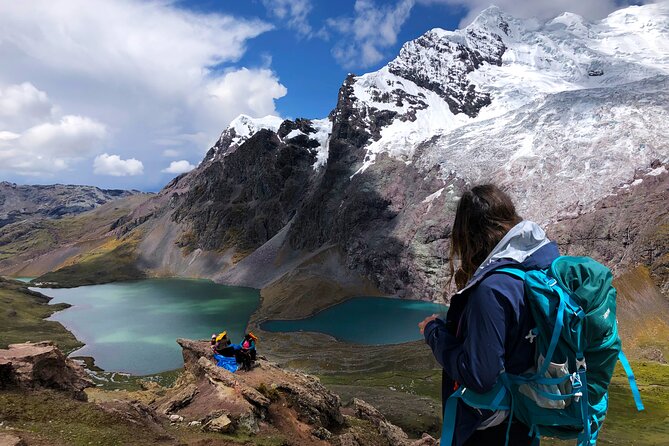
- High passes that feel serious: Arapa Pass at 4,850 m, Apacheta at 4,980 m, and Palomani Pass up to 5,200 m.
- Hot springs on two different days: soak at Upis with coca tea, then again at Pacchanta.
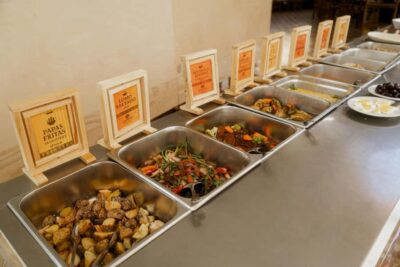
- All-inclusive food support: breakfast, lunch, and dinner are included through most days, so you aren’t hunting meals on the trail.
- Horses and camp setup included: your equipment rides with the horse driver, with the cook and team handling camp work.
- Culture moments built into the trek: an Apu Ausangate ceremony on the highest pass day, plus a local family food and weaving session at the end.
- Small group feel: a maximum of 10 travelers helps keep things personal and organized.
Ausangate lagoons, other trekking days
- Excursion to Ausangate & 7 lakes with Coca Ceremony |Private|
★ 5.0 · 80 reviews - Ausangate Trek 5 Days
★ 5.0 · 74 reviews - Laguna Humantay Full Day Trail
★ 5.0 · 57 reviews - Full-Day Tour to Ausangate 7 Lakes
★ 5.0 · 56 reviews
Why Ausangate Feels Different From Typical Cusco Tours
Most Cusco-area trips follow the same highlights. This one is built around the bigger question: what if you don’t just look at the Andes, but walk through them? You start the trek early, then spend five days moving through high valleys, glacial lagoons, and pass crossings that put you close to the mountain’s spiritual presence.
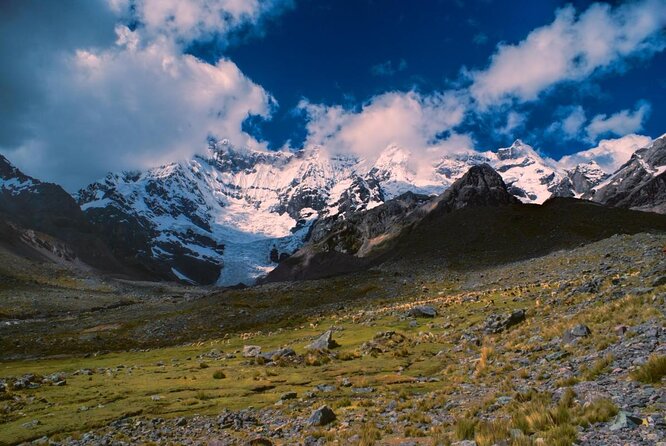
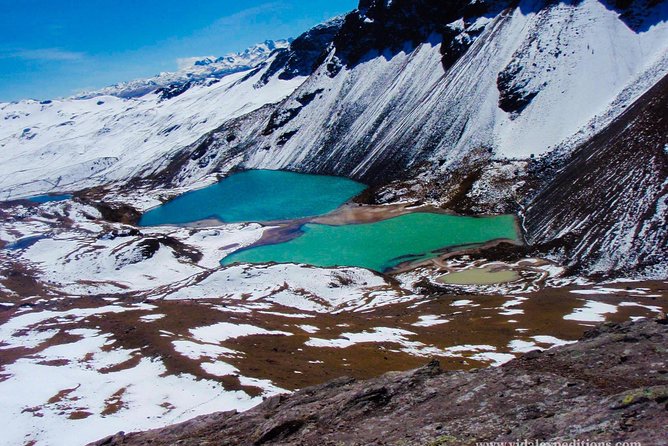
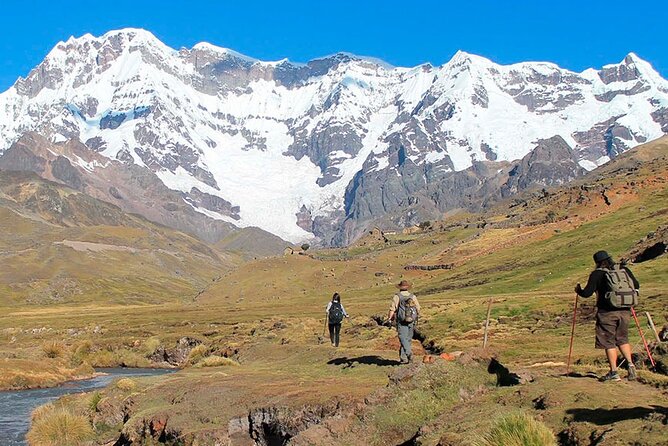
What makes Ausangate special is that the scenery isn’t random. You keep seeing the mountain from different angles as you climb and descend, including the bright water of Puqa Q’ocha and the turquoise Jatun Puqa Q’ocha. On top of that, the trek includes ceremony moments tied to Apu Ausangate, so the trip doesn’t feel like a photo stop. It feels like a lived-in landscape, with local meaning layered on top of big views.
Price and Value: What $660 Covers (and What It Does Not)
At $660 per person for about 5 days, this trek looks reasonable when you match it to what’s included. You’re not just buying a walk. You’re paying for a staffed mountain team plus camp operations: camping equipment, horses for equipment, and meals (five lunches, four dinners, and four breakfasts).
That matters because food and logistics at altitude are not small details. Lunch stops are placed to keep the route moving and help with energy, especially after longer pass days. Dinner and breakfast coverage also reduces your risk of running out of calories or dealing with cold, hard-to-find meals.
Two items you should budget separately:
- Entrance fee: 20 soles (not included).
- Sleeping bag: not included.
If you already own a good cold-weather sleeping bag, you’ll feel the value more strongly. If not, factor in that cost before you commit.
Small-Group Comfort at Altitude: How the Team Changes the Experience
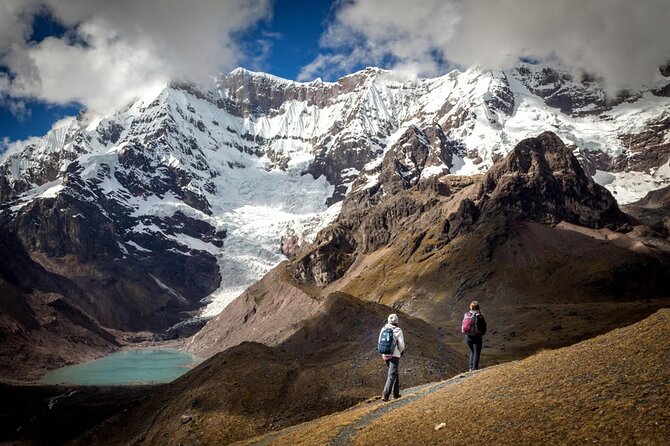
This trek caps at 10 travelers, which affects your day in practical ways. Fewer people means fewer delays when the route narrows, and it’s easier for your guide to manage the group when you’re adjusting to altitude.
You also get a real working crew, not just a guide. The team setup typically includes a guide and a cook, and there’s an equipment horse driver to handle the gear movement. Names that have come up with this company include guides like Chino and Guillermo, and support crew such as Benigno (chef) and Angel (horse driver). In plain terms, that kind of staffing shows up in the small things: camp gets built, meals show up hot, and you spend less time worrying about the machine of the trek.
The 5-Day Route: What Each Day Feels Like
Other Andean routes worth the acclimatisation
Day 1: Rondoca to Upis, with Apu Ausangate in Your First Views
You meet early in Cusco, then ride by private transportation toward Tinke. There’s a stop to buy final essentials and to grab breakfast before you continue on to Rondoca, where you’ll meet the rest of the trekking team.
The hike starts gently but not lazily, about two hours to a lunch spot where you can appreciate Apu Ausangate mountain. After lunch, you continue to your first camp area near the village of Upis. The best payoff on Day 1 is what comes after hiking: you can soak in the hot springs at Upis and warm up with coca tea before dinner.
This is also the day with the shorter hiking window, around 3 to 4 hours total. That makes it a good first acclimatization step.
Practical consideration: because you camp around 4,200 m, even a shorter day can feel heavy. Keep your pace steady and don’t chase speed.
Day 2: Arapa Pass to Two Lagoons, Then Apacheta to Ausangate Qocha
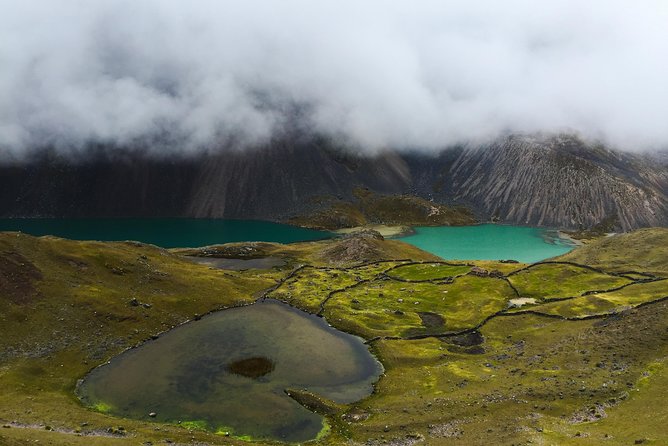
Day 2 is long, about 8 hours on the move. It starts with a wake-up hot coca tea, then breakfast, then a climb to the Arapa pass at 4,850 m. After the pass, you descend through a valley where you’ll pass the green lake of Puqa Q’ocha and then continue to the turquoise Jatun Puqa Q’ocha.
Lunch happens at the lake border with strong views of Ausangate. This is prime photo time, but it’s also a good moment to slow down, breathe, and let your body catch up before the second ascent.
Then comes Apacheta pass at 4,980 m. From there, you get another big view down toward turquoise water fed by melting snow from Ausangate. After that, you descend about an hour to camp at Ausangate Qocha.
Practical consideration: this is the day where altitude fatigue can stack up, because it’s both a pass day and a long day. You’ll be happier if you treat the uphill like a gradual climb, not a race.
Day 3: Palomani Pass at 5,200 m and a Ceremony for Apu Ausangate
Day 3 brings the highest point on this trek: Palomani pass at 5,200 m. Plan for a climb of about two hours after breakfast.
At the top, your guide leads a ceremony for Apu Ausangate. The intent is to connect you to the mountain’s role in local life, not just to say you reached a number on a map. It’s one of those moments that changes how you look at the views.
After the pass, you descend for about an hour to have lunch in Uchuy Phinaya. In the afternoon, you hike a couple more hours to reach the next campsite.
Practical consideration: at 5,200 m, even strong hikers often slow down. I’d go conservative here. You’ll enjoy the ceremony more and feel better for the afternoon.
Day 4: Pacchanta Valley, Deep Lagoons, and Hot Springs Recovery
Day 4 is about pacing and variety. With only one pass to cross, you can take time enjoying deep blue lagoons and glacial-colored lakes along the way. Some people choose to jump in to cool off if they feel brave, but the real point is the option to rest your eyes on the colors and keep moving without rushing.
Views of the massive Ausangate mountain stay in play, and you also get a new angle on Pacchanta Valley. Your goal later is the hot springs of Pacchanta, where you can soak after a day of hiking.
Camp is around 4,300 m, and you’re descending a bit, which often helps tired legs feel less angry by the end.
Practical consideration: even if you’re descending, the air can still feel sharp. Bring layers you can add quickly when the wind picks up.
Day 5: Final Circuit, Local Family Food, Then Back to Cusco
By the last day, the trek has already wrapped around Ausangate mountain. After breakfast, you slow down for a ceremony with a local family.
This is where the trip gets hands-on: you’ll learn about their food traditions and weaving techniques while they prepare local food. Then you head back by bus to Cusco, about 3 hours.
Practical consideration: you’ll likely feel a mix of satisfaction and emptiness after five days of trail life. That first warm meal and a normal bed feel extra earned.
The Cultural Parts Are Not Side Quests
The cultural moments are built into the route, not tacked on like a souvenir stop.
On Day 3, the Apu Ausangate ceremony on the highest pass day gives the mountain more than a visual role. On Day 5, the local family experience focuses on food preparation and weaving techniques. You get a chance to see how traditions connect to day-to-day life, especially in a region where the Andes are more than scenery.
If you care about culture that is lived, not performed, these stops matter. If you prefer only logistics and photos, you might still appreciate them as a calm break from the physical focus of pass days.
Hot Springs at Upis and Pacchanta, Why They Matter
This trek is framed around two soaking moments, and I’m a fan of that planning. After long altitude days, soaking isn’t just comfort. It’s recovery. It helps you feel less stiff, and it gives you a way to reset your mood before dinner or the next morning.
Day 1’s Upis hot springs come right after an easier hiking day, plus coca tea. Day 4’s Pacchanta hot springs come after longer lake and lagoon walking, when your legs will genuinely want a pause.
Practical tip: treat the springs like part of the day, not an afterthought. Keep your towel and simple warm layer ready so you don’t end up chilled afterward.
What to Pack for Cold Nights and High Passes
The trek runs from roughly 3,800 m up to 5,200 m, with camps around 4,200 m to 4,630 m. Cold evenings are a real factor here, and you should plan like it’s chilly in camp even if you feel fine during daylight hiking.
Since a sleeping bag is not included, I strongly suggest bringing the warmest one you can use comfortably. Reviews tied to this trek highlight that the cold can feel serious, so don’t assume you’ll stay warm by layers alone.
Also pack for early mornings. The start time is 5:00 am, so you’ll likely be moving before the day warms up.
Beyond that, stick to standard high-altitude hiking basics: a warm hat, gloves, and a layered system for wind and sun swings. Your guide will likely set the pace, but your gear needs to handle the weather.
Who Should Book This Trek, and Who Might Think Twice
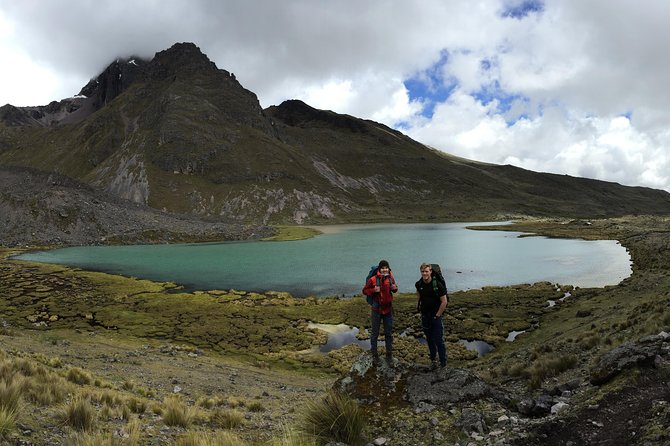
You’ll be a strong match if you have moderate physical fitness and you’re comfortable with multi-hour hikes plus steep pass days. Day 2 and Day 3 are the ones where the long effort shows most, and Day 3 peaks at 5,200 m.
This is also a good fit if you want:
- A small-group experience
- All meals handled
- Hot springs built into the schedule
- A guide who explains both route and cultural context, with leaders like Chino or Guillermo mentioned in this trekking team’s history
You might think twice if you:
- Are very sensitive to altitude and cold
- Need a trip with zero uphill strain
- Haven’t budgeted for a sleeping bag and warm gear
Should You Book Ausangate Trek 5 Days with Vidal Expeditions?
If your idea of a great Peru trip includes walking in the Andes, seeing high lagoons up close, and recovering in hot springs, this is a strong choice. The value comes from the full support package, the all-in meal structure, and a team built around cooking and equipment movement, not just guiding.
I’d book it if you’re ready for real altitude days and you can pack warm. I’d skip or reconsider if you don’t want to deal with cold camp nights or you are not prepared for pass crossings that reach 5,200 m.
If the weather turns, the operator notes that the experience requires good weather, and plans can change to protect the trip. That’s not a reason to avoid it, just a reason to stay flexible.
FAQ
What is the duration of the Ausangate trek?
It runs for about 5 days.
What time does the trek start?
The start time is 5:00 am.
How many people are in the group?
The maximum group size is 10 travelers.
Are meals included in the price?
Yes. Lunch is included for 5 days, dinner for 4 days, and breakfast for 4 days.
What gear is included?
The tour includes camping equipment and horses for transporting equipment.
Is a sleeping bag included?
No. A sleeping bag is not included.
Is there an entrance fee?
Yes. There is an entrance fee of 20 soles that is not included.
Are hot springs included?
Yes. You’ll soak in hot springs at Upis and also at Pacchanta.
What happens at the end of the trek?
After the hike and breakfast, you’ll take part in a ceremony with a local family focused on local food and weaving techniques, then travel back to Cusco by bus.
Can I cancel for a refund?
Yes. You can cancel up to 24 hours in advance for a full refund. If you cancel less than 24 hours before the start time, the amount paid is not refunded.
Andean Routes Worth the Climb
- From Cusco: 7 Lakes Ausangate Trek with Breakfast and Lunch
★ 4.8 · 360 reviews - Cusco: Rainbow Mountain Tour and Red Valley Hike (Optional)
★ 4.7 · 149 reviews - Cusco: Full-Day Rainbow Mountain & Red Valley Trekking Tour
★ 4.5 · 121 reviews - Salkantay Trek Challenge – 3 Days / 2 Nights
★ 5.0 · 101 reviews - From Cusco: Rainbow Mountain Trek
★ 4.5 · 98 reviews
More Tour Reviews in Cusco
- Cusco: Humantay Lake Tour with Breakfast and Buffet Lunch
★ 4.9 · 2,976 reviews - From Cusco: Moray, Maras Salt Mines & Chinchero Weavers Tour
★ 4.8 · 1,925 reviews - From Cusco: Full-Day Group Tour of Machu Picchu
★ 4.7 · 1,767 reviews - Machu Picchu Day Trip from Cusco
★ 4.5 · 1,644 reviews - Cusco: Half-Day City Tour with Sacsayhuaman and Q’enco
★ 4.6 · 1,129 reviews
Lagoons Below Ausangate
- From Cusco: 7 Lakes Ausangate Trek with Breakfast and Lunch
★ 4.8 · 360 reviews - Excursion to Ausangate & 7 lakes with Coca Ceremony |Private|
★ 5.0 · 80 reviews - Laguna Humantay Full Day Trail
★ 5.0 · 57 reviews - Full-Day Tour to Ausangate 7 Lakes
★ 5.0 · 56 reviews - From Cusco: Ausangate 7 Lakes Tour with Meals
★ 4.5 · 47 reviews
Freshly reviewed across Cusco
- Excursion Cusco – Puno – Titicaca Observatory Train★ 5.0 · 3 reviews
- Sacred Valley Vip Cusco★ 4.7 · 3 reviews
- Cusco | Humantay Lake 1-Day Tour with Breakfast and Lunch★ 5.0 · 3 reviews
- Full-Day Condor Viewpoint & Inca Sites Tour★ 5.0 · 3 reviews
- Best of Cusco: Private Walking Tour with a Local★ 3.6 · 3 reviews
- From Cusco: Full-Day Private Sacred Valley Tour★ 5.0 · 3 reviews
Ausangate and Andean Lakes side by side.
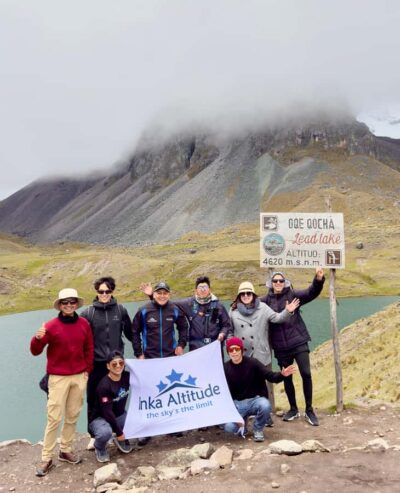 ★ 4.8From Cusco: 7 Lakes Ausangate Trek with Breakfast and LunchFrom $29360 reviews
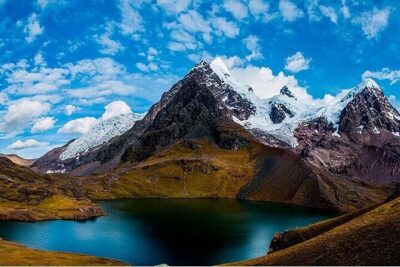 ★ 5.0Excursion to Ausangate & 7 lakes with Coca Ceremony |Private|From $10880 reviews
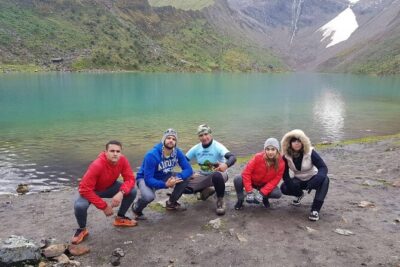 ★ 5.0Laguna Humantay Full Day TrailFrom $12157 reviews
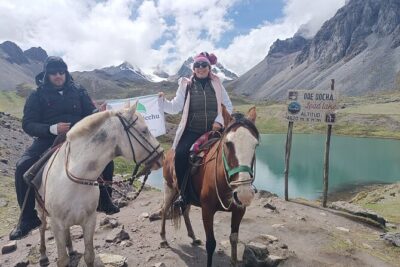 ★ 5.0Full-Day Tour to Ausangate 7 LakesFrom $6956 reviews
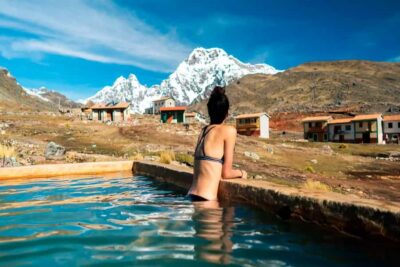 ★ 4.5From Cusco: Ausangate 7 Lakes Tour with MealsFrom $3747 reviews
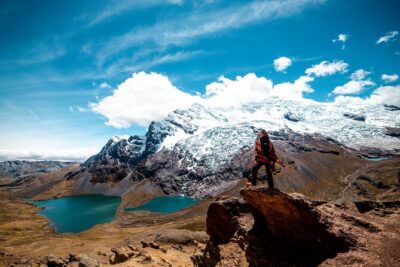 ★ 5.0Ausangate and Rainbow Mountain Trek – 3 Days / 2 NightsFrom $53535 reviews
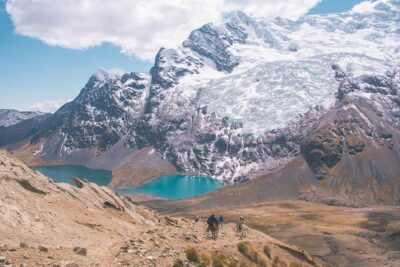 ★ 5.06 day Rainbow Mountain x Ausangate Trek – FlashpackerConnectFrom $1,05030 reviews
 ★ 5.0Qampa Climbing 2 Days in AusangateFrom $38027 reviews
Also on these Peru lists