
REVIEW · MACHU PICCHU
Ancascocha Trek To Machu Picchu 4 Days And 3 Nights
Cusco to Machu Picchu, but with quiet trails. This 4-day, 3-night Ancascocha trek sends you away from the busiest routes, with Inca ruins and Andean village life along the way, ending with a guided visit to Machu Picchu. You’ll hike high, sleep under the stars, and still get the classic payoff of Machu Picchu without the classic-trail crowds.
Two things I really like: you get real trail time in the Sacred Valley area (including waterfalls and cliff-top ruins), and the food and camping setup are handled for you. Even in reviews where people talk about big moments, they keep coming back to how well the camp was prepared and how good the meals were. The main drawback to consider is simple: this trek demands a strong fitness level and it is at altitude, so you should take training and pacing seriously.
One more thing to know up front: this is not the same as the famous Inca Trail route. It’s a different, quieter path, and you should expect a mix of steep ups, high passes, and long hiking days rather than a polished, low-energy stroll.
In This Review
- Key things to know before you go
- Entering the Ancascocha Trail from Cusco
- Day 1: Soqma start, Perolniyoc waterfall, and first ruins
- Day 2 and Day 3: What the middle days feel like
- The Kuychiccasa pass payoff and why the camp location matters
- Food and camping: the crew is a big part of the value
- Machu Picchu day: the guided ruins tour and the Aguas Calientes night
- Price and value: what $730 really covers
- Who should book, and who should pass
- Practical tips for a smoother Ancascocha trek
- Should you book Ancascocha for Machu Picchu?
- FAQ
- How long is the Ancascocha Trek to Machu Picchu?
- What does the trek cost?
- Does the tour include pickup from Cusco?
- What is included in the price?
- Are bus tickets from Aguas Calientes to Machu Picchu included?
- What fitness level is required?
- Are service animals allowed?
- Is there free cancellation?
Key things to know before you go
- Small-group trekking with a maximum of 30 travelers, so you’re less lost in the crowd
- Camping, meals, and national park fees included, which matters when you’re already spending on Machu Picchu
- Waterfall and Inca-site stops early on, including the Perolniyoc cascade lookout and the Inca site nearby
- High pass day and big views at Kuychiccasa pass, with llamas, farm houses, and snow-capped peaks
- A guided Machu Picchu visit included, plus a hotel pickup and drop-off in Cusco
- Bus transport not fully included for day 4, so you’ll want to budget for the Aguas Calientes to Machu Picchu ride
Other citadel visits, ticket types and start times
- From Cusco: Full-Day Group Tour of Machu Picchu
★ 4.7 · 1,767 reviews - Machu Picchu Day Trip from Cusco
★ 4.5 · 1,644 reviews - Machu Picchu: Full-Day Tour from Cusco with Optional Lunch
★ 4.6 · 927 reviews - Cusco: 4-Day Inca Trail to Machu Picchu with Accommodation
★ 4.8 · 432 reviews
Entering the Ancascocha Trail from Cusco
If your idea of a great Peru trip includes hiking first and taking in the show later, the Ancascocha trek fits. You start in Cusco and spend your days working your way toward Machu Picchu, with scenery that shifts from mountain valleys to high passes. This trek is built for people who want to feel the place, not just photo it.
The “avoid the crowds” promise is the big pitch here. The classic Inca Trail and Salkantay routes tend to draw heavy foot traffic, and that can make the whole experience feel crowded even when the views are stunning. The Ancascocha route keeps you on a less traveled line, which usually means you have more breathing room on the trail and more quiet moments to watch how the mountains change through the day.
This trek also runs with a team model. You won’t just be hiking next to strangers and hoping for the best. Reviews consistently call out guides and chefs by name, including Lino and Eddie, and they also mention chefs like Super Mario and team members like Joel. That matters because on a trek, the people who set the pace, handle the logistics, and feed you well can make the difference between a good trip and a memorable one.
Day 1: Soqma start, Perolniyoc waterfall, and first ruins
Your first morning starts with a hotel pickup in Cusco, then a drive of about 1 hour 45 minutes to Soqma at 10,512 ft. That drive helps you avoid spending your first day just transferring around Peru. It also means you can start hiking while your body is still adapting to the altitude climb from Cusco.
Once you’re at the starting point, the trek opens with a 2-hour walk to the Perolniyoc cascade lookout. This is the waterfall moment that sets the tone. From the wording in the route description, you’re not just passing by, you’re stopping to take it in. Waterfalls at elevation can be surprisingly powerful, and they’re the kind of stop that breaks up a long hiking day with real sensory payoff.
After the lookout, you hike about 45 minutes more to the nearby Inca site of the same name. This is a cliff-top setting over the valley, and your guide will share some history before you have time to wander. A stop like this is valuable because it turns a “hike to a view” into a “hike through meaning.” You’re moving through Inca-era spaces instead of treating ruins like roadside stops.
Then comes the climb. You’ll do a steep ascent of about 1 hour to reach lunch at Rayan at 12,139 ft. This is where your chef’s work starts to matter. You’re not eating a sad snack while gasping for air, you’re sampling real food at elevation. If you’re at all worried about energy, this is a key point.
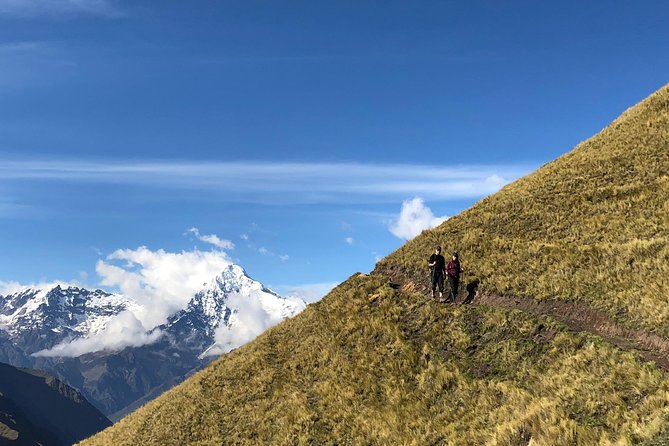
The afternoon continues uphill to Kuychiccasa pass at 14,599 ft, with about 3 hours of uphill hiking. The route passes rustic farm houses, and you’ll see llamas and sweeping views of the snow-capped Nevadas peaks. At the top, you pause and take in the Chancachuco Valley scene before the descent.
Finally, you end day 1 by hiking down about 45 minutes to your camp at Chancachuco Valley (14,147 ft). The practical value here is that your campsite is prepared when you arrive, and you can shift into warmer clothing quickly. That matters in high altitude nights, when you go from active hiking warmth to cold air fast.
Day 2 and Day 3: What the middle days feel like
The route description doesn’t lay out every hour of every day, but it does give you the core promise for the middle of the trek: you’ll keep hiking through Andean scenery, passing Inca ruins and traditional villages. So even when the exact sequence isn’t spelled out here, you can expect the same rhythm that day 1 established.
That rhythm usually looks like:
- a steady pace uphill or along high stretches,
- a few purposeful stops to connect you with the historical sites,
- and then a camp experience that keeps you from dealing with gear logistics while tired.
What I think you’ll enjoy most on days like this is the contrast. Reviews mention a wide variety of scenery across treks, including green fields and alpine zones, plus the feeling that the trail is active but not overcrowded. The guide and crew structure also tends to show up here. People repeatedly praise organization, and they mention that campsites were set up when they arrived and meals were ready. That’s not a small comfort when you’ve been moving for hours.
There’s another subtle benefit to the smaller-group setup. When you’re not packed in with hundreds of people, you notice more. You can slow down at ruins, you can take extra time for photos without feeling like you’re holding up a mass line, and you can talk with your guide when you actually have time instead of rushing through explanations.
The Kuychiccasa pass payoff and why the camp location matters
The highest point you’re told about on the route is Kuychiccasa pass at 14,599 ft. That means day 1 includes one of the biggest altitude stress points, followed by a descent to a still-high campsite at 14,147 ft. This setup is common in mountain trekking, but it still pays to understand it as a traveler.
Why it matters:
- You get a strong payoff for effort. The break at the top is where the views of Chancachuco Valley and nearby snow-capped peaks become the reward.
- You don’t get a full “drop to comfort.” Even after descending, you’re still sleeping high. That’s why changing into warmer clothing soon after arriving at camp is not optional.
This is also where a good guide helps with pacing and timing. The route description emphasizes views, llamas, and farm houses on the way up. That’s a clue that the uphill is not just a grind. It’s a moving viewpoint. If your guide keeps the pace steady, you arrive for the pass break still able to actually enjoy it.
Lares, Choquequirao and quieter approaches
Food and camping: the crew is a big part of the value
At $730 per person, you’re not paying only for a trail map. You’re paying for a working crew that takes care of the details you don’t want to handle after a long day of climbing. The inclusions back that up: camping gear, meals, and national park fees are included, and you get breakfast and buffet lunch and dinner during the trek.
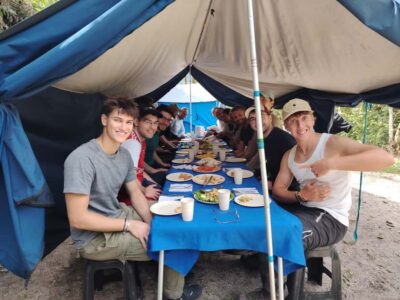
This is one of the most praised parts of the experience. People keep mentioning campsites ready when they arrive and food that is more satisfying than you’d expect at altitude. Names show up again in reviews, with guides like Lino and Eddie, and chefs such as Super Mario and Joel. Even when the hike is the headline, the crew shows up in the memories.
If you’re deciding whether to do a trek like this, think about what usually goes wrong on group hikes:
- someone forgets gear,
- food is delayed,
- the camp setup is rushed,
- or the group gets chaotic on the trail.
Here, the repeated praise for organization is a good sign. It also means you can focus on the hike instead of managing everything yourself.
Machu Picchu day: the guided ruins tour and the Aguas Calientes night
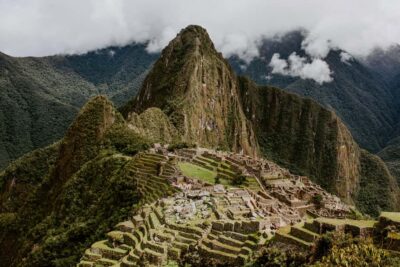
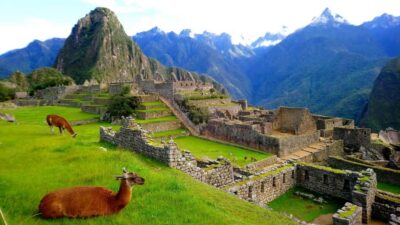
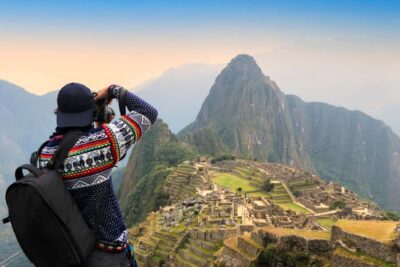
The trek ends at Machu Picchu, with a guided tour of the ruins included. That’s a big deal because Machu Picchu is impressive on its own, but it gets much better with context. Inca architecture, the site’s layout, and how the area functioned historically can feel like guesswork without interpretation.
Before Machu Picchu, you also get one night at a B&B in Aguas Calientes. This gives you a buffer night right near the site. It’s usually the practical move if you want to sleep, eat, and show up to Machu Picchu with less stress.
One logistics point to watch: the round trip bus tickets from Aguas Calientes to Machu Picchu on day 4 are not included. That means you should budget for transport on top of the trekking cost, or at least make sure you understand where those tickets fit into your day plan. It’s a small omission that can feel bigger once you’re at the end of a trek and ready to move on.
Price and value: what $730 really covers
Let’s talk value without the fluff. At $730 per person, this trek is priced like a full-service guided experience, not a DIY hike. What you get for that price is what you would otherwise have to piece together.
Included basics that affect your real cost:
- Hotel pickup and drop-off in Cusco
- Local guide
- Two nights camping
- Meals during the trek, including breakfast and buffet-style lunch and dinner
- National park fees
- One night in Aguas Calientes at a B&B
- A guided Machu Picchu ruins tour
What is not included:
- the round trip bus tickets from Aguas Calientes to Machu Picchu on day 4
- alcohol
- and any excess luggage charges if they apply
So where does the value land? For me, the strongest argument is that your biggest costs and biggest annoyances are handled. You’re not organizing permits and fees, you’re not dealing with camp logistics, and you’re not paying separately for a guide and a guided Machu Picchu component in a messy way. If you prefer convenience without going fully “luxury,” this is a pretty solid middle path.
Who should book, and who should pass
This is for you if you want:
- a quieter trek than the best-known routes,
- real mountain time with a small group,
- and a crew that handles meals and camping so you can focus on hiking and views.
It’s especially good if you care about the guide experience. Reviews highlight guide names like Lino and Eddie, and mention how the guides and staff connect with guests and keep things running smoothly. A good guide matters at altitude, when small pacing choices can protect your energy.
You should rethink if:
- you don’t have the physical fitness level this trek asks for,
- you’re not comfortable with altitude hiking,
- or your schedule requires a very low-impact itinerary.
Also, if you’re traveling with kids, the rule here is that children must be accompanied by an adult. Since the trek is strenuous and altitude is involved, you’ll want to be honest about whether your child can handle it.
Practical tips for a smoother Ancascocha trek
A few things to plan around, even with a well-run tour:
- Think in layers. Day 1 ends at altitude with a camp, and warmer clothing change is mentioned for a reason.
- Pace for altitude, not ego. The pass and long climbs are the kind of effort where going too fast early can ruin the rest of the day.
- Keep expectations about the bus realistic. Day 4 transport from Aguas Calientes to Machu Picchu is not fully included.
- Bring light luggage. Excess luggage can trigger charges, and your hike and camp days reward packing smart.
- Use the small group. Ask your guide questions at ruins and viewpoints. This trek is designed for attention, not just passing through.
Should you book Ancascocha for Machu Picchu?
If you’re choosing between the big-name treks and a less crowded route, I think Ancascocha is worth strong consideration. You get the Machu Picchu payoff with a guided site tour, while still getting days of hiking through villages, waterfall scenery, and Inca sites. The best part is how the crew shows up in the experience, especially with chefs and guides people name repeatedly, like Lino and Super Mario.
Book it if you’re fit enough for altitude, you like hikes that include steep sections, and you want a smaller-group feel. Skip it if you want an easier hike, you hate cold nights at elevation, or you need every part of day 4 transport included in the price.
If your goal is to trade crowds for character, and to treat Machu Picchu as the final chapter instead of the only event, this trek makes a lot of sense.
FAQ
How long is the Ancascocha Trek to Machu Picchu?
It runs for 4 days and 3 nights.
What does the trek cost?
The price is $730.00 per person.
Does the tour include pickup from Cusco?
Yes, hotel pickup and drop-off in Cusco are included.
What is included in the price?
Two nights camping, national park fees, breakfast, buffet lunch and dinner, a local guide, hotel pickup and drop-off, and one night at a B&B in Aguas Calientes are included.
Are bus tickets from Aguas Calientes to Machu Picchu included?
No. Round trip bus tickets from Aguas Calientes to Machu Picchu on day 4 are not included.
What fitness level is required?
Travelers should have a strong physical fitness level.
Are service animals allowed?
Yes, service animals are allowed.
Is there free cancellation?
Yes. You can cancel for free up to 24 hours in advance for a full refund. If you cancel less than 24 hours before the start time, the amount paid is not refunded.
More Tour Reviews in Cusco
- Cusco: Humantay Lake Tour with Breakfast and Buffet Lunch
★ 4.9 · 2,976 reviews - From Cusco: Moray, Maras Salt Mines & Chinchero Weavers Tour
★ 4.8 · 1,925 reviews - From Cusco: Full-Day Group Tour of Machu Picchu
★ 4.7 · 1,767 reviews - Machu Picchu Day Trip from Cusco
★ 4.5 · 1,644 reviews - Cusco: Half-Day City Tour with Sacsayhuaman and Q’enco
★ 4.6 · 1,129 reviews
Lares, Choquequirao and Beyond
- Choquequirao Trek 4 days and 3 nights
★ 5.0 · 81 reviews - 4-Day Inca Jungle Adventure, Mountain Biking, Rafting and Zipline
★ 5.0 · 60 reviews - Classic Choquequirao Trek – 5 Days / 4 Nights
★ 5.0 · 52 reviews - 4 Days Inca Jungle to Machu Picchu Standard
★ 4.5 · 48 reviews - 4-Day Lares Trek to Machu Picchu from Cusco
★ 5.0 · 47 reviews
Reaching the Citadel, Other Options
- From Cusco: Full-Day Group Tour of Machu Picchu
★ 4.7 · 1,767 reviews - Machu Picchu Day Trip from Cusco
★ 4.5 · 1,644 reviews - Machu Picchu: Full-Day Tour from Cusco with Optional Lunch
★ 4.6 · 927 reviews - Cusco: 4-Day Inca Trail to Machu Picchu with Accommodation
★ 4.8 · 432 reviews - From Cusco: 2-Day Trip to the Sacred Valley and Machu Picchu
★ 4.6 · 265 reviews
Freshly reviewed across Cusco
- Excursion Cusco – Puno – Titicaca Observatory Train★ 5.0 · 3 reviews
- Sacred Valley Vip Cusco★ 4.7 · 3 reviews
- Cusco | Humantay Lake 1-Day Tour with Breakfast and Lunch★ 5.0 · 3 reviews
- Full-Day Condor Viewpoint & Inca Sites Tour★ 5.0 · 3 reviews
- Best of Cusco: Private Walking Tour with a Local★ 3.6 · 3 reviews
- From Cusco: Full-Day Private Sacred Valley Tour★ 5.0 · 3 reviews
Machu Picchu Tours side by side.
 ★ 4.7From Cusco: Full-Day Group Tour of Machu PicchuFrom $3211,767 reviews
 ★ 4.5Machu Picchu Day Trip from CuscoFrom $3361,644 reviews
 ★ 4.6Machu Picchu: Full-Day Tour from Cusco with Optional LunchFrom $283927 reviews
 ★ 4.8Cusco: 4-Day Inca Trail to Machu Picchu with AccommodationFrom $470432 reviews
 ★ 4.6From Cusco: 2-Day Trip to the Sacred Valley and Machu PicchuFrom $370265 reviews
 ★ 4.9Cusco: Machu Picchu 2-Day Inca Trail with Panoramic TrainFrom $582260 reviews
 ★ 4.2From Cusco: 2-Day Inca Trail to Machu PicchuFrom $290244 reviews
 ★ 4.9Machu Picchu: Inca Trail 2-Day Overnight Guided TourFrom $585203 reviews
Also on these Peru lists